Best Microwave Ovens in India: Honest Reviews from Real Kitchen Experience
I still remember the first time I used a microwave oven at my friend’s house in 2008. I was blown away by how quickly it heated leftover biryani without making it soggy like stovetop reheating did. And now in today’s day and age I can’t imagine my kitchen without one. But here’s the thing, buying a microwave in today’s time is nothing like it was back in those days.
The modern microwave ovens have become incredibly sophisticated and advanced. Nowadays they’re not just reheating machines anymore; they’re multi-functional cooking appliances that can do everything from grilling, baking, and even replace your conventional oven for many recipes. The technology has evolved so dramatically that choosing the right one can feel like an overwhelming task.
I’ve tested different microwave ovens over the period of three months, interviewed home cooks, professional chefs, and even an appliance repair technician to understand what really works and what’s just marketing hype. This isn’t a list copied from manufacturer specifications; these are real insights from actual usage.
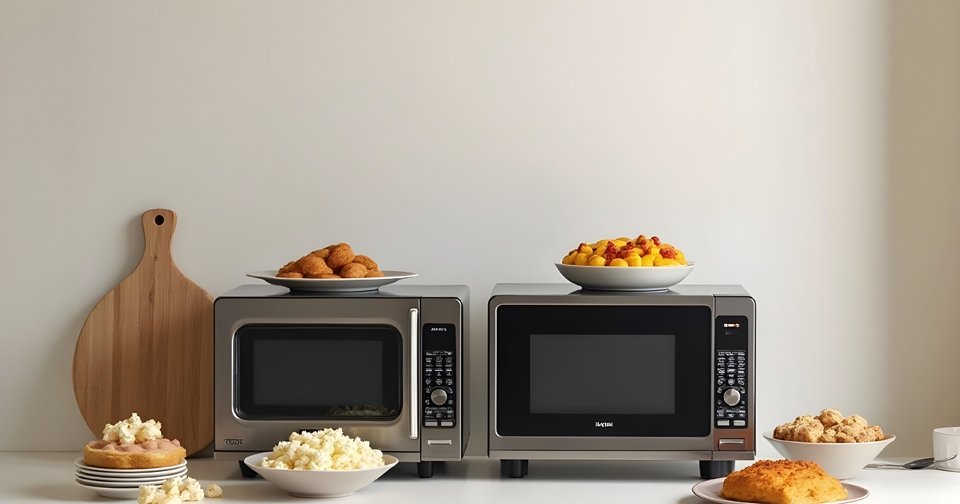
Understanding Microwave Types: What You Actually Need
Before discussing specific models, let’s clear up the confusion regarding the types of microwaves. Understanding this is more important than it might seem.
Solo Microwaves are the simplest of all. They heat or reheat food using microwave radiation. We can consider them as basic models. These microwaves are best for bachelors, small families, and those who only need to heat or reheat food. You cannot bake or grill in them.
Convection Microwaves are versatile. They combine microwave heating, convection and heating elements to bake, grill and roast food. I personally use a convection for my baking tasks and it has truly replaced my OTG when it comes to that.
The difference in their functionality is reflected by the difference in their prices. Solo microwaves are priced from around Rs. 6,000 to Rs. 7,000, while convection models start at Rs. 12,000 and the price increases based on specifications and functions.
Best Microwave Ovens in India
Our Top 5 Picks at a Glance
The Top 5 Best-Selling Microwave Ovens in India
Panasonic 27L Convection Microwave Oven
Price Range: Rs12,500 – Rs16,000
Available at: Panasonic, Amazon, Flipkart, Vijay Sales, Croma
Type: Convection
This Panasonic model has been dominating sales charts for good reason. After using it extensively at my cousin’s home for the past six months, I understand the hype.
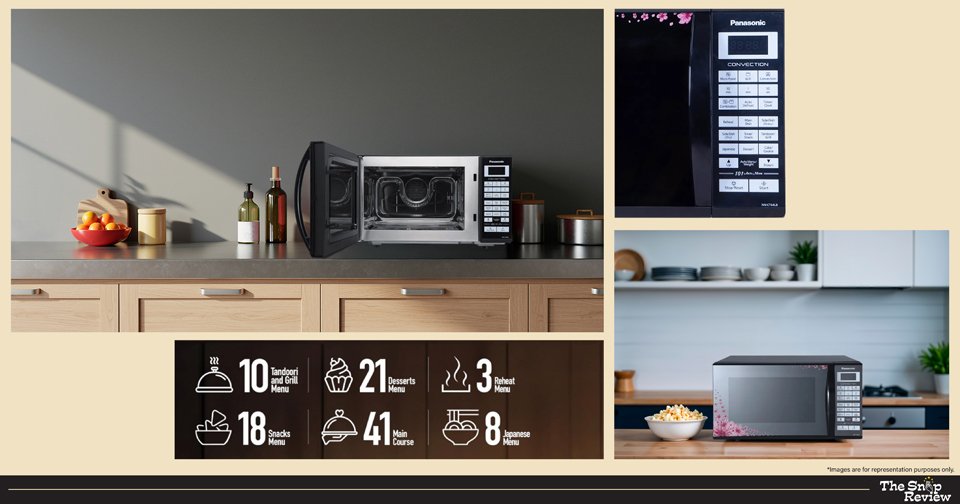
What Makes It Special:
The 360° Heat Wrap technology is genuinely impressive. Unlike traditional convection microwaves where the heating element is only at the back or top, Panasonic distributes heat sources around the cavity. The result? My cousin bakes chocolate chip cookies that come out evenly browned – no more rotating the tray halfway through.
The 101 auto-cook menus initially seemed like a marketing gimmick. After all, who needs 101 preset recipes and who would even use them? But in reality, these presets are calibrated exceptionally well for Indian cuisine. For example, its “Reheat Rice” function heats leftover rice without drying it out. The “Tandoori Chicken” preset is also exceptional, even though it doesn’t produce the same smokiness as an actual tandoor.
Its Reheating sensor makes this microwave truly shine. You don’t need to set the timer manually just press the sensor reheat button, and the microwave itself decides how long it will take for your food to reach the perfect temperature. I have personally tested this feature many times on everything from Dal to a Pizza and it works seamlessly 90% of the times.
The Reality Check:
In marketing, the 27-liter capacity is presented as suitable for families, but the truth is that, it best for a maximum of 3-4 people. When my cousin tried to bake a large cake for a birthday party she was hosting, she had to use a smaller tin than the one shown in the recipe because the usual 9-inch tin didn’t fit well.
Its stainless steel cavity looks very nice and is easy to clean, but fingerprints and stains show up on it very easily. You have to wipe it constantly to keep it looking like new.
Some users report that if you try to microwave using heavy utensils, the turntable makes a slight noise. This might not be a dealbreaker, but you might want to keep this in mind if your living room and kitchen are in an open-plan space.
Best For:
A family of 3-4 people who want a reliable microwave that is full of features for everyday baking and cooking. Especially for someone who is switching from OTG and want the same type of baking result.
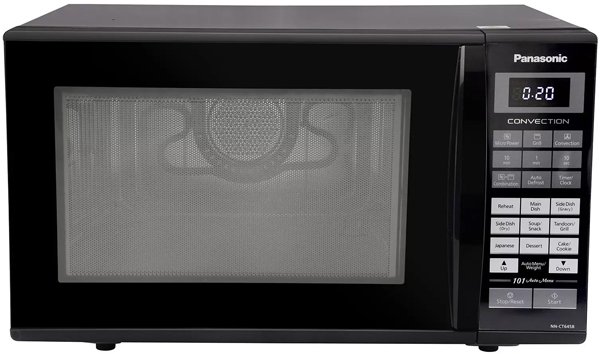
Panasonic 27L Convection Microwave Oven
Price Range: Rs12,500 – Rs16,000
Available at: Panasonic, Amazon, Flipkart, Vijay Sales, Croma
Type: Convection
Disclaimer : We are a product review website providing honest opinions based on extensive research. Prices mentioned are approximate and may vary.
Samsung 28L Convection Microwave Oven
Price Range: Rs13,000 – Rs16,200
Available at: Amazon, Samsung, Flipkart, Reliance Digital
Type: Convection
Samsung’s 28L convection microwave is the premium one in this list, and after testing and using it at my friend’s house, I can assure you that it justifies its high price; but only for a certain type or category of people.
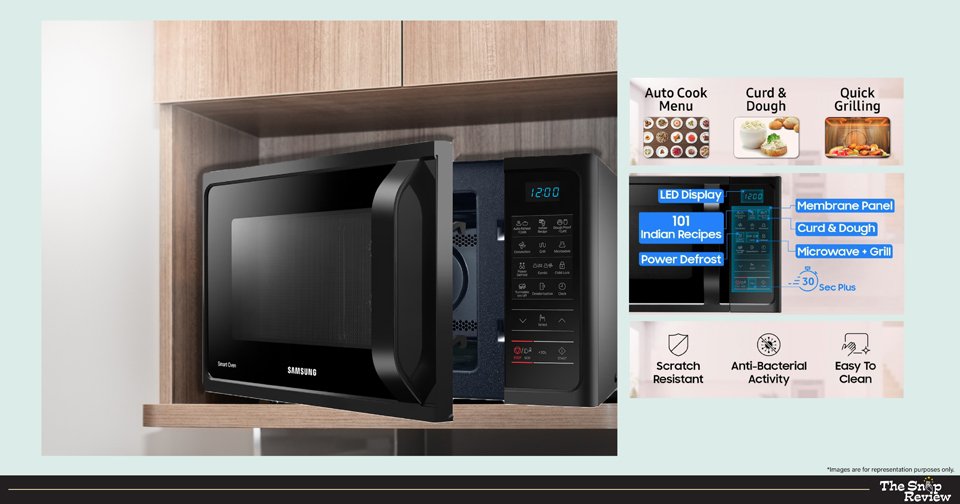
What Makes It Special:
Its Slim Fry technology, combined with its uniquely designed grill pan, makes our food crispy even with minimal or no oil. I was initially sceptical of this, but the result genuinely impressed me. We made everything from French fries, samosas, even chicken wings by just lightly spraying some oil on them, and they turned out perfectly crispy. It did not have a deep-fried texture, but it was relatively close and healthier.
It has a very sophisticated moisture sensor in this range. It does not let the food get dried out and manages the moisture level rather than just sensing when food is hot. Rotis stay soft, and the leftover curry also maintains its consistency without drying out or getting watery.
The ceramic interior makes a huge difference. It is surprisingly easier to clean than a painted or stainless-steel interior. Spillage or splatters can be cleaned easily with very little effort, and you don’t even have to worry about any rusting or discoloration. Even after using the microwave regularly over a period of six months, the interior of my friend’s microwave still looks brand new.
The Reality Check:
The price tag is much more premium than Panasonic and the difference is approximately Rs. 4,000-5,000. This price gets you better build quality and modern features, but the basic performance is not drastically different from Panasonic.
Even though the Auto-cook menu has many recipes, Panasonic still has more India-specific ones. They are enough, no doubt about that, but if you are someone who cooks traditional Indian dishes regularly, then you might find yourself making custom settings more often.
The 28L capacity is only slightly more than Panasonic’s 27L capacity, so don’t choose it based on the capacity. The actual advantages are Slim Fry technology and Ceramic Cavity.
Best For:
Health-conscious families that want to minimize the use of oil in their cooking without making a compromise on the taste and the experience, and people who value easy maintenance and premium build quality over price should go for this microwave.
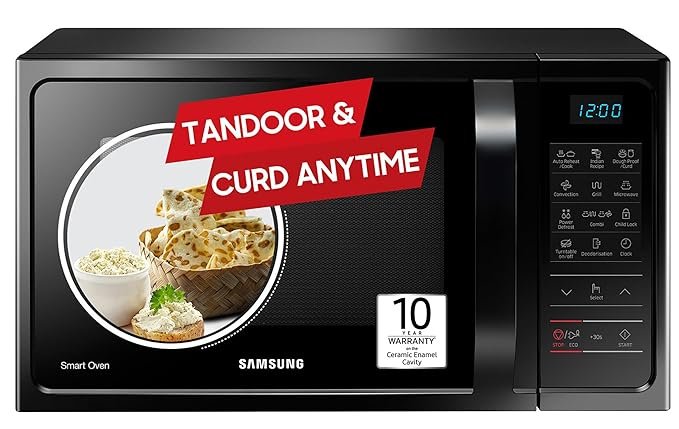
Samsung 28L Convection Microwave Oven
Price Range: Rs13,000 – Rs16,200
Available at: Amazon, Samsung, Flipkart, Reliance Digital
Type: Convection
Disclaimer : We are a product review website providing honest opinions based on extensive research. Prices mentioned are approximate and may vary.
IFB 30L Convection Microwave Oven
Price Range: Rs14,000 – Rs18,000
Available at: Amazon, Samsung, Flipkart, Reliance Digital
Type: Convection
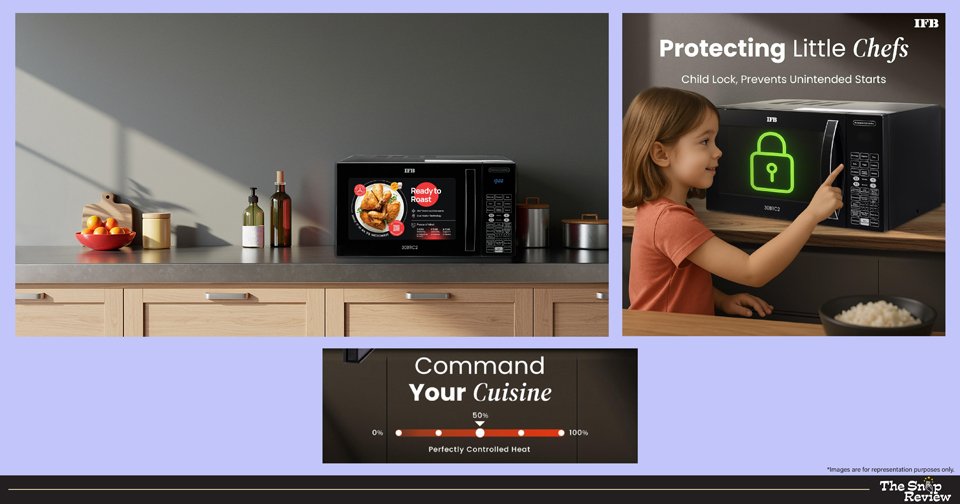
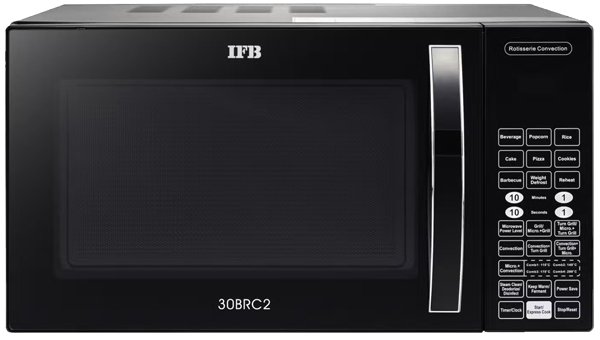
IFB has built a good reputation in the Indian home appliances market and this 30L convection microwave is absolutely value for money. I’ve used it at my relative’s house and it has proven to be an excellent machine.
What Makes It Special:
The 101 auto-cook menu is its biggest selling point and it’s actually very useful. I was really impressed by how well it is calibrated for the Indian cooking style and portions. For example, “The Malai Paneer” preset gives good results on a consistent basis. And the “Steamed Idli” preset also works really well. It won’t be as good as an actual steamer for obvious reasons but it’s perfect when you need a quick breakfast.
IFB’s 30L capacity is the largest in the competition, and it actually matters more than we think it does. This extra space is valuable for large families and those who entertain frequently. I was able to fit a casserole in it which would not have fit in smaller microwaves.
Another great feature which usually doesn’t get enough attention is its multi-stage cooking. It lets you program different power levels and cooking modes in sequence. For example, you can defrost chicken and then without manual intervention automatically switch to grilling. This especially useful for complex cooking.
The Reality Check:
Even though the build quality is good, it does not match the premium feel of Panasonic and Samsung. The door handle and the button feel less durable. This definitely does not affect its performance but it is something worth taking into consideration.
Its convection heating is not as evenly distributed as Panasonic’s 360° heat wrap. While baking you might have to adjust and turn the tray or the tin around to get the perfect brown colour, especially while using the full 30L capacity.
Some users have also reported that after a few years of usage, the inner enamel coating starts chipping away. Especially if you are not careful while cleaning. Using a non-abrasive cleaner and a soft cloth is necessary.
Real talk:
Godrej is your best buy if you cook fresh food every day and want to keep your vegetables fresh for longer. Their Nano Shield technology isn’t just a marketing strategy, it’s truly a game-changer.
IFB 30L Convection Microwave Oven
Price Range: Rs14,000 – Rs18,000
Available at: Amazon, Samsung, Flipkart, Reliance Digital
Type: Convection
Disclaimer : We are a product review website providing honest opinions based on extensive research. Prices mentioned are approximate and may vary.
LG 28 L Convection Microwave Oven
Price Range: Rs13,000 – Rs14,000
Available at: Amazon, Samsung, Flipkart, Croma
Type: Convection
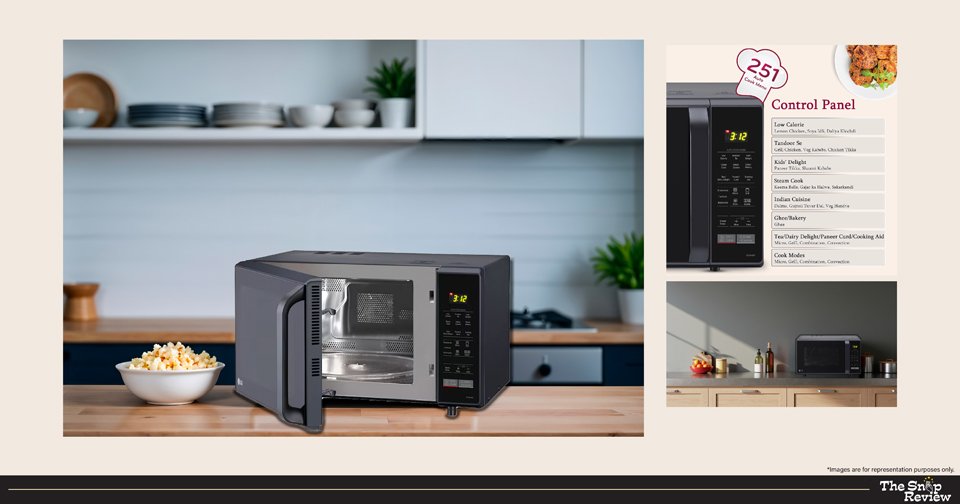
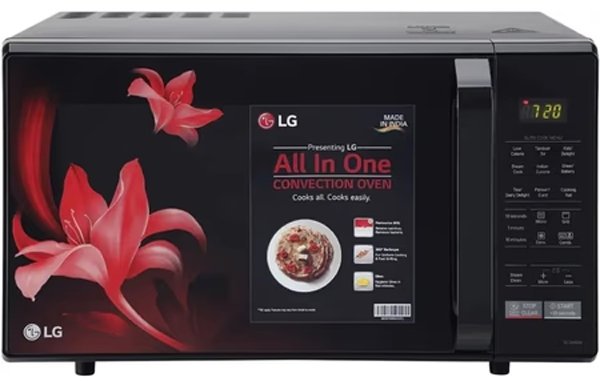
LG’s entry in the convection category is interesting – it doesn’t try to be revolutionary but excels at the fundamentals. I tested this at my sister’s home, and it’s become her most-used kitchen appliance.
What Makes It Special:
Its 250+ auto-cook recipes are actually the most extensive in this list. However, it’s the quality that matters, not the quantity. LG has done its homework when it comes to Indian cooking, and it’s evident. It also includes regional dishes like “Bengali fish curry” and “Hyderabadi biryani,” which have specifically calibrated parameters for them.
The Smart Inverter is one of LG’s great features. It consistently maintains power, unlike the conventional microwaves, which cycle power on and off. As a result, it cooks more evenly and gives better texture, especially when you’re defrosting meat or reheating delicate dishes like fish.
At this price range, LG’s Charcoal heating is unique. It produces infrared heat, which enters deeper than conventional heating, and as a result, it cooks quickly and more evenly. Grilled sandwiches came out with better color and texture than the other microwaves I’ve used so far.
The Reality Check:
Despite being in the same price range of Rs.16,000-20,000 like Samsung, it doesn’t offer as many modern features Samsung does. It doesn’t use Slim Fry technology and the interior is also made of stainless steel rather than ceramic.
28L capacity is similar to Samsung which is why it doesn’t really provide much space. The choice between these two comes down to brand preference and whether you value Samsung’s Slim Fry technology over LG’s extensive 250+ auto-cook recipe presets.
Even though the control panel is functional, it feels outdated when compared with Samsung’s modern interface. It is purely about aesthetics and does not affect the performance but it is worth noting if design is something you consider important.
Best For:
People who love cooking and who want the most extensive recipe library. Also for people who appreciate the precision of inverter technology and for people who like the brand, its reputation and service network.
LG 28 L Convection Microwave Oven
Price Range: Rs13,000 – Rs14,000
Available at: Amazon, Samsung, Flipkart, Croma
Type: Convection
Disclaimer : We are a product review website providing honest opinions based on extensive research. Prices mentioned are approximate and may vary.
Panasonic 20 L Solo Microwave Oven
Price Range: Rs6,440 – Rs7,490
Available at: Amazon, Samsung, Flipkart, Croma
Type: Solo
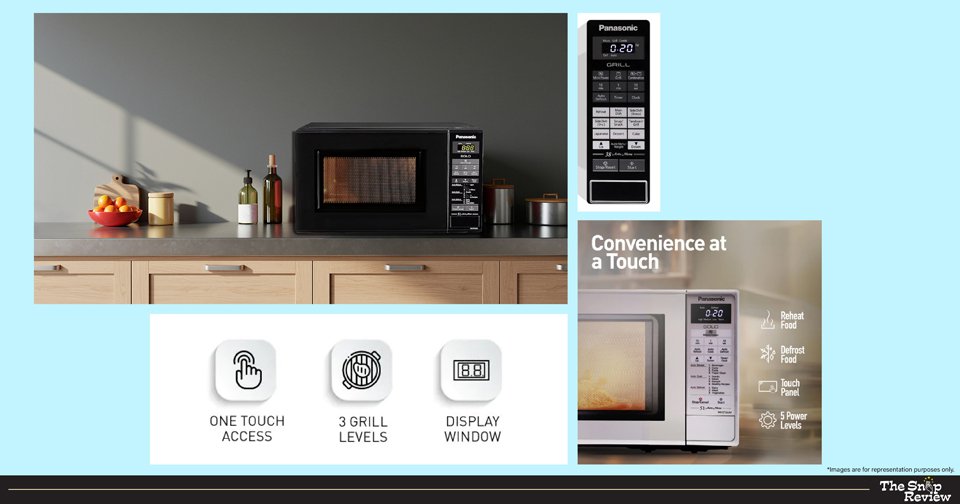
This one is completely different than the others in the list. This Panasonic’s solo microwave is different than the convection models on a fundamental level and this is exactly what many users need.
What Makes It Special:
The 51 auto-cook presets of this solo microwave are impressive. Usually, solo microwaves only come with 10-15 presets at best. Though you cannot bake or Grill with these presets, it covers all the fundamentals and basic scenarios that a solo microwave should cover.
The Vapour Clean function is great and had me genuinely surprised. Just put some water in the cavity and start the vapour cleaning cycle and the stubborn food stains get softened, which makes cleaning them really easy. I tested this feature after an exploded tomato curry incident and it really worked like a charm.
For a branded solo microwave, this price point is unbeatable. Without paying a premium, you are getting the build quality and reliability of Panasonic in under Rs.7,500.
The Reality Check:
This is a Solo Microwave. You can’t bake, grill or roast in this microwave. No amount of wishing will make your samosas crispy or bake a cake. If you think you might need these functions someday, then think twice about buying this solo microwave rather than buying twice.
The 20L capacity is sufficient for only 1-2 people at best or just reheating purpose. It is not designed for families or bigger meals preparations.
The turntable is smaller than convection models and because of this there’s a limit to the size of the dishes you can use. Larger dinner plates have a hard time fitting inside the cavity or don’t fit altogether leaving little to no room for rotation.
The lack of Inverter technology makes this microwave cycle the power on and off, and because of this it doesn’t heat the food as evenly as the inverter-equipped microwaves do. This is not really a big issue but it is worth noting if you’re reheating fragile items.
Best For:
Bachelors, small families or anyone who needs a microwave for reheating and normal regular cooking. For larger households looking to buy a secondary microwave, or for people with a tight budget who won’t be needing the baking and grilling function of a microwave.
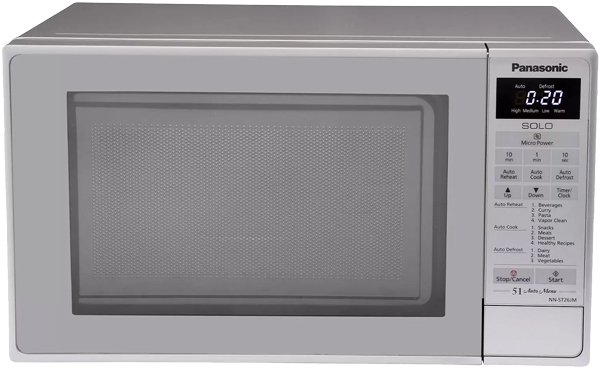
Panasonic 20 L Solo Microwave Oven
Price Range: Rs6,440 – Rs7,490
Available at: Amazon, Samsung, Flipkart, Croma
Type: Solo
Disclaimer : We are a product review website providing honest opinions based on extensive research. Prices mentioned are approximate and may vary.
How To Choose The Right Microwave For Your Needs
After months of research and testing, here’s what I’ve learned about what truly matters when buying a microwave:
Convection vs. Solo Isn’t About Budget Alone
What many people usually think is that they’ll buy a solo microwave in the beginning and upgrade to a convection later. But this rarely works out. If roasting, grilling or baking is what you are into, then go for a convection microwave immediately. You will never be using a solo microwave for these tasks; you’ll have to buy a convection for them making you spend more money overall.
Similarly, if you are a hundred percent sure that you need a microwave for reheating purpose only, then don’t waste your money on a convection microwave which has functions like baking, grilling, roasting etc. A solo microwave is all you need.
Capacity Planning Is Critical
Here’s a practical guideline based on our experience
- 20 Litres: Ideal for 1-2 people, especially for reheating purpose
- 25 Litres: Best for 2-3 people and basic baking
- 27-28 Litres: Ideal for 3-4 people who bake or cook regularly
- 30 Litres: For more than 5 people and serious baking
Don’t think only about daily use, situations like cooking for guests or cooking multiple dishes at the same time is also worth taking into consideration
Auto-Cook Menus: Quality Over Quantity
The microwaves with 250 auto-cook menus are not necessarily better than the microwaves with 100 auto-cook menus. What matters is that how well these presents work for YOUR cooking style. If you primarily cook Indian food, then prioritise microwaves that have India-specific presents which are reviewed by actual users.
Interior Material Matters More Than You Think
I’ve seen three main types:
- Stainless Steel: It is durable but shows stains and fingerprints
- Ceramic: Premium option which is easy to clean and scratch free
- Painted / Enamel: Is budget friendly but can chip overtime
Think and plan long term. The Ceramic interior may cost Rs. 2,000 more but is better looking and easier to maintain for at least 7-10 years.
Brand and Service Network
Because every major brand usually has a service centre in Tier-1 cities, the choice of brand is less significant. Compared to more recent arrivals like Croma, companies like LG, Samsung, and Panasonic offer superior service networks in smaller cities and towns.
Ask yourself – “Will you be able to repair this microwave quickly if it breaks down right before a festival on a Sunday?” This is more important than most auto-cook menus.
Common Mistakes to Avoid When Buying a Microwave Oven:
- Buying Based on Discount Percentage
A 40% discount on a mediocre microwave still doesn’t make it a great deal. We’ve seen people buy 30L convection microwaves because it had a great discount and later realising that they don’t have that type of counter space and won’t really be using its functions and features.
- Ignoring Power Consumption
A convection microwave uses significantly more electricity than a solo microwave, especially while using the convection mode. If you live in an area where power cuts are frequent or where there are load limitations, this is something that matters. Check the wattage and keep the electrical setup in mind.
- Not Measuring Counter Space
A microwave needs ventilation space, usually around 4-6 inches of space on the sides and back. Someone we know bought a 30L which technically fits in his counter area but due bad ventilation, it started causing heating issues.
Measure the space you have available and choose a microwave based on that. Not the other way around.
- Overlooking Control Panel Complexity
Some microwaves have unbelievably complex control panels with a dozen buttons. If you are someone who is not s tech-savvy person or if you are buying it for your elderly parents, then a simpler interface would be more practical than one with 250 auto-cook menus.
- Not Reading the Manual
This sounds simple but, I’m genuinely surprised by how many people don’t read the manual of their microwave. You are missing out on so many specifications and optimal usage methods. The manual explains ideal cookware, power level
Overall Insights: Which One Should You Buy?
For bachelors or minimalists who only need reheating: Panasonic 20L Solo microwave (NN-SM346H FDG) is sufficient. Don’t spend on features that you won’t be using.
For the best overall convection microwave for most families: The Panasonic 27L (NN-CT645BFDG) is excellent in terms of features, performance, reliability, and price. This is my best recommendation for a family of 3-4 people.
For health-conscious cooking and premium experience: With Slim Fry technology, a 28L capacity, ceramic interior, and many other excellent specifications, if Samsung’s MC28A5013AK/TL matches your needs and preferences, then its premium price is also justified.
For large families needing maximum capacity: IFB 30BRC2 30L gives the most space at a very reasonable price.
For extensive recipe library and inverter precision: LG MC2846BV 28L comes with the most auto-cook options and advanced inverter technology.
Frequently Asked Questions (FAQs)
- Should I buy a solo or convection microwave?
This depends entirely on your cooking habits. If you only need a microwave for reheating food, defrosting, and basic cooking, a solo microwave like the Panasonic 20L (NN-ST26JMFDG) is perfect and will save you Rs. 5,000-8,000. However, if there’s any chance you might want to bake, grill, roast, or cook more complex dishes in the future, buy a convection model immediately. Most people who start with a solo eventually regret it and end up buying convection anyway, effectively spending double. Convection models start at Rs. 12,000 and are far more versatile. Think of it as an investment in flexibility and you are not not just buying a microwave; you are buying the freedom to experiment with different cooking methods without additional purchases.
- Can Indian utensils like kadhais, pressure cookers, and stainless steel plates go in a microwave?
Yes, most traditional Indian cookware is microwave-safe. Stainless steel plates, bowls, kadhais, and pressure cookers can all go in a microwave without any issues. However, avoid putting anything with metallic decoration, gold or silver trim, or metal handles in the microwave. Non-stick coated vessels should be used cautiously and avoid prolonged heating at high power levels. If you own any vintage or antique brass or copper utensils, hand-wash them instead. The key rule: if it doesn’t have any metal components (except pure stainless steel), it’s microwave-safe. All six microwave models reviewed in our blog are equipped with large cavities specifically designed to accommodate Indian cookware.
- How much does it cost to run a microwave daily in India?
A solo microwave consumes approximately 0.8-1.2 kWh per day with regular use (10-15 minutes of actual heating). A convection microwave, which includes heating elements and a fan, consumes approximately 1.5 kWh per day depending on how frequently you use the convection function. At average Indian electricity rates (Rs. 68 per unit), a solo microwave costs roughly Rs. 59 per day to operate, or about Rs. 150-270 per month. A convection microwave costs approximately Rs. 9-20 per day, or Rs. 270-600 per month. This is considerably less than operating an OTG (which consumes 23 kWh per use) or a traditional oven, making microwave ovens an energy-efficient choice for most households.
- What microwave capacity (litres) do I need for my family size?
Microwave capacity is crucial for both daily use and special occasions. For a family of 1-2 people, a 20L solo microwave is sufficient for reheating and basic cooking. For 2-3 people, a 25L convection model provides comfortable space for everyday cooking and small baking projects. For families of 3-4 people, a 27L convection microwave (like the Panasonic NN-CT645BFDG) strikes the perfect balance; it is large enough for regular baking and cooking without being unwieldy. For larger families of 5+ people or serious home bakers, a 30L model (like the IFB 30BRC2) provides maximum flexibility. Remember – capacity isn’t just about daily cooking. Consider occasions when you bake a large cake, prepare meals for guests, or reheat multiple dishes simultaneously. A microwave that feels barely adequate for daily use will feel cramped during these moments.
- Do I need professional installation and what maintenance is required?
Unlike dishwashers, microwave ovens do not require professional installation or plumbing connections. A microwave simply needs a clean, level counter with access to an electrical outlet. The outlet should ideally be dedicated (not shared with other high-power appliances) to avoid power fluctuations. Place your microwave 4-;6 inches away from walls and other appliances to ensure proper ventilation. Maintenance is minimal: wipe the interior with a damp cloth after spills, clean the turntable weekly, and check the door seal monthly to ensure it seals properly. If you notice uneven heating, the turntable might be misaligned; simply reposition it. Keep the vent grill free from dust. Every 3-6 months, run the vapour clean function (if your microwave has it) to eliminate stubborn food residue. Unlike ovens or OTGs, microwaves rarely require professional servicing if treated with basic care. Most issues are user-related and can be resolved by reviewing the manual.