Best Yoga Mats in India
Top 5 Yoga Mats That Actually Support Your Practice (Without Breaking Your Budget)
We’ve all been there: slipping during a Downward Dog Yoga Pose, experienced knee pain due to a flat mat, or noticed a chemical smell after just two weeks of buying a new mat, you can understand how serious this irritation can be. The good news is that yoga mats have gotten much better these days. It’s no longer necessary to spend Rs.3,000 or more on a good, comfortable, and supportive mat. With a few smart choices, you can find the perfect mat for your practice at a reasonable price.
The market for Yoga Mats in India has seen significant changes over the past few years. Previously, simple foam mats were available, but now the options have become quite advanced. Today’s yoga mats offer better grip, are slip-resistant even when sweating, and come in different thicknesses suitable for all types of yoga. Many mats are now made from eco-friendly materials and have an antimicrobial coating for hygiene. Features like alignment lines to help maintain correct posture are also available. What was previously only available in premium studio mats are now readily available and affordable.
We spent a lot of time researching the best yoga mats in India available on Amazon India, Croma, Reliance Digital and Vijay Sales. We read thousands of customer reviews, checked the grip in our own yoga sessions, and even tested the durability by using them for months. We only looked at the things that matter to real yoga practitioners: whether the mat slips or not, how cushioning it is for joints, whether it is easy to carry, and most importantly, either the mat improves your practice or creates a useless struggle.
After this research, we found 5 yoga mats that truly perform, without the expensive yoga studio price. Whether you’re a beginner – just starting yoga at home, an experienced yogi who needs a strong grip, or needs extra comfort due to joint issues, here you’ll find honest and practical guidance on which mats work and which don’t.
Best Yoga Mats in India
Our Top 5 Picks at a Glance
The Top 5 Best Yoga Mats in India
Boldfit EVA Yoga Mat Review
Price Range: Rs.299 – Rs.600
Thickness: 4-6mm
Material: EVA (Ethylene-Vinyl Acetate)
Best For: All-around yoga practice, hot yoga, home workouts
What We Like
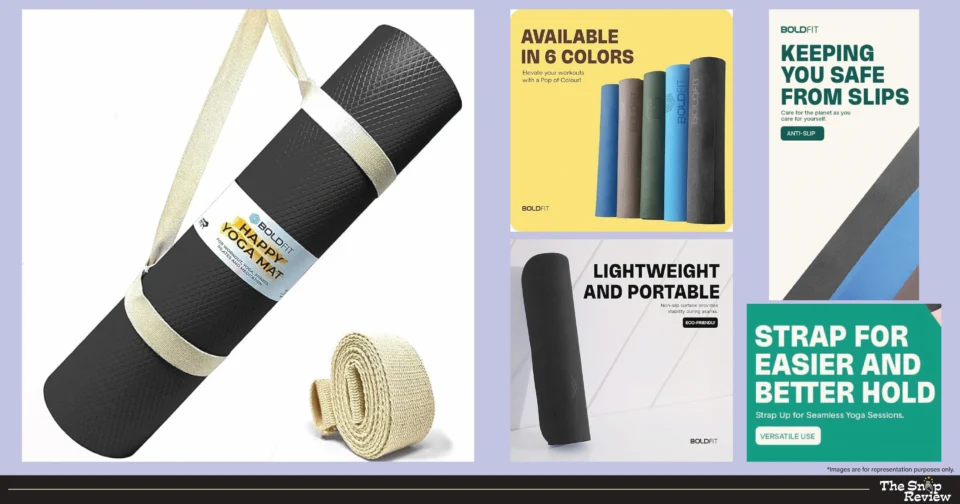
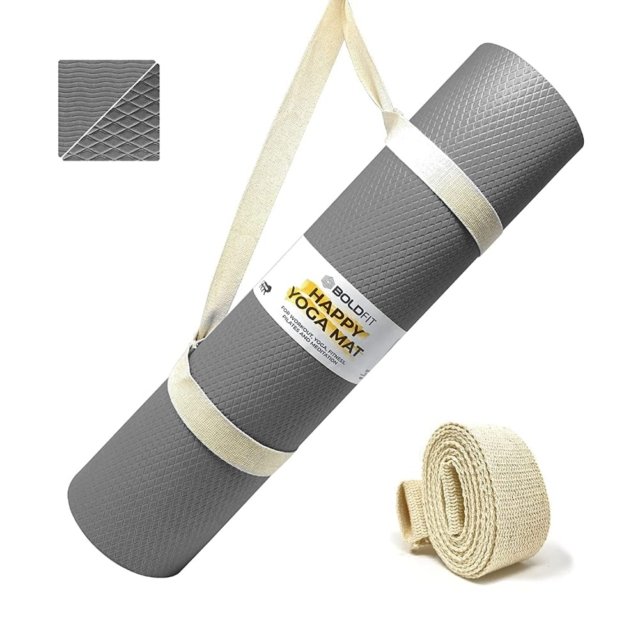
The Boldfit EVA mat focuses on simple things like keeping the basics strong, without the unnecessary show-off. Its 4.6mm thickness is the perfect balance. Soft enough for the knees when doing low lunges, yet firm enough not to lose balance in Tree Pose or Warrior III.
The EVA material of this mat is the biggest plus point. It does not slip when sweating like cheap PVC mats. It maintains grip even during Vinyasa flow. The surface doesn’t feel too rough or uncomfortable but provides a proper hold. This means you can hold the Plank Pose for 60 seconds, yet your hands don’t slide forward. Overall, it’s a simple, strong, and reliable mat that does everything a yoga mat should do.
The grip of Boldfit is genuinely very good, whether the mat is dry or slightly wet with sweat. This is not just a marketing ploy; it works in real life too. Whether it is normal yoga in an AC room or power yoga in Mumbai’s humidity, the mat does not slip. Hands remain stable in Downward Dog; grip remains intact during Chaturanga, and the transition between poses feels smooth.
The weight of the mat is also perfect; not too heavy, approximately 800–1000 grams. It rolls up easily, fits in a yoga bag, and does not feel bulky like gym equipment when taken to class.
What Could Be Better
The EVA material is strong and durable, but if the mat isn’t cleaned regularly, it can develop a slight odor. This smell isn’t overly strong, but becomes noticeable within the first few weeks, especially if you sweat a lot and don’t wipe down the mat after your workout.
The color options for this mat are a bit limited compared to premium brands. If looks and color matching (with yoga outfits) are very important to you, the choices may seem limited.
The thickness is 4–6 mm, which is fine for most people. But for people with more sensitive knees or wrists, or who already have joint pain, a little more cushioning may be better. In such cases, thicker options like the Amazon Basics NBR mat may be more comfortable.
Real Talk
This yoga mat is just like the Honda City – simple, reliable, and does its job well without being too show-offy. Perfect for those who practice yoga 3-4 times a week, or are shifting from studio to home practice. Be it Vinyasa, Hatha or normal stretching, this mat provides good support in all. Its grip is genuinely strong, so there is no tension of slipping during practice. And in the price range of Rs.299-600, it offers more value than mats that cost double the price. Overall, if you want a dependable, practical and value-for-money yoga mat, this is a safe and smart choice.
Boldfit EVA Yoga Mat Review
Price Range: Rs.299 – Rs.600
Thickness: 4-6mm
Material: EVA (Ethylene-Vinyl Acetate)
Best For: All-around yoga practice, hot yoga, home workouts
Disclaimer : We are a product review website providing honest opinions based on extensive research. Prices mentioned are approximate and may vary.
Fitness Mantra TPE Yoga Mat Review
Price Range: Rs.300 – Rs.800
Thickness: 6-8mm
Material: TPE (Thermoplastic Elastomer)
Best For: Beginners, portability, travel
What We Like
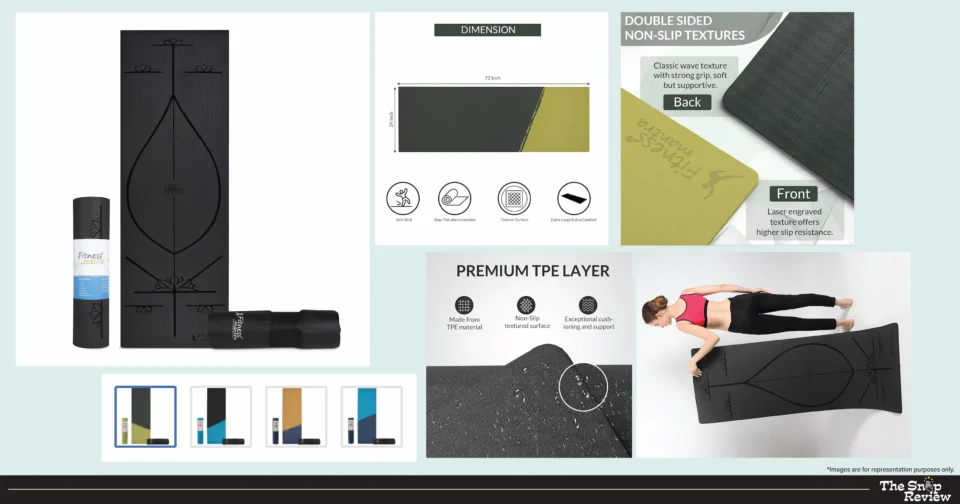
Fitness Mantra’s yoga mat is a great option for beginners. Its 6–8mm thickness is slightly softer than the Boldfit, which is helpful for wrists and knees, especially when you’re new to yoga. Joints are a little stressed in the first few weeks, so the extra cushioning makes practice more comfortable.
The TPE material of this mat is also a plus point. It’s eco-friendlier than PVC and doesn’t have the strong chemical odor that cheaper mats have. When you first unroll it, there’s no irritating factory-type smell. Overall, for the price, this is a smart and beginner-friendly choice.
This mat provides a perfect grip for beginners and intermediate level. Normal yoga poses are easily accomplished. Heavy sweating doesn’t offer as strong a grip as Boldfit, but it performs well for daily yoga. This mat is quite comfortable for gentle yoga, Hatha yoga, and medium-level Vinyasa flows.
The Fitness Mantra mat is very lightweight and folds/rolls easily. It also comes with a carrying strap, making it a convenient option for college students, travelers, or those who carry the mat daily. Overall, both use and carry are easy.
What Could Be Better
The comfort of a 6–8mm thickness is good, but you may experience slight instability during balance poses. Experienced yogis may find it less stable in standing poses compared to thinner mats. It’s basically a trade-off between cushioning and balance.
The grip is good overall, but not exceptional. During hot yoga or intense sessions, when there’s a lot of sweat, there may be slight slippage. It’s not risky, just a little noticeable after using more grippy mats.
Durability is decent, but not best for long-term heavy use. Some users have reported that the surface becomes a little smooth after 8–10 months of daily practice. If you practice yoga 2-3 times a week, this mat will last for quite some time. But daily users may need to replace it a little sooner.
Real Talk
Fitness Mantra is perfect for those who are just starting yoga and don’t want to invest a lot of money upfront. Even if you don’t continue with yoga later, it won’t feel like a waste of money. The performance of the mat is decent, so good that there shouldn’t be any problems while practicing. This isn’t a fancy or next-level mat, but it has everything you need for the basics. Overall, it’s a simple yet honest option to start your yoga journey without pressure.
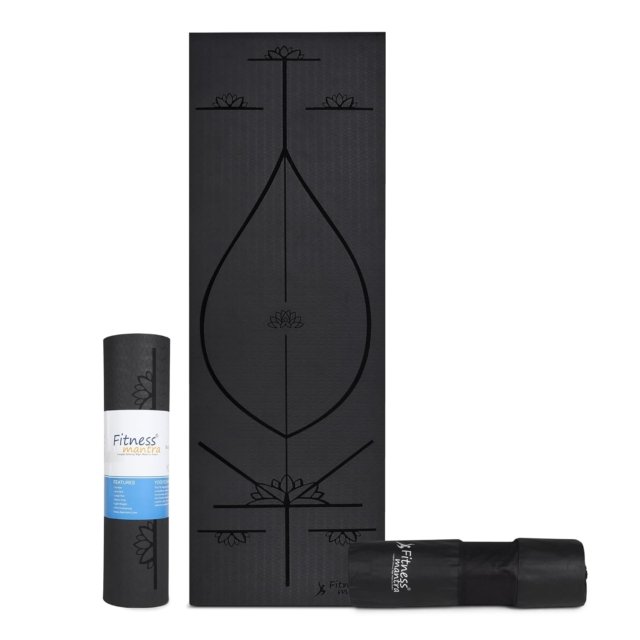
Fitness Mantra TPE Yoga Mat Review
Price Range: Rs.300 – Rs.800
Thickness: 6-8mm
Material: TPE (Thermoplastic Elastomer)
Best For: Beginners, portability, travel
Disclaimer : We are a product review website providing honest opinions based on extensive research. Prices mentioned are approximate and may vary.
Amazon Basics NBR Yoga Mat Review
Price Range: Rs.989
Thickness: 13mm
Material: NBR (Nitrile Butadiene Rubber)
Best For: Joint protection, Pilates, therapeutic yoga
What We Like
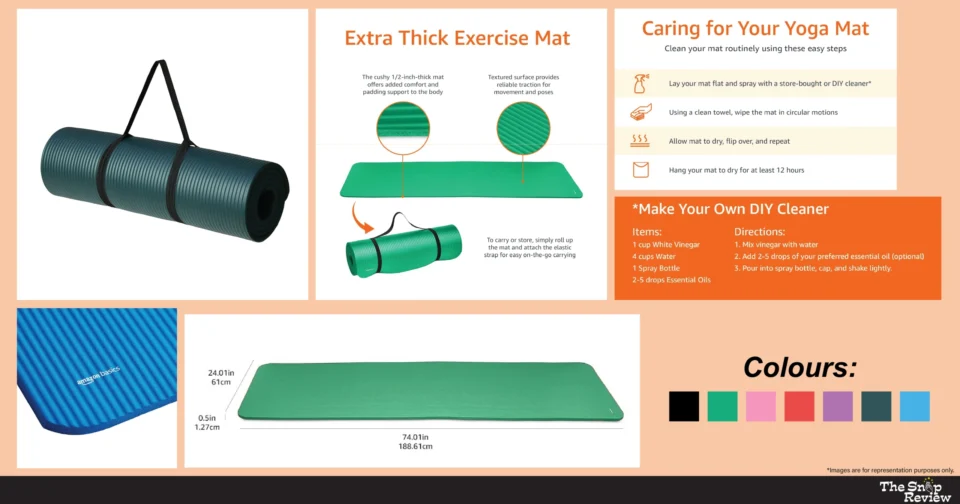
The Amazon Basics 13mm yoga mat isn’t just any ordinary mat; it’s specially designed for extra cushioning. If you have sensitive knees, painful wrists, or practice Pilates/gentle yoga, this thickness makes a huge difference. It’s so soft you can’t feel the floor at all, especially in kneeling poses.
Its NBR material provides strong cushioning that holds its shape even after compression. Knees feel secure in poses like Cat-Cow, low lunges are comfortable, and elbows don’t hurt in Forearm Plank.
Good grip is also great for daily slow yoga and Pilates. Not for heavy sweating fliers, but calm, controlled movements don’t cause slipping issues.
At Rs.989, this mat offers great value. Such joint-friendly mats usually go for Rs.2000–3000, but Amazon Basics offers the same comfort for almost half the price.
What Could Be Better
The 13mm thickness of cushion is comfortable, but it’s a bit challenging for balance poses. Maintaining balance in poses like Tree Pose, Half Moon, and Warrior III requires extra effort. This mat isn’t designed for a more balance-focused practice.
Grip issues arise as soon as you sweat. The NBR material doesn’t hold up well with sweat, so hands can slip during hot yoga or intense vinyasa. This mat is more suitable for dry, gentle yoga.
The mat is quite heavy. The 13mm thickness and dense NBR make it weigh approximately 1.5–2 kg. It’s fine for home use, but it’s not convenient to take to the studio every day.
Real Talk
The Amazon Basics NBR mat is best for those who need extra comfort, not hardcore performance. This mat isn’t a typical yoga mat that does everything right. It’s a special cushioning mat that does one thing really well: support and softness. Perfect for those with joint pain, those in injury recovery, those doing Pilates, or those who need a soft base for their knees and back. It’s also great for home practice, especially when comfort is a priority. In simple words: This mat is made for comfort, not grip.
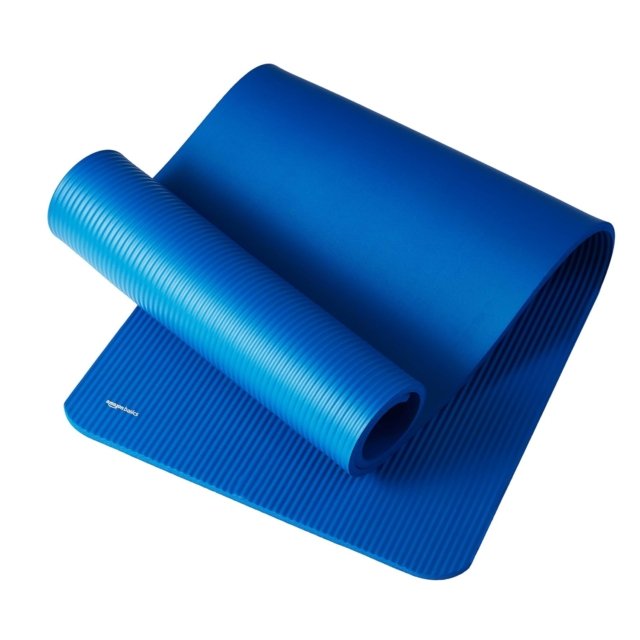
Amazon Basics NBR Yoga Mat Review
Price Range: Rs.989
Thickness: 13mm
Material: NBR (Nitrile Butadiene Rubber)
Best For: Joint protection, Pilates, therapeutic yoga
Disclaimer : We are a product review website providing honest opinions based on extensive research. Prices mentioned are approximate and may vary.
Lifelong Dual TPE Yoga Mat Review
Price Range: Rs.319 – Rs.600
Thickness: 6mm
Material: Dual-layer TPE
Best For: Eco-friendly practice, budget-conscious buyers, moderate use
What We Like
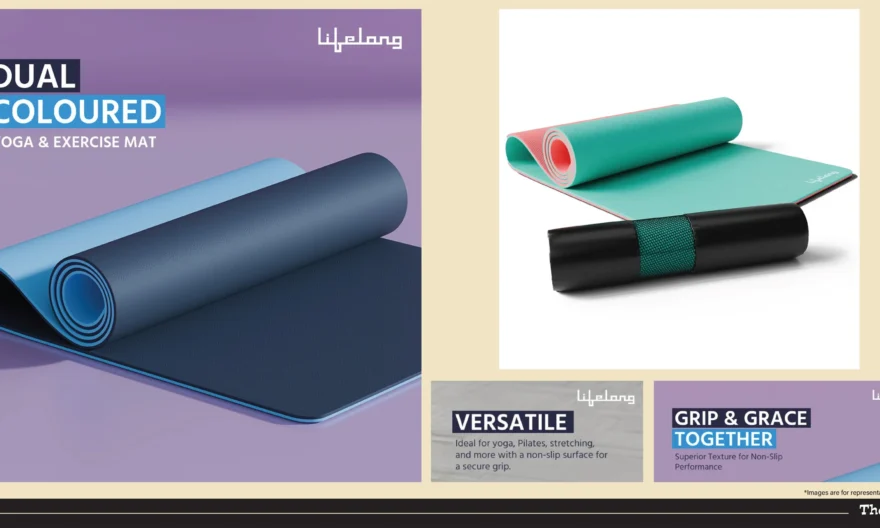
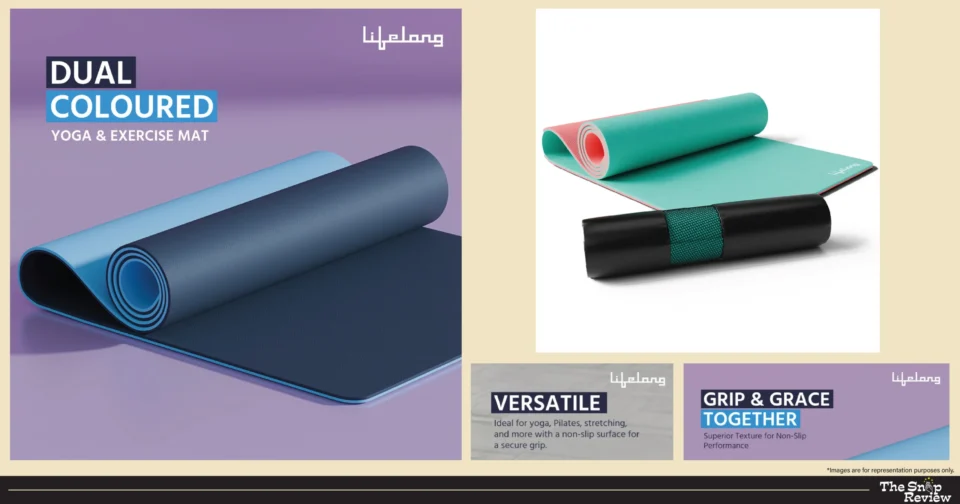
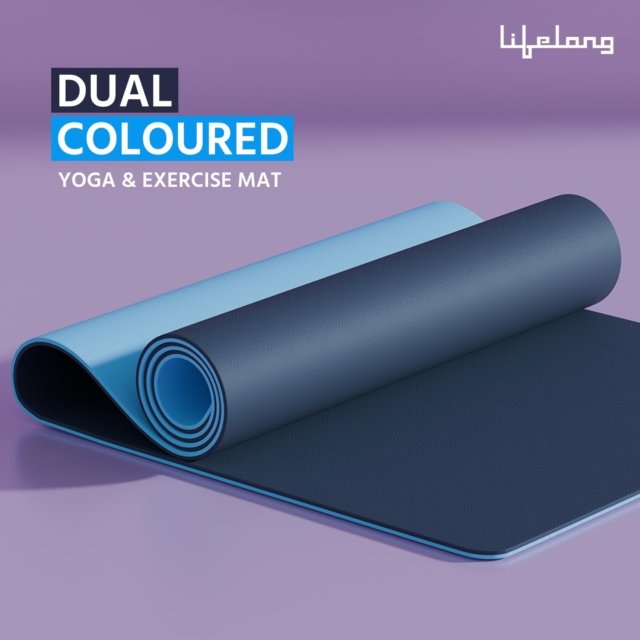
Lifelong’s dual-layer TPE mat is stronger and more durable than standard single-layer budget mats. Both layers are tightly bonded, so it doesn’t tear easily and doesn’t leave permanent lines when folded. Unlike cheaper mats that show damage over time, this one retains its shape for a long time.
If the environment is important to you, TPE material is a better option. It’s recyclable, biodegradable over time, and doesn’t use harmful chemicals (phthalates) like PVC mats. While not perfect, it’s quite eco-friendly compared to budget mats.
The grip is also quite reliable. Whether it’s dry yoga or practicing with a little sweat, the surface provides a good grip. Hands don’t slip in Downward Dog, and feet remain stable in standing poses.
In the price range of Rs.319–600, this mat is truly value for money. Dual-layer build, eco-friendly materials, and strong grip are all available at a budget price. Overall, the quality vs. price ratio is quite impressive.
What Could Be Better
6mm thickness is normal and is enough for most people, but if you have sensitive knees or your workout/yoga on hard floors, a little extra cushioning would be better. It is fine for daily use, but it is not special in terms of joint support. Color options and overall look are simple. Lifelong focuses more on functionality, not looks. If you want a premium feel or specific color matching, then options will be limited. Customer service and warranty support is decent, but not as strong as Amazon Basics. If any issue arises, it may take some time to resolve. The product itself is reliable, only the support side is average.
Real Talk
Lifelong is for those who care about the environment while practicing yoga, without compromising on quality even when budget is limited. Its dual-layer design and eco-friendly materials prove that budget yoga mats don’t necessarily mean cheap or disposable. Perfect for intermediate yogis, those starting a regular practice at home, and anyone who likes to support responsible brands while being affordable.
Lifelong Dual TPE Yoga Mat Review
Price Range: Rs.319 – Rs.600
Thickness: 6mm
Material: Dual-layer TPE
Best For: Eco-friendly practice, budget-conscious buyers, moderate use
Disclaimer : We are a product review website providing honest opinions based on extensive research. Prices mentioned are approximate and may vary.
WiseLife Alignment Yoga Mat Review
Price Range: Rs.1,245
Thickness: 6mm
Material: TPE
Best For: Posture correction, beginners, alignment-focused practice
What We Like
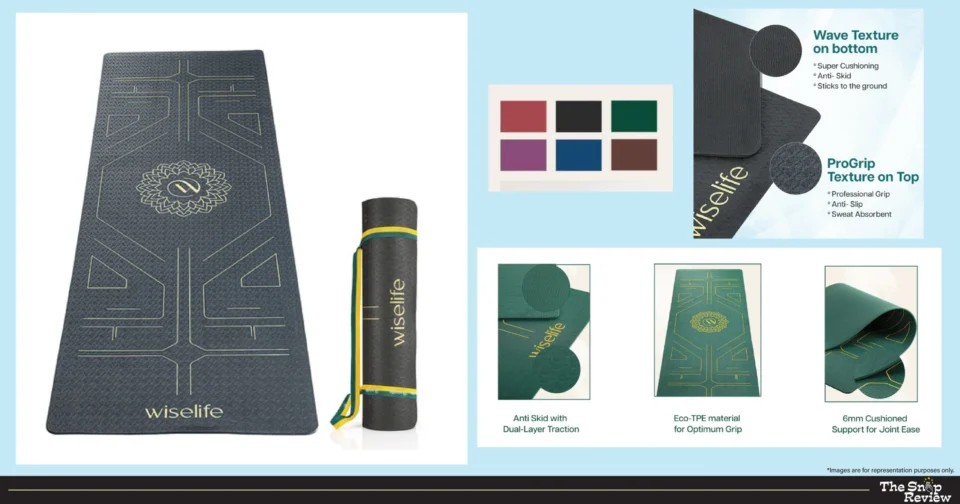
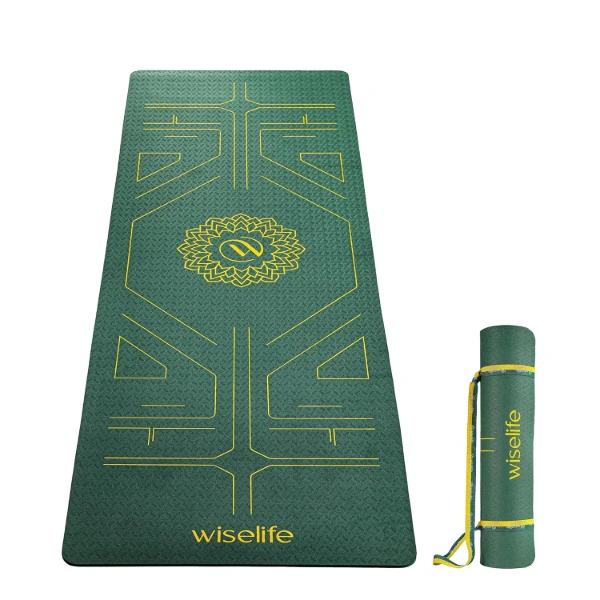
WiseLife’s alignment guide system is its biggest plus point. The mat has clearly printed lines and markers that show the correct hand and foot placement for common yoga poses. This is perfect for beginners as it makes learning alignment easier, and for experienced yogis, it helps refine their practice. In a pose like Warrior II, you can instantly understand whether your feet are in the correct position.
Speaking of grip, the mat performs well in both dry and sweaty conditions. The textured TPE surface prevents hands and feet from slipping, even if the flow is a little intense. Transitions feel smooth, inversions feel stable, and there’s no need to constantly readjust your hands.
It’s not just about lines; the overall design of the mat improves body awareness. Beginners are helped to understand poses correctly, and advanced yogis are able to notice small corrections to their posture. With time, alignment is naturally memorized, reducing dependence on guides.
With a 6mm thickness, this mat provides the perfect balance of cushioning and stability. Knees receive proper support, but stability for balance poses is not compromised. Overall, this mat is a practical and comfortable option for almost every yoga style.
What Could Be Better
Priced at Rs.1,245, this mat is 3–4 times more expensive than budget options. Essentially, you’re paying extra just for the alignment guide. If you already have a good sense of body posture or don’t need visual lines, paying such a premium isn’t justified.
The alignment lines are helpful initially, but over time, as positioning becomes a habit, they can become a bit distracting. More experienced yogis may even find these guides annoying after a few months.
Another limitation is that the mat is only available on Amazon in India. This means fewer options, and returns or exchanges can be a bit tricky. If you prefer to buy from a physical store or from a specific seller, your choices are restricted.
Real Talk
WiseLife is for those who take yoga seriously, where alignment matters in every pose. If you are a beginner and want to build good habits from day one, or are in injury recovery where attention to posture is crucial, then it is very helpful. Its alignment guides really speed up learning and you can feel both the tool and the teacher. Yes, the price is a bit premium because of this feature. And if you find visual guides a bit over the top or gimmicky, then Boldfit or Lifelong would be a more sensible option and you will also save money.
WiseLife Alignment Yoga Mat Review
Price Range: Rs.1,245
Thickness: 6mm
Material: TPE
Best For: Posture correction, beginners, alignment-focused practice
Disclaimer : We are a product review website providing honest opinions based on extensive research. Prices mentioned are approximate and may vary.
How to Choose the Right Yoga Mat for Your Practice
Consider Your Yoga Style and Experience Level
Gentle / Restorative Yoga: Comfort is paramount here. Poses are held for extended periods, so joints need good cushioning. A 13mm NBR mat from Amazon Basics or a 6–8mm mat from Fitness Mantra would be perfect for this. Soft support will be provided, and the body will remain relaxed.
Vinyasa Power Yoga: In this type of yoga, movements are fast and sweating is also high. So grip is crucial. Boldfit EVA or WiseLife Alignment mats do not slip even in sweaty flow. A slightly thinner mat is better for smooth balance and transitions.
Hot Yoga: The sweat level here is next level, so a strong wet grip is absolutely non-negotiable. The Boldfit EVA mat performs best in both high heat and sweat. NBR mats should be avoided here, as there is a risk of slipping.
Yin / Therapeutic Yoga: The poses are held on the floor for a long time. So maximum cushioning is required. The 13mm NBR mat from Amazon Basics provides good support to the joints and makes the practice comfortable.
Understanding Mat Specifications That Actually Matter
Thickness Trade-offs
- 4-6mm (Boldfit, WiseLife): Best balance of cushioning and stability, suitable for most practices
- 6-8mm (Fitness Mantra, Lifelong): Extra comfort for beginners, slight stability compromise
- 13mm (Amazon Basics): Maximum cushioning, sacrifices stability and portability
Material Matters –
EVA (Boldfit):
- Excellent grip wet or dry
- Durable, maintains texture
- Can develop odor if not cleaned
- Best for: Sweaty practices, hot yoga
TPE (Fitness Mantra, Lifelong, WiseLife):
- Eco-friendlier than PVC
- Good grip, pleasant initial smell
- Less durable than EVA long-term
- Best for: Eco-conscious practitioners, moderate use
NBR (Amazon Basics):
- Superior cushioning and density
- Poor wet grip
- Heavier, less portable
- Best for: Therapeutic practice, pilates, joint issues
Grip Rating Decoded
- Excellent (Boldfit, WiseLife): Handles intense sweating, suitable for hot yoga and power flows
- Very Good (Lifelong): Reliable for moderate sweating, most standard practices
- Good (Fitness Mantra, Amazon Basics): Adequate for dry or gentle practices, struggles when very wet
The Portability Factor Often Overlooked
For frequent studio-goers: (those who attend classes daily or several times a week), it’s best to get a lightweight mat like Boldfit, Fitness Mantra, or Lifelong. To be honest, carrying a mat weighing more than 2kg can be genuinely irritating.
For Home Practice Only: The weight doesn’t matter as much here because you don’t have to carry the mat around every day. In this case, a mat with extra cushioning, like Amazon Basics, is a good option, especially if the mat will stay in one place.
For travelers: This is where an ultra-portable mat is crucial. The Fitness Mantra or Boldfit rolls up easily, is compact, and fits into luggage without any extra hassle.
Common Mistakes to Avoid When Buying a Yoga Mat
1. Assuming Thicker Is Always Better
The misconception: More cushion means a better yoga mat.
Reality: A very thick mat creates instability in balance poses. For most people, 4–6 mm is ideal for both support and stability.
Who actually needs thick mats:
- Those with joint injuries or arthritis
- Those who practice Pilates
- Those who focus on therapeutic or gentle yoga
- Those who prioritize comfort over performance
For everyone else, a 4–6mm mat provides the best balance, comfort, and stability.
2. Ignoring Grip When You Don’t “Sweat Much”
Even a little sweat affects grip. What feels easy at the beginning of a gentle hand class can become quite sweaty by the 15th pose. Even if your hands don’t sweat much, they can still become moist enough to slip on a low-grip mat.
Try this test: Do 5 Sun Salutations on your current mat. If your hands slide even slightly in Downward Dog, grip is more important than you think.
3. Not Considering Mat Maintenance Requirements
Some materials demand regular cleaning:
- EVA mats (Boldfit): It’s important to wipe the mat after every sweaty session, or an odor can develop.
- TPE mats: Weekly cleaning is recommended, and these typically retain less odor.
- NBR mats: If only gentle use is used, once a month is sufficient.
4. Overlooking Eco-Friendliness Until It’s Too Late
Cheap PVC yoga mats end up in landfills after a short time, and then lie there for years without properly degrading. If the environment is important to you, investing a little extra and buying a mat made of TPE material is a better option, as it’s more eco-friendly.
Saving Rs.200 may seem tempting, but if you’re eco-conscious, that small saving is like harming nature and inflicting guilt on yourself. Choose something better—for your practice and for the planet.
5. Buying Based Solely on Amazon Reviews Without Context
“Great mat! 5 stars after just 1 week of use.”
But after 6 months, the reality is different:
Grip gradually wears out, the material becomes thinner, and seams start to come apart.
So always look carefully for reviews from 6+ months ago.
Recent reviews only reflect packaging and first impressions.
Only long-term reviews reveal the true quality, durability, and performance.
Overall Insights: Which Yoga Mat Should You Buy?
Here’s our straight recommendation based on different scenarios:
If you’re an intermediate or advanced yogi and practice regularly, the Boldfit EVA is a solid choice. It has excellent wet and dry grip, a balanced thickness, and is quite durable. The Rs.299–600 investment is totally worth it as it supports your practice, not fights it. It performs well with every yoga style.
If you’re just starting yoga and aren’t sure if you can continue, the Fitness Mantra TPE is a safe option. The extra cushioning helps a lot in the beginner phase when your body is a little sore. And even if yoga isn’t long-term, it’s not a big waste (Rs.300–800).
If you have joint pain, do Pilates, or want maximum cushioning, the Amazon Basics NBR is made for you. Yes, it’s a bit heavy and loses grip with sweat, but the 13mm thickness provides proper joint support that thinner mats can’t.
If you’re environmentally conscious and want to stay within your budget, the Lifelong Dual TPE is a good option. Eco-friendly materials offer decent quality without much compromise.
If you take yoga seriously and want to learn alignment and correct posture, the WiseLife Alignment Mat is very helpful. It’s a bit premium, but if you consider yoga a proper practice, not just a workout, it’s worth the investment.
Frequently Asked Questions
Q: How often should I replace my yoga mat?
Depends on usage intensity:
- Daily practice: 1-2 years for quality mats, 6-12 months for budget options
- 3-4 times weekly: 2-3 years for quality mats, 12-18 months for budget
- Occasional (1-2 times weekly): 3-5 years for quality mats, 2-3 years for budget
Replace when grip deteriorates noticeably or material shows significant wear, regardless of time elapsed.
Q: Can I practice hot yoga on any mat?
No. Hot yoga requires specific grip characteristics:
Suitable materials:
- EVA (Boldfit) – excellent wet grip
- High-quality TPE with textured surface (WiseLife)
Unsuitable materials:
- NBR (Amazon Basics) – becomes slippery when wet
- Basic TPE without texture – inadequate grip
- Cheap PVC – dangerous when sweating
For hot yoga specifically, prioritize wet grip over all other features. A slightly thinner mat with excellent wet grip beats a thick mat that slides.
Q: How do I know what thickness I need?
Simple test: Do 5 Sun Salutations on your current mat (or floor).
If you notice:
- Knee pain during low lunges → Need 6-8mm or thicker
- Instability during Warrior III → Need 4-6mm or thinner
- Comfortable throughout → Your current thickness works
Most yogis prefer 6mm, but depends on the individual’s joints.
Q: Are alignment guides on mats helpful or gimmicky?
Genuinely helpful for:
- Absolute beginners learning poses
- People with specific alignment issues
- Anyone recovering from injury requiring precise positioning
- Visual learners who benefit from reference points
Potentially gimmicky for:
- Experienced yogis who’ve internalized alignment
- People who find visual guides distracting
- Anyone practicing intuitive, flow-based yoga
If you’re unsure, start without alignment guides. You can always upgrade later if you realize you’d benefit from them.
Q: How important is eco-friendliness in yoga mat materials?
Depends on your values, but consider:
Environmental impact:
PVC mats: These mats spend years in landfills and use chemicals in their manufacturing, which can be harmful.TPE mats: These mats eventually degrade within 5-10 years and are relatively cleanly manufactured. Natural rubber mats: These degrade the fastest, but some people may develop a latex allergy.
Practical choice: TPE mats are a little more expensive, about Rs.100-300 more, but have similar performance and are better for the environment. For eco-conscious yogis, the extra money is worth it.
If budget is more important and environment is secondary, then PVC mats are also fine, just use them for a long time to get more value.
Disclosure: We are a product review website providing honest opinions based on extensive research and real-world usage analysis. Prices mentioned are approximate and may vary based on sales, offers, and location. We may earn a small commission if you purchase through our links, at no extra cost to you. This helps us keep our research independent and unbiased, allowing us to continue providing honest yoga mat reviews for Indian practitioners.