
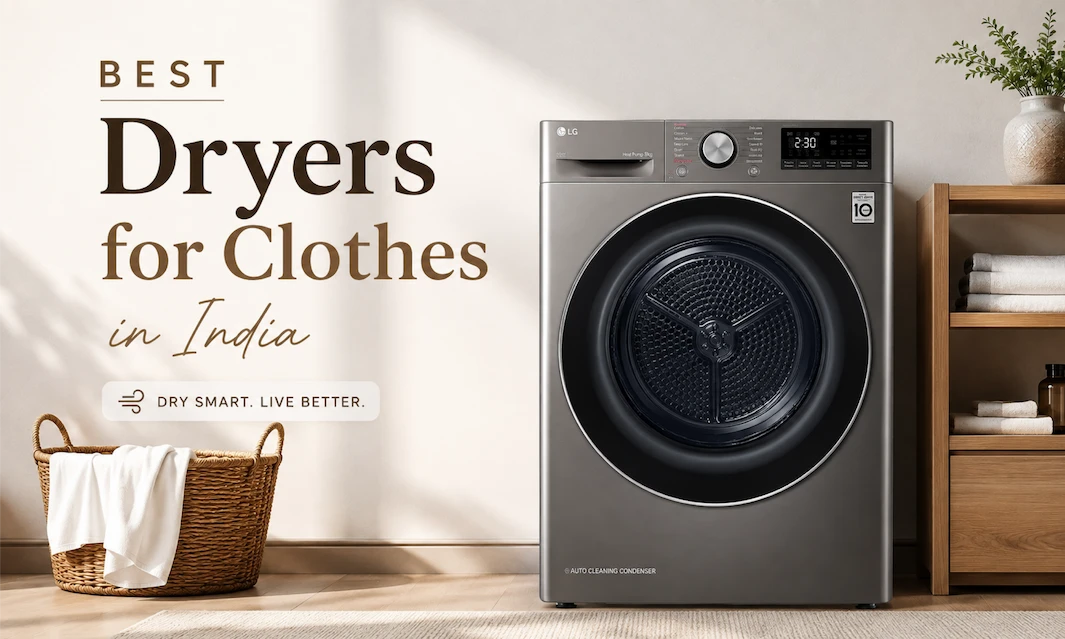
Best Clothes Dryers India 2026

The Laundry Revolution: From Clotheslines to Smart Dryers

For centuries, Indian households have relied on the sun’s natural heat to dry clothes. From the rooftops of grand mansions in Mumbai to the balconies of modest homes in residential colonies, the clothesline has been an essential feature of Indian living. However, the advent of automatic clothes dryers marks a significant step towards making laundry easier—a particularly useful innovation given India’s weather patterns, which are heavily influenced by the monsoon.

The first electric clothes dryer appeared in the 1950s, but heat-pump dryers revolutionized the technology by reducing energy consumption by up to 60%. Today’s dryers are not just about convenience; they also focus on energy efficiency, garment care, and addressing the challenges posed by humidity and pollution in India.

In 2026, India’s clothes dryer market is witnessing tremendous growth. Urban Indian families—balancing demanding careers, limited space, and the challenges of the monsoon—are realizing that a dryer is not a luxury item but a practical investment. It pays for itself by saving time and keeping clothes safe.

Our Comprehensive Research Process

We conducted extensive research across Amazon India, Flipkart, Croma, Vijay Sales and Reliance Digital — analysing over 1,500 verified customer reviews, comparing technical specifications, evaluating real-world performance under Indian conditions, and examining after-sales service records.

Best Clothes Dryers India 2026

Top 6 Picks at a Glance


Bosch WPG24108IN (9 kg)


Best For : Families and frequent laundry
Approx. Price : Rs. 51,990–Rs. 60,000
Buy From : Amazon India, Flipkart, Croma


Electrolux EDV754H3WB (7.5 kg)


Best For : Faster drying at lower price
Approx. Price : Price varies
Buy From : Amazon India, Flipkart


IFB Laundrimagic (8.5 kg)

Best For : Small apartments and limited space
Approx. Price : Rs. 45,000–Rs. 66,000
Buy From : Flipkart, Amazon India


LG DHV09SAB (9 kg)


Best For : Energy-conscious buyers
Approx. Price : Price varies
Buy From : Amazon India, Vijay Sales


LG FHD0905STB (9 kg wash/5 kg dry)


Best For : Homes without space for two machines
Approx. Price : Rs. 62,990
Buy From : Amazon India, Croma


Portable Electric Dryer Cabinet


Best For : Tenants and small homes
Approx. Price : Price varies
Buy From : Amazon India, Flipkart

Honest findings:

Bosch WPG24108IN (9 kg) – The Best Overall Standalone Dryer

Price: Rs. 51,990–Rs. 60,000
Type: Vented Dryer
Capacity: 9 kg
Drying Time: 45-60 minutes
Energy Rating: 2-star (typical for vented dryers)
Best For: Families and frequent laundry loads

Bosch WPG24108IN (9 kg)

What We Like –

This Bosch dryer is perfectly suited to the needs of a practical Indian family—it is easy to use, reliable, and built with German engineering designed for durability. Its 9kg capacity allows it to easily dry bulky items—such as bedsheets, comforters, towel sets, and heavy rain jackets—whereas lower-capacity dryers often struggle with such loads.

Its drying performance is truly excellent. The adjustable temperature setting means you can dry cotton clothes at high heat (perfect for India’s humid weather, where clothes tend to stay wet for a long time) and use lower heat for delicate fabrics. Its moisture sensor really works—it doesn’t just run for a fixed duration or leave clothes slightly damp; the dryer shuts off automatically once the clothes reach the right moisture level, helping you save on your monthly electricity bill.

It appears to be sturdily built. Its stainless steel drum is designed to withstand years of continuous use without rusting or deteriorating—a crucial feature for India’s humid coastal regions. It features a straightforward exhaust system that vents air outwards; this means that, unlike condenser dryers, it does not recirculate hot, humid air back into your home.

It is very easy to install. If you have a balcony or window through which hot air can be vented out, setting up this dryer requires minimal effort. In many Indian homes, standard exhaust ducting can be installed without any major modifications. It does not have a water collection tank that needs to be emptied repeatedly; the moisture is vented directly outside.

For families with a heavy laundry load—such as working couples with children or large households—a 9kg capacity is truly practical. You don’t need to wash clothes in small batches; instead, you can load everything at once and complete the entire washing and drying process in fewer cycles.

What Could Be Better –

Its 2-star energy rating is a major drawback. This dryer consumes more electricity compared to modern heat-pump models. You will clearly notice the impact on your monthly electricity bill, especially during the monsoon season when you use it frequently. If you run the dryer several times a week, this electricity consumption increases even further.

The sound of its operation is clearly audible; the motor’s noise can be heard when the machine is running. While it isn’t excessively loud, the noise level is sufficient to potentially disturb family members or neighbours in an apartment complex if the machine is used late in the evening or during quiet hours. Heat-pump dryers operate very quietly.

Compared to heat-pump options, this takes longer to dry. If someone is in a hurry or has a very tight laundry schedule, the 45–60 minutes required for each load can add up to a significant amount of time.

Real Talk –

This is a reliable dryer for Indian families who value dependability and ease of use over high-tech capabilities. It is perfect for households with regular laundry needs (2–3 times a week), families who do frequent washing due to children, or those who prioritize German engineering and long-lasting quality over the latest tech trends. At a price point of Rs. 51,990 – Rs. 60,000, you aren’t just buying specifications; you are investing in a reliable, long-lasting appliance backed by a brand trusted for quality in India. If your main concern is whether the dryer will last 10 years and effectively dry clothes in India’s humid climate, the Bosch WPG24108IN delivers exactly that promise.

Bosch WPG24108IN (9 kg) Cloths Dryer

Bosch WPG24108IN (9 kg) Cloths Dryer

Price: Rs. 51,990–Rs. 60,000
Type: Vented Dryer
Capacity: 9 kg
Drying Time: 45-60 minutes
Energy Rating: 2-star (typical for vented dryers)
Best For: Families and frequent laundry loads

Disclaimer : We are a product review website providing honest opinions based on extensive research. Prices mentioned are approximate and may vary.

LG DHV09SAB (9 kg) – The Best Premium Heat-Pump Dryer

Price: Price varies (typically Rs. 80,000–Rs. 1,10,000)
Type: Heat-Pump Dryer
Capacity: 9 kg
Drying Time: 60-90 minutes
Energy Rating: 5-star
Best For: Energy-conscious buyers and environmentally aware households

LG DHV09SAB (9 kg) Clothes Dryer

What We Like –

LG’s heat-pump dryer represents the future of drying technology in India. Its heat-pump mechanism is impressive—it recirculates warm air internally and removes moisture without wasting energy, unlike vented or conventional condenser dryers. This can significantly reduce your electricity bill, especially if you use the dryer regularly.

A 5-star energy rating is not just a marketing gimmick. Real-world usage in Indian households shows that heat-pump dryers consume 50–60% less electricity compared to vented dryers. Over five years, the savings are significant enough to recover a portion of the dryer’s higher initial cost. Just do the math: if you save Rs. 100–Rs. 150 on electricity each month, you would save Rs. 6,000–Rs. 9,000 over the course of a year.

Its noise level is very low. Traditional dryers have loud motors, but this one operates so quietly that you can run it even in the evening without disturbing anyone. Its compressor functions efficiently without producing any constant droning noise.

Hygiene features include bacterial filters and steam cycles that eliminate dust particles and allergens—an increasingly important factor for Indian households grappling with moisture-related issues like mould and allergies. For families suffering from respiratory problems or allergies, this offers a genuine health benefit.

With dual-temperature control, you can optimize the drying process based on the type of fabric. Use higher temperatures for towels and bedding, and lower temperatures for everyday wear—giving you complete control over the care of your clothes.

What Could Be Better –

Its price is significantly higher compared to standard dryers. While a Bosch vented dryer costs Rs. 50,000, spending Rs. 80,000 to Rs. 1,00,000 on this model represents a substantial initial investment. For budget-conscious families, this higher price point might not seem justified, despite the long-term savings on electricity.

It takes longer for clothes to dry with this type. Heat-pump dryers prioritize energy efficiency over speed. While a vented dryer takes 45–60 minutes to dry clothes, this type can take 60–90 minutes for a full load. If you need to dry clothes quickly, you will have to wait. This is an important consideration for those with busy schedules or large households.

The water collection tank needs to be emptied regularly. While this isn’t technically difficult, it adds another task to your laundry routine. If you forget to empty it, the tank fills up and the dryer stops mid-cycle. In India’s humid weather, the tank fills up quite quickly.

Cleaning the condenser is sometimes necessary. Although it requires less frequent cleaning compared to older models, you still need to clean the condenser filters to maintain optimal performance. Neglecting this maintenance can slightly reduce its efficiency.

If a malfunction occurs, the cost of repairing it is higher compared to standard dryers. Heat-pump components are more complex, and service centre charges reflect this complexity.

Real Talk –

This LG dryer is designed for environmentally conscious families who are willing to spend a bit more upfront to save money (and electricity) in the long run. It is an ideal choice for those who care about the environment, households where electricity costs significantly impact the monthly budget, or anyone looking for a dryer built to last well beyond eight years. Its energy-saving capabilities, gentle fabric care, and quiet operation make it a premium option that justifies the higher price point for the right buyer. Priced between Rs. 80,000 and Rs. 1,10,000, you are investing in technology that quietly reduces your carbon footprint and keeps electricity bills manageable during the monsoon season and beyond.

LG DHV09SAB (9 kg) Clothes Dryer

LG DHV09SAB (9 kg) Clothes Dryer

Price: Price varies (typically Rs. 80,000–Rs. 1,10,000)
Type: Heat-Pump Dryer
Capacity: 9 kg
Drying Time: 60-90 minutes
Energy Rating: 5-star
Best For: Energy-conscious buyers and environmentally aware households

Disclaimer : We are a product review website providing honest opinions based on extensive research. Prices mentioned are approximate and may vary.

Electrolux EDV754H3WB (7.5 kg) – The Best Budget Vented Dryer

Price: Price varies (typically Rs. 35,000–Rs. 50,000)
Type: Vented Dryer
Capacity: 7.5 kg
Drying Time: 40-55 minutes
Energy Rating: 2-star
Best For: Faster drying at a lower price point

Electrolux EDV754H3WB (7.5 kg) Clothes Dryer

What We Like –

This Electrolux dryer proves that you don’t need to spend Rs. 60,000 to get reliable drying performance. Priced between Rs. 35,000 and Rs. 50,000, this dryer is perfect for Indian families looking to dry their clothes quickly. Its drying speed is truly impressive. Its vented design ensures that hot air is expelled directly rather than being recycled, allowing clothes to dry faster. This speed saves a significant amount of time, especially during the monsoon season when clothes often need to be washed and dried frequently.

A 7.5 kg capacity is sufficient for most households. Although it is smaller than Bosch’s 9 kg model, it handles standard loads—such as everyday clothes, towels, and routine items—effectively. Paying a lower price for this slightly reduced capacity makes perfect sense.

Its build is sturdy, even if it doesn’t aim for a premium look. It features a rust-resistant stainless steel drum and easy-to-use controls, without any overly complex features that would require technical support. This simplicity means there is less likelihood of malfunctions.

Temperature options offer you convenience. With adjustable heat settings, you can dry a wide range of fabrics—from delicate items (low heat) to heavy towels and bedding (high heat). A moisture sensor ensures that clothes do not over-dry, thereby preserving their lifespan.

It is very easy to maintain. You don’t have to empty water tanks or deal with tedious tasks like frequently cleaning the condenser filter. Simply empty the lint trap, vent the exhaust outwards, and you’re all set. Users who want to avoid the hassle of complex appliance maintenance appreciate this simplicity.

It offers an excellent price-to-performance ratio. You get Electrolux’s trusted quality—a brand known in India for home appliances—at a price point that makes purchasing a dryer accessible even for middle-income families.

What Could Be Better –

A 7.5 kg capacity is quite limited. Families with a heavy laundry load or those who wash bulky items (such as comforters or bedding sets) may find themselves running the machine more frequently than they would prefer.

Energy consumption in vented dryers is moderate—while not excessive, it is not as efficient as heat pump models. This will impact your electricity bill, particularly during seasons when usage is high.

The drying time is decent, though not exceptional. While 40–55 minutes is a good duration, it isn’t significantly faster than other mid-range products. Heat-pump dryers take roughly the same amount of time but consume less electricity.

Due to the electronic controls, repair costs may be higher than those for basic models, though they will still remain lower compared to premium brands. You should plan your budget accordingly in case a malfunction occurs after the warranty expires.

Real Talk –

This Electrolux dryer is an excellent choice for anyone looking to buy a dryer in India. It proves that you don’t need to spend a fortune to get relief from the hassle of damp clothes during the monsoon season. It is perfect for families on a budget who want to dry clothes quickly without the high cost of heat-pump technology; for households with moderate laundry needs; or for those who aren’t entirely sure if they need a dryer and want to try one out at an affordable price. Priced between Rs. 35,000 and Rs. 50,000, it offers a simple, cost-effective, and reliable way to dry clothes—without any unnecessary frills or exaggerated claims.

Electrolux EDV754H3WB (7.5 kg) Clothes Dryer

Electrolux EDV754H3WB (7.5 kg) Clothes Dryer

Price: Price varies (typically Rs. 35,000–Rs. 50,000)
Type: Vented Dryer
Capacity: 7.5 kg
Drying Time: 40-55 minutes
Energy Rating: 2-star
Best For: Faster drying at a lower price point

Disclaimer : We are a product review website providing honest opinions based on extensive research. Prices mentioned are approximate and may vary.

LG FHD0905STB (9 kg wash / 5 kg dry) – The Best Washer-Dryer Combo

Price: Around Rs. 62,990
Type: Washer-Dryer Combination
Wash Capacity: 9 kg
Dry Capacity: 5 kg
Drying Time: Varies by load
Best For: Homes without space for two separate machines

LG FHD0905STB (9 kg wash 5 kg dry) Washer Dryer

What We Like –

If you have limited space at home—such as in a small apartment, a compact bathroom, or a shared living area—this combo unit eliminates the dilemma of choosing between a washer and a dryer. It offers the convenience of performing both functions in a single machine.

Its convenience is undeniable. Simply load your clothes, select the wash-and-dry cycle, and a few hours later, your clothes will be clean and dry. For busy working professionals, this all-in-one approach is a real time-saver; there is no need to transfer wet clothes from one machine to another or manage separate drying cycles.

It comes with built-in water and electricity-saving features. Instead of running separate appliances at different times, this combo optimizes consumption; you only use the standby power of a single machine rather than two.

It incorporates excellent technology. Smart features like modern controls, sensor-based cycles, and a delay-start function allow you to manage your laundry more efficiently according to your schedule. Its inverter motor is energy-efficient and operates quietly.

Its price has also been set sensibly. At Rs. 62,990, it costs roughly the same as a mid-range washer and a budget dryer purchased separately—but here, you get both functions in a single machine, which saves space and offers greater convenience.

What Could Be Better –

The real issue lies in the difference between washing and drying capacities. You can wash 9 kg of clothes, but you can dry only 5 kg at a time. For large families, this means having to wash or dry clothes in separate batches, which diminishes the convenience factor.

Its drying speed is slower compared to dryers designed specifically for drying. As it is a condenser dryer integrated into the washer, it prioritizes space-saving over speed. For a heavy load, the full drying cycle can exceed two hours—which takes longer than standalone dryers.

The process requires washing first, followed by drying. You cannot start a second wash cycle while the first load is still drying; everything happens sequentially. This can slow down the laundry process in large families where multiple loads need to be washed.

Repairing these units is more difficult compared to standalone appliances. A malfunction in either the washing or drying function can affect the entire machine. You need to rely on a service technician specifically trained for combo units, rather than one who only repairs standard washing machines.

The drum’s design compromises performance in both functions to some extent. Had the drum been specifically engineered for either washing or drying alone, it would have performed far better than it does in this hybrid setup. Instead of achieving excellent results in a single task, you are settling for average performance across both.

This combo machine tends to struggle under heavy usage. Families that wash clothes more than ten times a week might feel the machine is being overburdened; appliances designed for specific tasks are better equipped to handle such high-frequency use.

Real Talk –

This LG combo is perfect for apartment dwellers in India’s major cities, where space is at a premium and convenience is key. It is an excellent choice for young professionals, small families, or anyone who would otherwise have to choose between a standalone washer and a dryer. The price of Rs. 62,990 is justified, given that you get the functionality of two appliances in a single machine. If your household does laundry 3–4 times a week and space is truly limited, this combo eliminates the dilemma of choice and offers effective drying without compromising on fabric quality.

LG FHD0905STB (9 kg wash 5 kg dry) Washer Dryer

LG FHD0905STB (9 kg wash 5 kg dry) Washer Dryer

Price: Around Rs. 62,990
Type: Washer-Dryer Combination
Wash Capacity: 9 kg
Dry Capacity: 5 kg
Drying Time: Varies by load
Best For: Homes without space for two separate machines

Disclaimer : We are a product review website providing honest opinions based on extensive research. Prices mentioned are approximate and may vary.

IFB Laundrimagic (8.5 kg) – Best Compact Dryer for Small Apartments

Price: Rs. 45,000–Rs. 66,000
Type: Fully Automatic Condenser Dryer
Capacity: 8.5 kg
Drying Time: 50-70 minutes
Best For: Small apartments and limited space

IFB Laundrimagic (8.5 kg) Washer Dryer

What We Like –

IFB has designed this dryer specifically for Indian homes where space is at a premium. Its compact size allows it to fit easily into apartments, small laundry areas, or shared bathrooms without requiring major modifications or a dedicated space.

It does not require an external exhaust vent—a highly practical feature for apartment dwellers. The condenser system converts humid air into water, which is then collected in a tank. This is particularly useful for apartments where building management does not permit external structural changes.

Its 8.5 kg capacity is impressive, yet the unit isn’t overly large or heavy. While it is slightly bigger than budget models, it is still suitable for smaller homes; you get substantial capacity without the bulky footprint of 10+ kg dryers.

Its drying performance is excellent. IFB has optimized its condenser technology to effectively handle India’s humidity levels. Clothes come out completely dry—not just slightly damp—which is a significant advantage during the monsoon season.

It takes good care of your clothes. The condenser method operates at lower temperatures compared to vented dryers, preventing damage caused by intense heat. Your clothes last longer, which helps offset the drying costs over time.

The water drainage options are also convenient. You can manually empty the collected water tank or, if your laundry area has a drain point, set up a continuous drainage system. This flexibility makes it suitable for various apartment layouts.

Its energy efficiency is decent—better than a vented dryer, though not quite at the level of a heat-pump model; still, it is good for a compact machine. It keeps monthly electricity bills reasonable without requiring a huge investment.

The controls are easy to understand. Selecting the temperature, using the timer, and utilizing the moisture-sensing feature is very simple. You don’t need a steep learning curve to operate it effectively.

What Could Be Better –

It takes a moderate to long time to dry clothes. A drying time of 50–70 minutes means the process takes longer compared to a vented dryer; this can be a drawback if you need to dry clothes quickly.

Periodic cleaning of the condenser is essential. Lint and minerals accumulate on the condenser coil, and if left unattended, this reduces efficiency. Regular maintenance is required to ensure optimal performance.

Its noise level is moderate; it is neither as quiet as a heat-pump dryer nor excessively noisy. You will hear the sound of it running, which is a factor to consider if the laundry area is located near a bedroom or living area.

This compact footprint could feel limiting if your laundry volume grows, or if you later want a larger capacity dryer.

Compared to major brands, spare parts and service centres for this unit may not be easily available in some Indian cities; availability can vary significantly depending on the region.

Real Talk –

This IFB dryer is designed specifically for those living in Indian apartments. It is ideal for young professionals, couples, or small families residing in metro cities, where space is at a premium and building regulations make structural modifications difficult. Priced between Rs. 45,000 and Rs. 66,000, it is a suitable choice for Indian families seeking the convenience of a dryer without occupying excessive space. If your main concern is, “I live in an apartment and want to dry my clothes properly during the monsoon without asking my landlord for permission to make structural changes,” then the IFB Laundrimagic is the perfect solution for you.

IFB Laundrimagic (8.5 kg) Washer Dryer

IFB Laundrimagic (8.5 kg) Washer Dryer

Price: Rs. 45,000–Rs. 66,000
Type: Fully Automatic Condenser Dryer
Capacity: 8.5 kg
Drying Time: 50-70 minutes
Best For: Small apartments and limited space

Disclaimer : We are a product review website providing honest opinions based on extensive research. Prices mentioned are approximate and may vary.

Portable Electric Dryer Cabinet – Best Budget Portable Option for Tenants

Price: Price varies
Type: Portable Electric Dryer
Capacity: 3-5 kg
Drying Time: 45-60 minutes per load
Best For: Tenants, small homes, and people skeptical about investing in permanent appliances

Portable Electric Dryer Cabinet

What We Like –

This portable dryer is incredibly useful for tenants. You don’t need to install a permanent appliance or make any structural changes to your rental home. Simply plug it in, use it, and take it with you if you move. You won’t face complaints from your landlord, nor will any money be deducted from your security deposit for modifications.

It is very compact and doesn’t take up much space; it can easily be stored in a closet, a corner, or a wheeled storage unit. For studio apartments or homes lacking a dedicated laundry area, this space-saving feature is a real advantage.

Setting it up is incredibly easy—simply plug it in and start using it. There is no need for installation, venting, or complex connections.

It consumes less electricity during each drying cycle. While it may not be as efficient as industrial or heavy-duty heat-pump dryers, this portable unit—designed to dry 3–5 kg of clothes—consumes a reasonable amount of electricity for small households.

It is easy to take this anywhere. If you travel, frequently change locations for work, or simply value flexibility, you can take this dryer along with you. Unlike fixed dryers—which weigh over 60 kg and require installation—a portable dryer can be easily moved from place to place.

It effectively dries smaller loads of laundry. For those who prefer doing laundry two or three times a week rather than washing large batches at once, a portable dryer offers the right capacity to meet their needs.

What Could Be Better –

Its capacity is indeed low. With a capacity of only 3–5 kg per cycle, large families might face difficulties; instead of washing a large batch of clothes at once, you have to run multiple small loads, which is time-consuming and less efficient.

It takes a long time to dry clothes. Even for a small load, it takes 45–60 minutes, meaning you have to wait longer relative to the amount of laundry being dried. Compared to dedicated full-capacity dryers, this process takes more time per cycle.

They are generally built to budget-grade standards. Portable dryers are not as robust as those from well-known brands like Bosch or LG. Typically, they have a lifespan of 3 to 5 years, after which a noticeable decline in performance occurs.

Their heating performance is average. These portable units do not generate heat as intensely as full-sized dryers. While they are suitable for drying delicate items, heavy towels and winter clothing take longer to dry and often do not dry completely.

They lack smart features. Portable dryers generally do not come with features like moisture sensors, temperature controls, or the ‘smart’ capabilities found in modern appliances; you usually have to manage the drying process manually.

They have a very plain appearance. Rather than looking like integrated appliances, portable dryers resemble simple boxes. If your home’s décor or aesthetic matters to you, these dryers may not look very appealing in terms of design.

Real Talk –

This portable dryer is for renters, travellers, or those who aren’t quite ready to commit to spending over Rs. 50,000 on a full-sized dryer. Its price point of Rs. 12,000–Rs. 25,000 makes it a reasonable option to try out. It isn’t perfect—it has limited capacity and doesn’t dry clothes very quickly—but it genuinely solves a real problem: “I need to dry small batches of clothes without buying a permanent appliance.” If you are considering buying a high-end dryer later but want to verify its utility first, start with a portable dryer and upgrade based on your actual experience.

Portable Electric Dryer Cabinet


Portable Electric Dryer Cabinet

Price: Price varies
Type: Portable Electric Dryer
Capacity: 3-5 kg
Drying Time: 45-60 minutes per load
Best For: Tenants, small homes, and people skeptical about investing in permanent appliances

Disclaimer : We are a product review website providing honest opinions based on extensive research. Prices mentioned are approximate and may vary.

How to Choose the Right Dryer for Your Needs

Choosing a clothes dryer isn’t just about picking the largest or most powerful model. The right choice depends on the size of your home, your laundry habits, available space, the climate, and your budget.

1. Consider Your Laundry Volume

Choose a capacity based on how much you actually machine-dry.

– 1–2 people: 5–6 kg

– 3–4 people: 7–8 kg

– 5+ people: 9–10 kg

– Frequent bedding or bulky loads: 9 kg or more

You don’t necessarily need the same capacity as your washing machine.

2. Choose the Right Dryer Type

Different drying technologies suit different needs:

Vented: Dries quickly and has a lower initial cost, but requires an external vent and generally consumes more electricity.

Condenser: Does not require an external vent and is suitable for apartments, but requires maintenance of the water tank and condenser.

Heat Pump: More energy-efficient and gentler on clothes, though generally slower and has a higher initial cost.

Washer-Dryer Combo: Saves space and performs two functions at once, but the drying capacity is often lower than the washing capacity.

3. Check Your Available Space

Measure the installation area before purchasing. Consider the dryer’s width, depth, and height, the space required to open the door, and whether you intend to stack it on top of a washing machine.

If you are considering a vented model, ensure that external venting facilities are available.

4. Consider Your Local Climate

Humidity levels can significantly impact the drying process. If you live in humid or monsoon-prone areas, features like moisture sensors and automatic drying cycles can help prevent clothes from remaining damp or becoming over-dried.

5. Look at Energy Efficiency

Do not evaluate a dryer solely based on its purchase price. If you use it frequently, electricity consumption can significantly impact its long-term cost.

For regular use, a more energy-efficient dryer might cost more upfront, but it can help reduce operating costs over time.

6. Think About Fabric Care

If you frequently dry delicate or expensive garments, look for dryers that offer specific cycles for different types of fabrics. Drying at lower temperatures can help minimize shrinkage, color fading, and heat-related damage.

7. Set a Realistic Budget

Focus not just on the purchase price but also on the total cost of ownership; when comparing dryers, take into account expenses related to electricity, installation, maintenance, and potential repairs.

Common Mistakes When Buying a Clothes Dryer in India

1. Not Checking Your Space & Ventilation
Measure your laundry area before buying, and check if the dryer requires external venting.

2. Choosing the Wrong Capacity
Don’t choose a dryer based solely on your washing machine. Select the capacity based on the actual volume of your laundry and the size of large garments or items.

3. Focusing Only on the Price
Buying a cheap dryer can lead to higher expenses later due to increased electricity consumption, maintenance, and repair costs. Therefore, consider the total cost of purchasing and using it.

4. Ignoring Your Climate
The humidity levels in your area matter. Look for features like moisture sensors and choose the right drying technology suited to your region.

5. Forgetting Maintenance Requirements
Check what kind of cleaning and maintenance the dryer requires. Regular care of the lint filter and condenser helps maintain the dryer’s performance and efficiency.

Frequently Asked Questions

1. Do I really need a clothes dryer in India?
– It depends on the weather and your lifestyle. Dryers are particularly useful for people living in humid or monsoon-prone regions, those in apartments with limited space, and anyone who needs to dry their clothes quickly.

2. Which type of clothes dryer is best?
– Vented dryers are faster and generally cheaper, whereas condenser and heat-pump dryers are better suited for homes that lack external venting facilities. Heat-pump models are more energy-efficient and also gentler on clothes.

3. How much electricity does a clothes dryer use?
– Electricity consumption varies based on the type, capacity, and usage of the dryer. Generally, heat-pump dryers consume less electricity compared to traditional vented models, making them more cost-effective for frequent use.

4. What dryer capacity should I choose?
– Instead of simply matching it to your washing machine, choose based on the typical load of clothes you dry. Small families might need a capacity of around 5–6 kg, whereas larger families—or those who frequently dry heavy items—could benefit from an 8–10 kg machine.

5. Do clothes dryers damage clothes?
– If used incorrectly, this can happen. Excessive heat and over-drying can cause delicate fabrics to shrink, fade, or get damaged. Using the right temperature and cycle for each garment can help keep your clothes safe.

Disclaimer: We (thesnapreview.com) are a product review website providing honest opinions based on extensive research and real-world usage analysis. Prices mentioned are approximate and may vary based on sales, offers, and location.