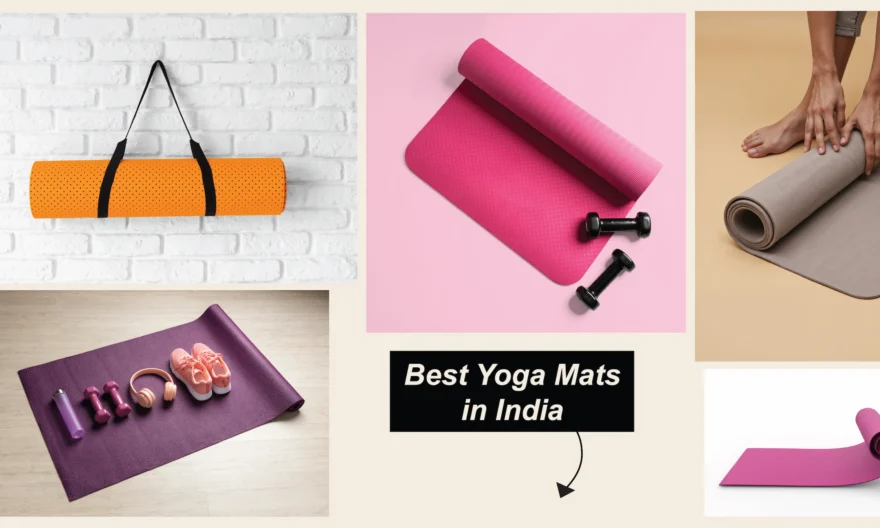
Best Yoga Mats in India
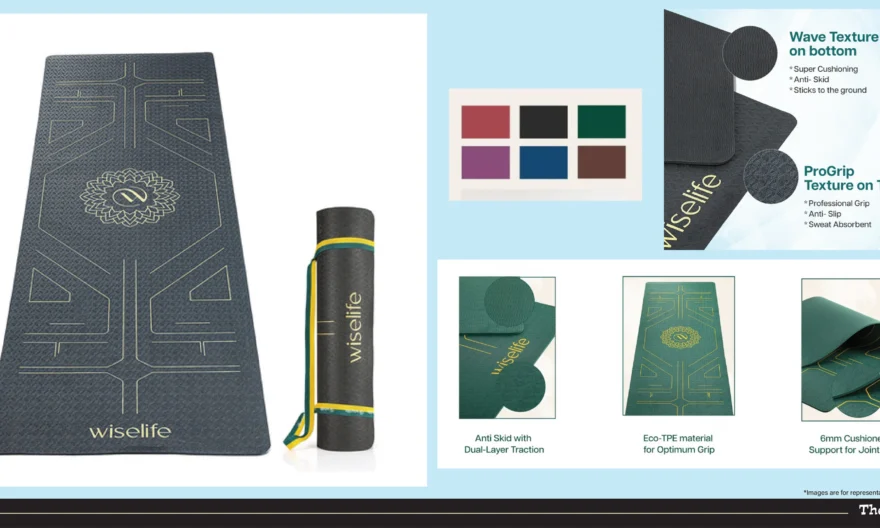
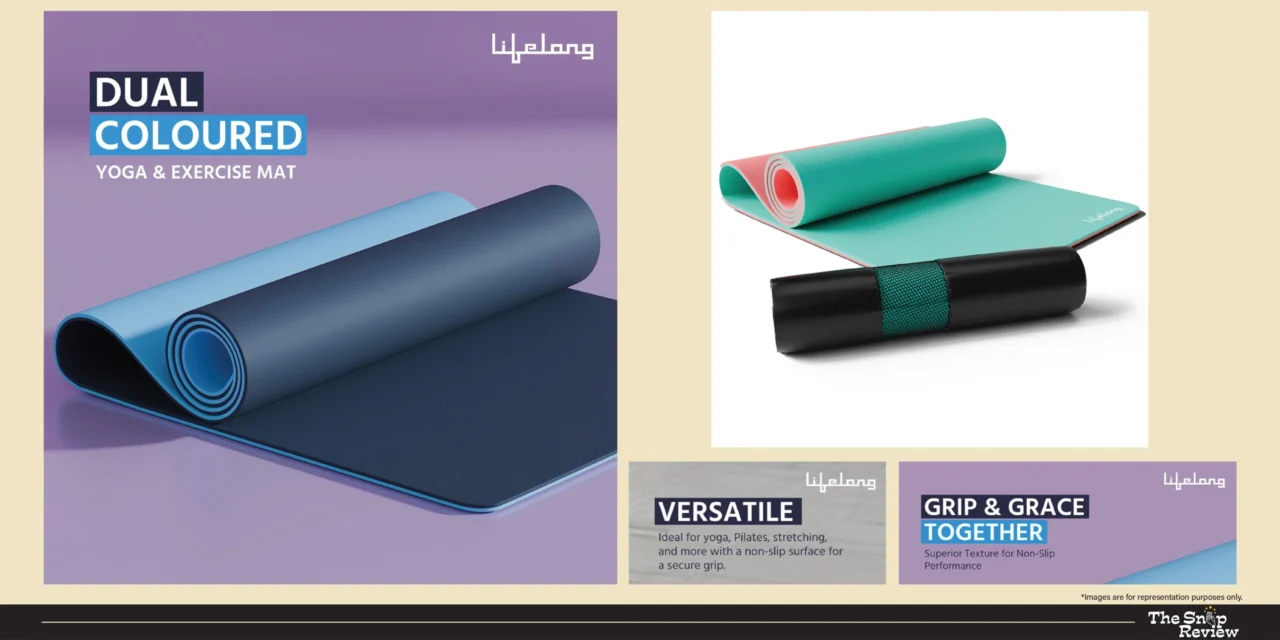
Lifelong Dual TPE Yoga Mat Review
Price Range: Rs.319 – Rs.600
Thickness: 6mm
Material: Dual-layer TPE
Best For: Eco-friendly practice, budget-conscious buyers, moderate use
What We Like
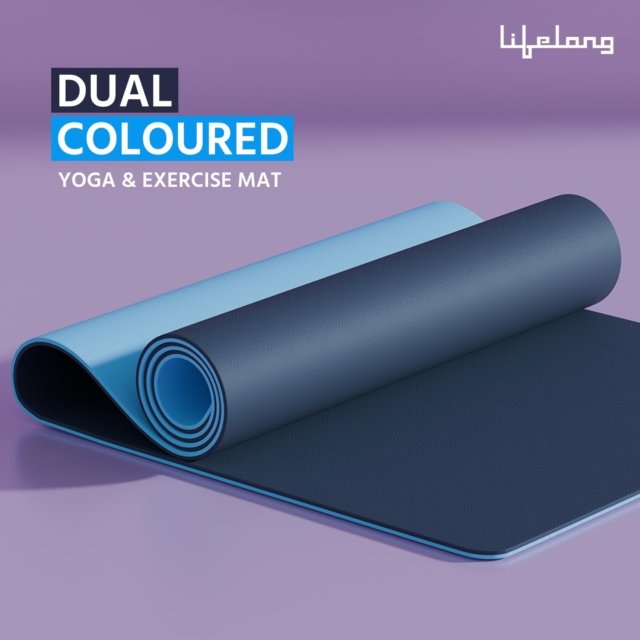
Lifelong’s dual-layer TPE mat is stronger and more durable than standard single-layer budget mats. Both layers are tightly bonded, so it doesn’t tear easily and doesn’t leave permanent lines when folded. Unlike cheaper mats that show damage over time, this one retains its shape for a long time.
If the environment is important to you, TPE material is a better option. It’s recyclable, biodegradable over time, and doesn’t use harmful chemicals (phthalates) like PVC mats. While not perfect, it’s quite eco-friendly compared to budget mats.
The grip is also quite reliable. Whether it’s dry yoga or practicing with a little sweat, the surface provides a good grip. Hands don’t slip in Downward Dog, and feet remain stable in standing poses.
In the price range of Rs.319–600, this mat is truly value for money. Dual-layer build, eco-friendly materials, and strong grip are all available at a budget price. Overall, the quality vs. price ratio is quite impressive.
What Could Be Better
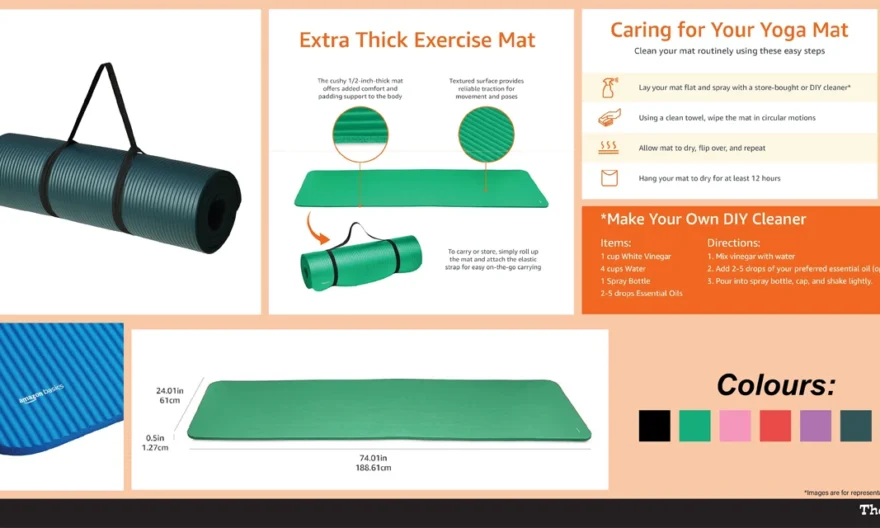
6mm thickness is normal and is enough for most people, but if you have sensitive knees or your workout/yoga on hard floors, a little extra cushioning would be better. It is fine for daily use, but it is not special in terms of joint support. Color options and overall look are simple. Lifelong focuses more on functionality, not looks. If you want a premium feel or specific color matching, then options will be limited. Customer service and warranty support is decent, but not as strong as Amazon Basics. If any issue arises, it may take some time to resolve. The product itself is reliable, only the support side is average.
Real Talk
Lifelong is for those who care about the environment while practicing yoga, without compromising on quality even when budget is limited. Its dual-layer design and eco-friendly materials prove that budget yoga mats don’t necessarily mean cheap or disposable. Perfect for intermediate yogis, those starting a regular practice at home, and anyone who likes to support responsible brands while being affordable.
Lifelong Dual TPE Yoga Mat Review
Price Range: Rs.319 – Rs.600
Thickness: 6mm
Material: Dual-layer TPE
Best For: Eco-friendly practice, budget-conscious buyers, moderate use
Disclaimer : We are a product review website providing honest opinions based on extensive research. Prices mentioned are approximate and may vary.
Common Mistakes to Avoid When Buying a Yoga Mat
1. Assuming Thicker Is Always Better
The misconception: More cushion means a better yoga mat.
Reality: A very thick mat creates instability in balance poses. For most people, 4–6 mm is ideal for both support and stability.
Who actually needs thick mats:
- Those with joint injuries or arthritis
- Those who practice Pilates
- Those who focus on therapeutic or gentle yoga
- Those who prioritize comfort over performance
For everyone else, a 4–6mm mat provides the best balance, comfort, and stability.
2. Ignoring Grip When You Don’t “Sweat Much”
Even a little sweat affects grip. What feels easy at the beginning of a gentle hand class can become quite sweaty by the 15th pose. Even if your hands don’t sweat much, they can still become moist enough to slip on a low-grip mat.
Try this test: Do 5 Sun Salutations on your current mat. If your hands slide even slightly in Downward Dog, grip is more important than you think.
3. Not Considering Mat Maintenance Requirements
Some materials demand regular cleaning:
- EVA mats (Boldfit): It’s important to wipe the mat after every sweaty session, or an odor can develop.
- TPE mats: Weekly cleaning is recommended, and these typically retain less odor.
- NBR mats: If only gentle use is used, once a month is sufficient.
4. Overlooking Eco-Friendliness Until It’s Too Late
Cheap PVC yoga mats end up in landfills after a short time, and then lie there for years without properly degrading. If the environment is important to you, investing a little extra and buying a mat made of TPE material is a better option, as it’s more eco-friendly.
Saving Rs.200 may seem tempting, but if you’re eco-conscious, that small saving is like harming nature and inflicting guilt on yourself. Choose something better—for your practice and for the planet.
5. Buying Based Solely on Amazon Reviews Without Context
“Great mat! 5 stars after just 1 week of use.”
But after 6 months, the reality is different:
Grip gradually wears out, the material becomes thinner, and seams start to come apart.
So always look carefully for reviews from 6+ months ago.
Recent reviews only reflect packaging and first impressions.
Only long-term reviews reveal the true quality, durability, and performance.
Frequently Asked Questions
Q: How often should I replace my yoga mat?
Depends on usage intensity:
- Daily practice: 1-2 years for quality mats, 6-12 months for budget options
- 3-4 times weekly: 2-3 years for quality mats, 12-18 months for budget
- Occasional (1-2 times weekly): 3-5 years for quality mats, 2-3 years for budget
Replace when grip deteriorates noticeably or material shows significant wear, regardless of time elapsed.
Q: How do I know what thickness I need?
Simple test: Do 5 Sun Salutations on your current mat (or floor).
If you notice:
- Knee pain during low lunges → Need 6-8mm or thicker
- Instability during Warrior III → Need 4-6mm or thinner
- Comfortable throughout → Your current thickness works
Most yogis prefer 6mm, but depends on the individual’s joints.
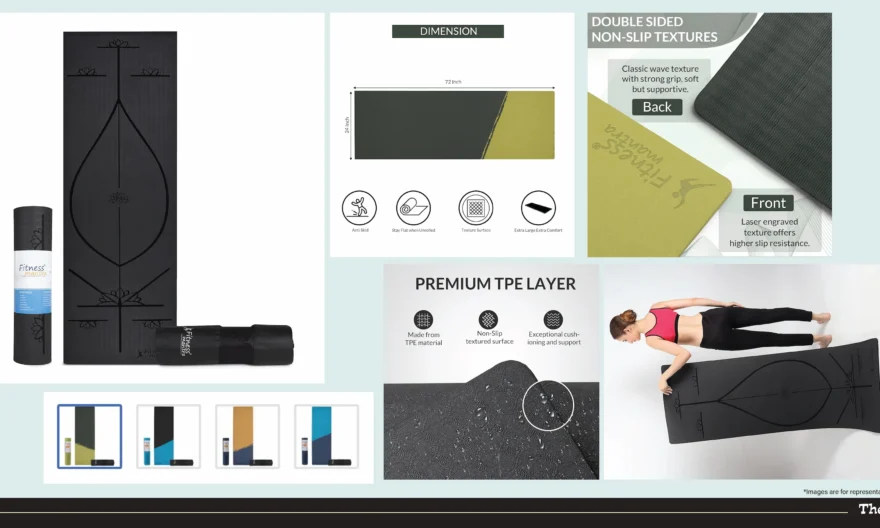
Q: Are alignment guides on mats helpful or gimmicky?
Genuinely helpful for:
- Absolute beginners learning poses
- People with specific alignment issues
- Anyone recovering from injury requiring precise positioning
- Visual learners who benefit from reference points
Potentially gimmicky for:
- Experienced yogis who’ve internalized alignment
- People who find visual guides distracting
- Anyone practicing intuitive, flow-based yoga
If you’re unsure, start without alignment guides. You can always upgrade later if you realize you’d benefit from them.
Q: How important is eco-friendliness in yoga mat materials?
Depends on your values, but consider:
Environmental impact:
PVC mats: These mats spend years in landfills and use chemicals in their manufacturing, which can be harmful.TPE mats: These mats eventually degrade within 5-10 years and are relatively cleanly manufactured. Natural rubber mats: These degrade the fastest, but some people may develop a latex allergy.
Practical choice: TPE mats are a little more expensive, about Rs.100-300 more, but have similar performance and are better for the environment. For eco-conscious yogis, the extra money is worth it.
If budget is more important and environment is secondary, then PVC mats are also fine, just use them for a long time to get more value.
Disclosure: We are a product review website providing honest opinions based on extensive research and real-world usage analysis. Prices mentioned are approximate and may vary based on sales, offers, and location. We may earn a small commission if you purchase through our links, at no extra cost to you. This helps us keep our research independent and unbiased, allowing us to continue providing honest yoga mat reviews for Indian practitioners.