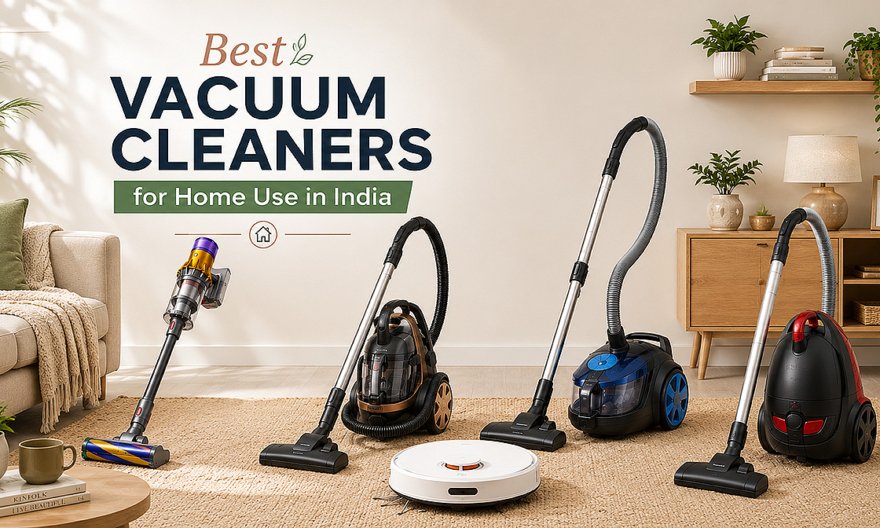
Best Vacuum Cleaners in India
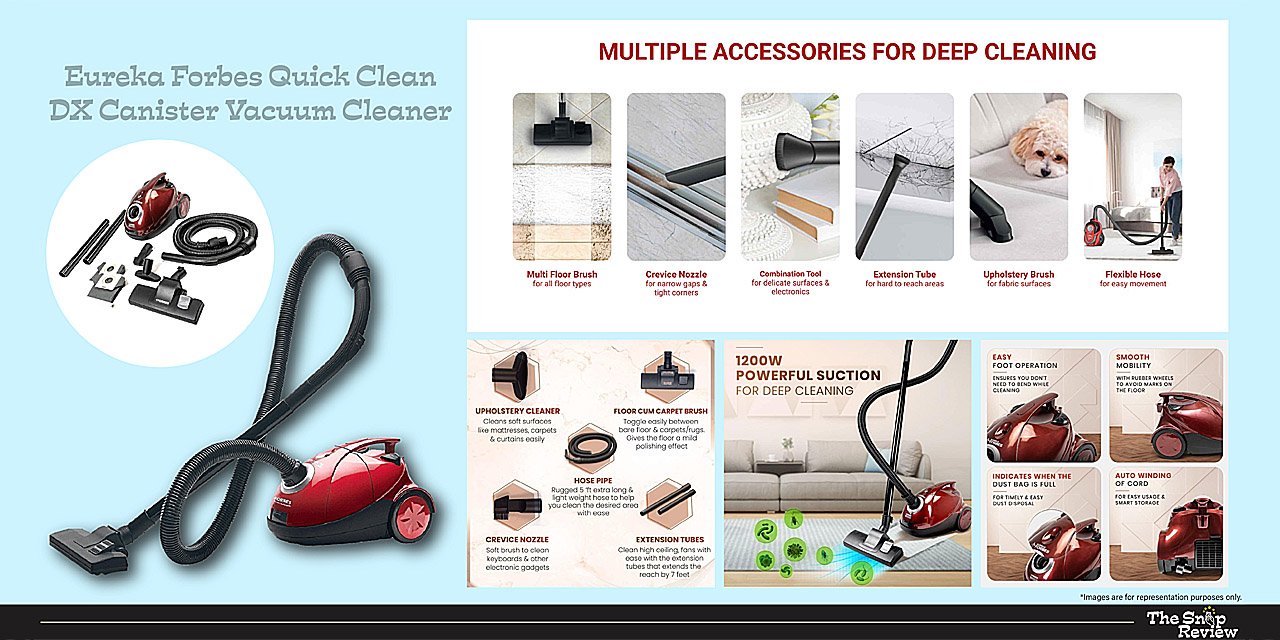
Eureka Forbes Quick Clean DX Vacuum Cleaner Review
Price Range: Rs.3,499 – Rs.4,499
Type: Bagged Canister Vacuum
Suction Power: 1200W
Weight: 3.6kg
Best For: Dust allergies, heavy dust conditions, and traditional home cleaning
What We Like
Eureka Forbes is a common name in Indian households, and the reason for that is the Quick Clean DX. Its 1200W motor provides consistently powerful suction to handle the dust found in Indian homes. We’re talking about the everyday cement dust, flour particles from the kitchen, and the dust that refuses to go away even with our best efforts.
The bagged system is actually very beneficial for people with allergies, contrary to modern marketing suggestions. When you remove the bag and dispose of it, the dust is completely sealed inside; a cloud of dust doesn’t fly into your face like with some bagless models. This feature is very important for people with severe dust allergies or asthma.
Dust Bag Full Indicator: A built-in dust bag full indicator alerts users when the bag needs emptying for timely and hygienic disposal.
The 3.6kg weight makes it very easy to move this vacuum cleaner around furniture. The 4-meter cord with auto-rewind means you can cover a medium-sized room without having to change the power outlet. Its attachments, including a floor brush, upholstery tool, and crevice nozzle, fulfil all fundamental cleaning needs.
Eureka Forbes’ service network are excellent in India. You can find authorized service, replacement bags, and filters even in Tier 1 and Tier 2 cities. The after-sales service aspect is often undervalued until you actually need it. Eureka Forbes service network is excellent across India. Even in tier-2 and tier-3 cities, you can get authorized service, replacement bags, and filters. This after-sales support is often undervalued until you need it.
What Could Be Better
Compared to modern cordless vacuum cleaners, the corded design of this model compromises its functionality. You have to plan your cleaning path according to the power outlets and the cord can sometimes get tangled in furniture legs.
Replacement bags cost between 150-200 rupees. If you clean every day or every other day, you might need around 12-15 bags a year, which adds 600-800 rupees to the operating cost. Budget-conscious individuals should keep this in mind.
The noise level is around 75-85 decibels. While not loud enough to disturb the neighbours, it can definitely overpower conversations and the sound of your TV, etc.
Although its plastic body is durable, it doesn’t feel premium considering the price. The focus is more on functionality rather than elegance. It’s purely a utilitarian tool.
Real Talk
This is for people who want reliable cleaning without any gimmicks. If you or any of your family members have a dust allergy, the dust control feature provided by the bagged system justifies the cost of changing the bags. Its blower function also eliminates the need for many people to hire specific cleaners for outdoor cleaning. We can consider this the Maruti Suzuki of vacuum cleaners – not exciting, but reliable and comes with good service.
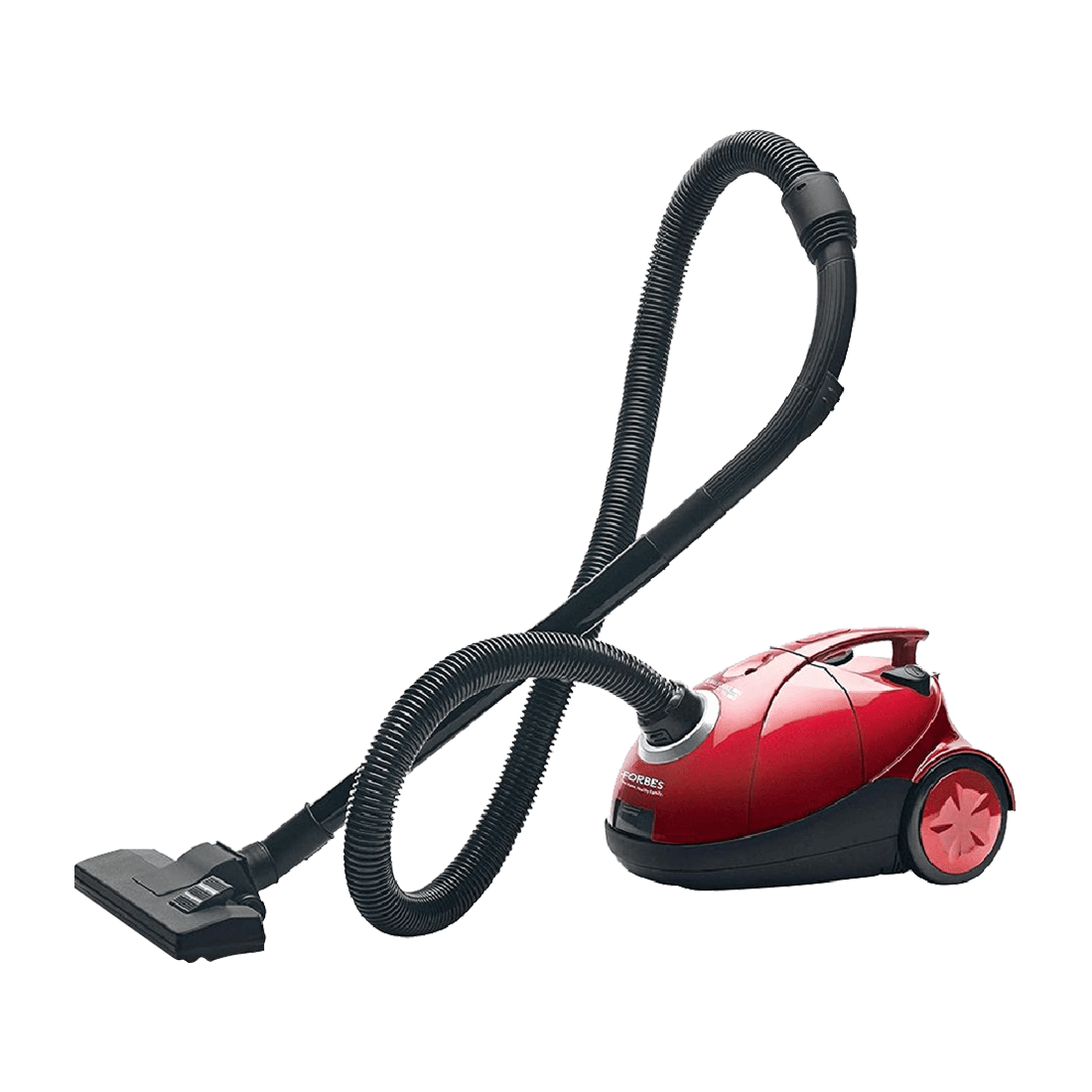
Eureka Forbes Quick Clean DX Vacuum Cleaner Review
Price Range: Rs.3,649 – Rs.4,499
Type: Bagged Canister Vacuum
Suction Power: 1200W
Weight: 3.6kg
Best For: Dust allergies, heavy dust conditions, and traditional home cleaning
Disclaimer : We are a product review website providing honest opinions based on extensive research. Prices mentioned are approximate and may vary.
How to Choose the Right Vacuum Cleaner for Your Needs
Corded vs Cordless – The Real Trade-offs
Cordless Advantages:
• No outlet hunting or cord management
• Easily grab-able for quick cleaning
• Excellent for stairs and car interiors
• Also storage-friendly with wall mount
Cordless Disadvantages:
• Limited operating time (approximately 30-60 minutes)
• Suction power decreases as the battery drains
• Battery typically wears out in 2-3 years
• Higher upfront cost for comparable suction
• Charging time may be required during use
In most Indian homes, a corded vacuum cleaner can be considered for primary cleaning, with a cordless one as an option for quick cleaning.
Bagged vs Bagless – Which is Better?
Bagged System
- • Pros: Good for serious allergies (complete dust control), higher effective capacity and low maintenance
- • Cons: Ongoing cost of bags (Rs. 600-1,000), bags may not be available in smaller cities, stocking up on bags is necessary.
- • Best for: People with allergies, those who vacuum infrequently (weekly or bi-weekly), and those who don’t like cleaning the dustbin.
Bagless System:
- • Pros: Zero external/extra costs, transparent container shows capacity, environment friendly
- • Cons: You are exposed to dust when emptying the dustbin (problem for allergic people), requires frequent washing, filters also need regular maintenance.
- • Best for: Daily vacuuming, budget-conscious users, and those who are comfortable with regular maintenance.
In the Indian dust situation, bagless systems require the dustbin and filter to be washed after every 2-3 uses to avoid odour and maintain suction. Keep this maintenance in mind when making your selection.
Suction Power – How Much Do You Really Need?
The vacuum cleaner industry uses confusing metrics – Watts, Air Watts, kPa, air flow in litres/minute. Below is a practical guide:
Budget Range (less than Rs. 10,000): 600-1000W motors or 20-30kPa suction adequately handles Indian dust on hard floors and thin carpets.
Medium Range (Rs. 10,000-30,000): 1000-1500W or 80-150 Air Watts provide noticeably better carpet cleaning and quick pick-up service.
Premium Range (Rs. 30,000+): 180+ Air Watts provide excellent cleaning for deep carpet cleaning, pet hair, and large homes.
Too much suction makes it difficult to push the vacuum cleaner on hard floors, and excessive suction can also damage delicate fabrics. Therefore, more is not always better. Adjustable suction control is better and more useful than simply having more suction power.
Key Features Worth Paying For
HEPA Filtration (Rs. 1,000-2,000 extra): This feature is definitely useful if you have a dust allergy, asthma, or if you live in a highly polluted city. It captures 99.97% of micro-particles. Regular filters allow fine dust to return to your room.
Motorized Brush Roll (Rs. 1,500-3,000 extra): This is important if you have carpets or rugs. Static suction alone cannot deeply clean carpets. The rotating brush agitates the fibers to loosen embedded dirt.
Automatic Cord Rewind (Rs. 500-1,000 extra): This is a convenience feature, but it’s really nice to have, especially after you’ve finished cleaning the house.
LED Headlights (Rs. 500-1,000 extra): These are extremely useful for detecting dust under furniture and in dark corners. It will be very beneficial if your house has multiple dark areas or if you clean early in the morning or in the evening.
Multiple Power Modes (Rs. 1,000-2,000 Extra): This saves battery in cordless models and electricity in corded models. Use eco mode for light cleaning and maximum power mode for deep cleaning.
Washable Filter (Included in most modern models): Saves money over time. Check the price and availability of replacement filters before buying.
Features You Can Probably Skip
Aroma Perfume Dispenser: Gimmick. If your vacuum cleaner smells bad, then properly clean the dustbin and filter. Don’t try to mask the smell with artificial perfume.
UV Sterilization (In robot vacuums): Minimal practical use for the extra money or extra cost involved. Regular vacuuming removes dust particles. UV sterilization adds more to the price than to the cleaning effectiveness.
App Connectivity (In regular vacuums): Useful in robot vacuums, but completely pointless in handheld/stick models. You are already holding the vacuum cleaner, so what’s the need for an app?
15+ Attachments: Most people regularly use only 3-4 attachments. Don’t pay extra for attachments that you won’t even use.
Common Mistakes to Avoid When Buying a Vacuum Cleaner
1. Buying Based Only on Suction Power Numbers
There is no guarantee that a 2000-watt motor will be better than a well-designed 1000-watt battery. Efficiency depends on the airflow design, brush design, and nozzle engineering. Read not only the spec sheet but also the reviews from actual users.
Many brands inflate the wattage numbers by measuring input power rather than actual suction. A 2000-watt motor might draw 2000 watts from your wall socket but actually deliver only 300 watts of suction power.
2. Ignoring Filter Maintenance Costs
The claim that “bagless vacuums save money” is only applicable or true when you maintain them properly.
Bagless vacuums require:
- Washing the filter after every 2-3 uses (Your time)
- Replacing the filter every 6-12 months (Rs. 500-3,000 per filter)
- Regularly washing the dustbin to avoid odors
Bagged systems require:
- New bags after every 4-6 uses (Rs. 50-70 each)
- Less frequent deep cleaning
- Consider not just the buying cost, but also the cost of ownership over 3 years.
3. Underestimating Indian Dust Volumes
If you are used to Western YouTube reviews, please note that noticeably more dust accumulates in Indian homes. Where in Europe you might empty the vacuum cleaner once a week, in Indian cities you might have to empty it every other day.
Decide the dustbin capacity based on practical usage:
- Small apartments: 0.5-1 Litres will be enough
- Medium houses: 1.5-2 litres is ideal
- Big houses: 2+ litres, otherwise there’s a risk of it getting full while cleaning.
4. Overlooking Noise Levels in Apartments
An 80-decibel vacuum cleaner might seem fine in a showroom, but it’s inconsiderate in apartments with shared walls. The noise level becomes important if you vacuum early in the morning or late in the evening.
Rough guide:
- Less than 70db: Quiet and considerate
- 70-75db: Medium and acceptable
- 75-80db: Loud, limit the usage time
- More than 80db: Very loud, use only during the day
For an accurate assessment, check user reviews regarding noise levels.
5. Not Testing Weight and Manoeuvrability in Store
A 6 kg vacuum cleaner might seem manageable in the showroom while it’s in a stationary state. But try actually moving it, lifting it over obstacles, or taking it to the upper floor. If it feels heavy in the shop itself, it will feel even worse after cleaning the entire house.
For older family members or anyone with back issues, weight is very important. Cordless stick vacuums (2-3 kg) are noticeably easier to handle than canister models (4-6 kg).
6. Forgetting About After-Sales Service
You’re not just buying a vacuum cleaner; you’re entering into a 5-10 year relationship with the brand’s service network.
Check:
- Are service centres available in your city?
- Are replacement parts shipped to your location?
- What is the cost of normal repairs?
- What is the warranty period (usually 1-2 years)?
Eureka Forbes and Philips have excellent service throughout India. Newer online-only brands may have limited local support. For expensive purchases, spending a little extra on established brands with readily available service is justified.
Frequently Asked Questions
Q: How much electricity do vacuum cleaners consume?
Corded models (600-1000W) consume approximately 0.6-1.0 units per hour. For regular Indian usage (2-3 hours a week), this amounts to 8-12 units per month, or Rs. 50-75 at a rate of Rs. 6 per unit. Cordless models consume significantly less power, but the charging cost needs to be factored in. Premium models with inverters are 20-30% more efficient.
Q: Can vacuum cleaners work during power cuts with inverters?
Yes, But check the inverter capacity of your corded vacuum cleaner. Most corded vacuums need a running power of 600-1000W. A standard 800VA-1000VA home inverter can handle a lot of power, but it can also drain your battery. Power cut-prone zones can often cause cordless models to change their electricity availability.
Q: Do vacuum cleaners work on Indian marble and tile floors?
Absolutely. Hard floors are easily vacuumed. Marble, granite, vitrified tiles, and ceramic tiles can be cleaned well with any decent vacuum cleaner. To prevent scratches on polished floors, make sure your vacuum cleaner has a hard floor setting and a soft brush roll. Al the 5 models we reviewed are excellent for Indian floors.
Q: How often should I vacuum my home?
This depends on your lifestyle and location. In dusty Indian homes, vacuuming daily or every other day is beneficial for dust management, especially in high-traffic areas like the kitchen entrance and living room. Bedrooms can be vacuumed 2-3 times a week. Deep cleaning the house once a week should be a common practise. Homes with pets or children require regular vacuuming. Robot vacuums perform excellently here by automatically handling daily cleaning.
Q: Can vacuum cleaners remove pet hair effectively?
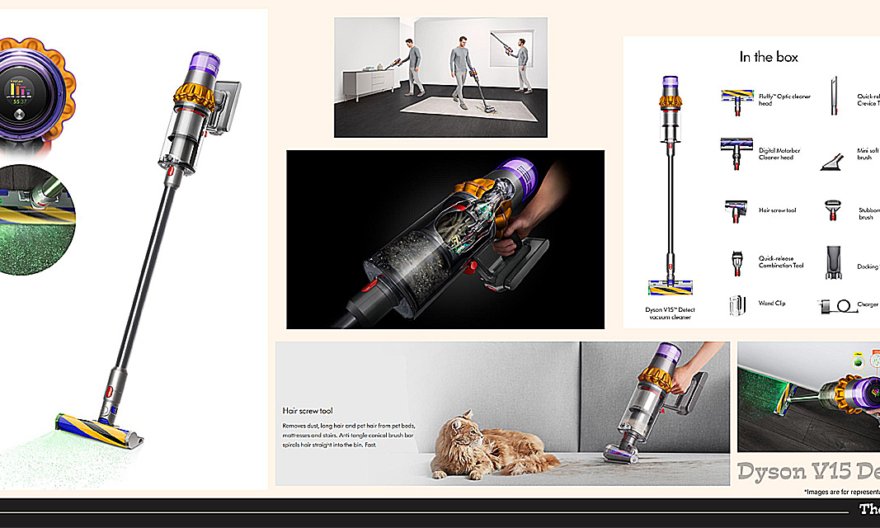
Yes, But you need the right type of vacuum cleaner. Pet hair gets embedded in carpet fibers and furniture fabrics, requiring agitation to remove it. The Dyson V15, with its specialized attachments, is excellent at dealing with pet hair. Budget models struggle with long pet hair, which gets tangled around the brush and often requires manual cleaning. For serious pet hair problems, invest in models costing Rs.15,000+ with strong suction and motorized tools.
Q: Can I wash carpets and rugs with vacuum cleaners?
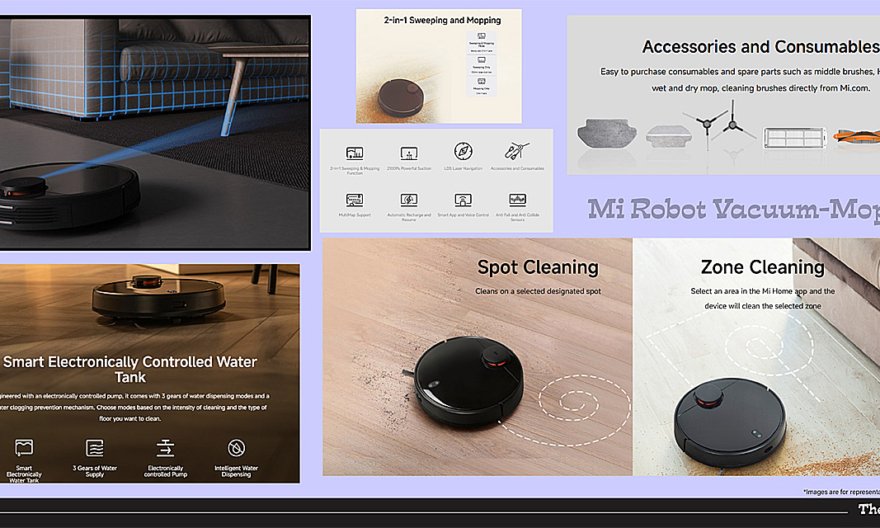
Vacuum cleaners remove dry dirt, dust, and debris from carpets. They cannot “wash” the carpet with water. For wet cleaning, you will need specialized carpet shampooers (a different appliance, costing Rs. 15,000+) or professional carpet cleaning services. The MI Robot can perform light mopping on hard floors but not carpet washing. Regular vacuuming extends the time between professional carpet cleanings from a few months to 6-12 months.
Q: Are robot vacuums worth it for Indian homes?
It’s good for daily maintenance but doesn’t completely replace manual vacuuming. It’s suitable for working couples and those who don’t like daily floor cleaning. It works great on plain hard surfaces but struggles with thick carpets, rugs, stairs, and cluttered spaces. Indian homes with many objects at floor level (shoes near the entrance, floor seating, toys scattered on the floor) will require decluttering before the robot vacuum can work effectively. If you can afford Rs. 28,000-32,000 and if most of your house has hard flooring, this convenience is truly life-changing.
Disclosure: We are a product review website providing honest opinions based on extensive research. Prices mentioned are approximate and may vary based on sales, offers, and location. We may earn a small commission if you purchase through our links, at no extra cost to you. This helps us keep our research independent and unbiased.