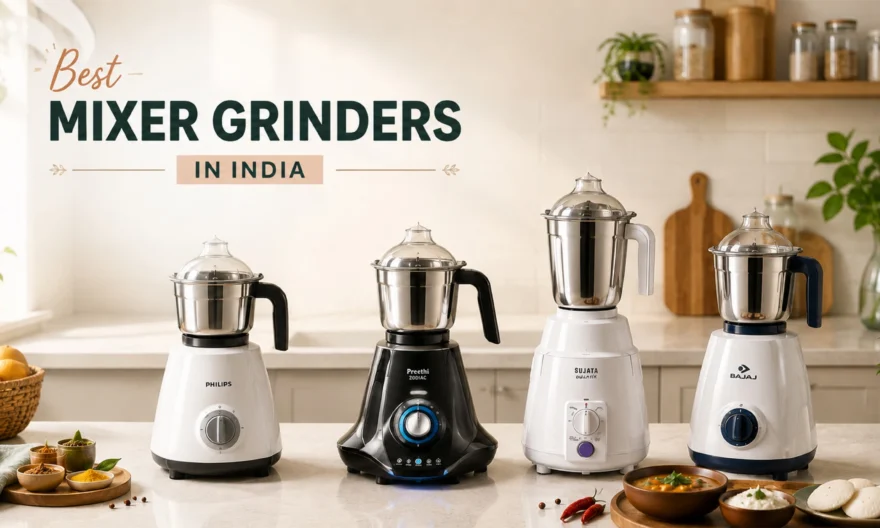
Best Mixer Grinders in India
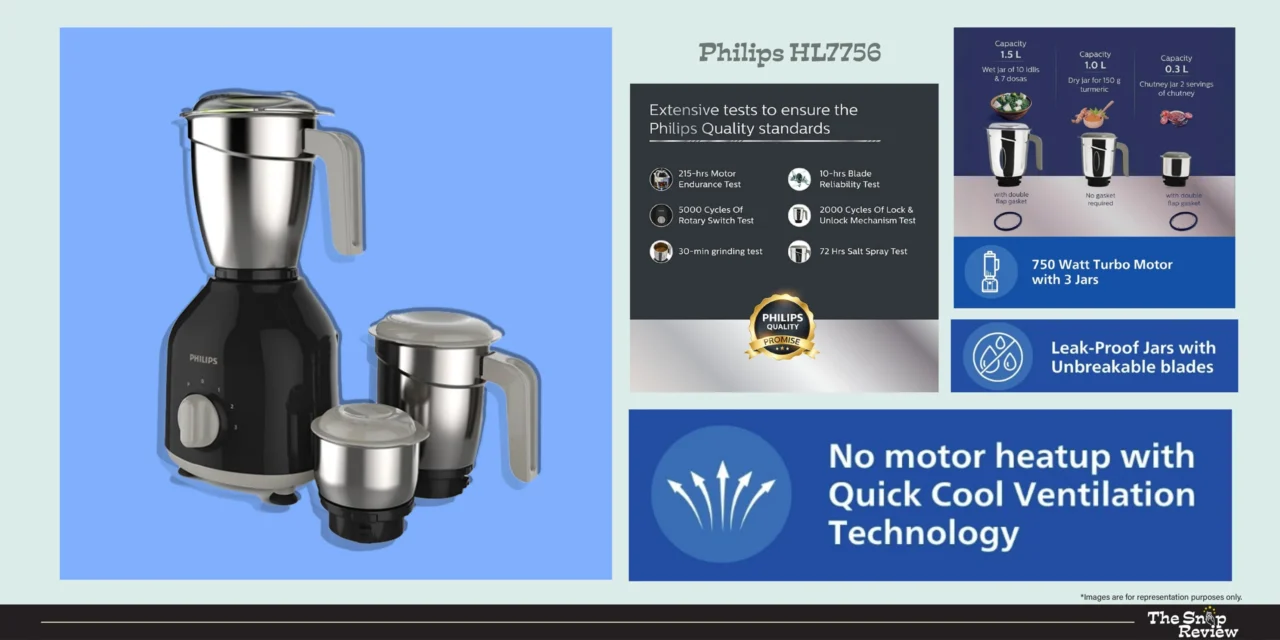
Philips HL7756 Mixer Grinder Review
Price Range: Rs.3,500 – Rs.4,500
Power: 750W
Jars: 3
Best For: Smooth batters, juices, and anyone who values quieter operation
What We Like
Philips has designed the Advanced Air Ventilation System very smartly. Unlike many other mixer grinders that get really hot when used for a long time, this system keeps the grinder cool. So even during long grinding sessions, like making dosa batter, it won’t overheat.
The batter grinding is really good. If you make idli or dosa batter often, you’ll see the difference it comes out smoothly and even. The jar and blades are designed in a way that grinds wet ingredients very well, giving you soft, fluffy idli and nice, crispy dosas.
The 750W motor delivers good power not too much, not too little. It’s perfect for daily grinding, like turmeric, coriander, cumin, and even tougher cheeses like dried coconut and whole spices. The motor also runs smoothly, without the annoying high-pitched sound that weaker models have.
It comes with three jars that cover almost all kitchen tasks: one for smoothies and milkshakes, one for wet grinding like batters and pastes, and one for chutneys. The jars are sturdy, the handles are strong, and the measurement markings are clear.
What Could Be Better
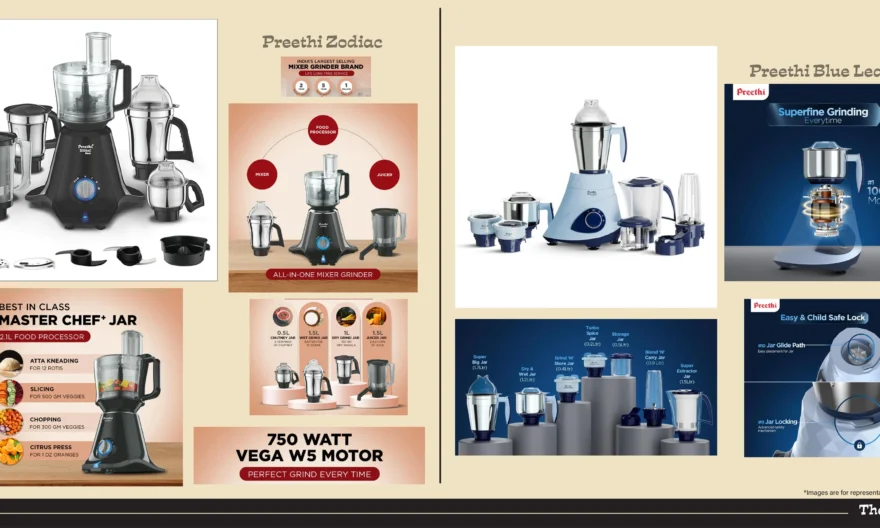
There are only 3 jars, compared to Preeti’s 5, so the options are a bit limited. If you grind both the dry masala and wet batter on the same day, you’ll need to wash more jars.
The 750W motor works well but sometimes struggles when grinding hard items like dry coconut or long, hard lentils. It gets the job done it just takes a little longer than stronger models.
The plastic quality is good, but it doesn’t feel as premium as Preethi. The jars are fine for work, but don’t feel very sturdy or heavy, so I don’t know if they’ll last long. Some people have reported that the jar lids crack after a few years.
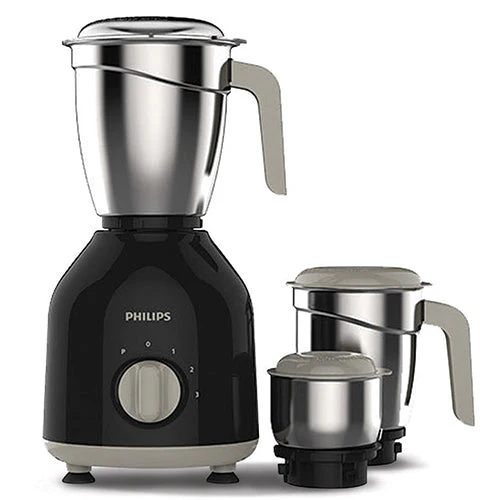
Philips HL7756 Mixer Grinder Review
Price Range: Rs.3,500 – Rs.4,500
Power: 750W
Jars: 3
Best For: Smooth batters, juices, and anyone who values quieter operation
Disclaimer : We are a product review website providing honest opinions based on extensive research. Prices mentioned are approximate and may vary.
How to Choose the Right Mixer Grinder for Your Kitchen?
– Motor Power: What Actually Matters
500–600W: Good for basic use. You can make smoothies, soft chutneys, and do light grinding. But it may struggle with hard spices or thick batters.
700–750W: This is the best choice for most Indian homes. It handles daily spice grinding, regular chutneys, and batter making smoothly without heating up too much.
900W and above: Designed for Commercial Use. You only need this if you often grind very hard ingredients or make large quantities quickly.
More power doesn’t always mean better performance. A well-designed 750W mixer can work better than a poorly made 1000W one. Things like blade quality, jar shape, and motor build matter just as much as wattage.
- Build Quality Indicators
Jar material: First, check the jar. It should feel thick and strong, not like cheap or flimsy plastic. A good quality jar won’t crack easily or change color.
Blade quality: The blades should be stainless steel, sharp, and properly fixed. Thin blades bend and dull quickly.
Coupler mechanism: Also check the coupler, the part that connects the jar to the motor. Cheap mixers tend to break easily, so they should be made of strong metal or reinforced plastic.
Motor casing: Finally feel the mixer’s base. It should feel heavy and sturdy; a plastic one will feel flimsy. Metal casing can handle heat and last longer.
– Speed Settings: How Many Do You Need?
Most mixers offer 2-3 speed settings plus a pulse/turbo function. Realistically:
Speed 1: For gentle mixing and liquids
Speed 2-3: For regular grinding of spices and batters
Pulse/Turbo: For hard ingredients and when you need short bursts of maximum power
Home use usually doesn’t require more than three speeds. What’s important is whether the speeds you get are sufficient for your daily use, or not. Simply having more options doesn’t matter.
Common Mistakes to Avoid When Buying a Mixer Grinder
1. Choosing Based Only on Power Rating
A 1000W motor fitted to a poorly designed 1000W mixer grinder will perform worse than a well-designed 750W model. For example,
The performance of a mixer grinder depends primarily on the motor, blades, jar, and build quality.
A DC motor is more efficient and consumes less power.
A good blade design ensures fast and smooth grinding.
Proper jar shape creates proper flow inside, resulting in even grinding.
And a strong build quality makes the machine long-lasting and reliable.
2. Not Checking Warranty Terms
Mixers typically come with a 2–5 year warranty on the motor and a 1–2 year warranty on parts.
But be sure to check the fine print whether motor damage from overloading is covered, whether jars and blades are covered by the warranty or consumables, and whether home service is available or the product must be shipped. Premium models tend to be a bit more expensive because they have better warranties and service.
3. Assuming All Jars Are Equally Useful
A five-jar mixer sounds nice, but think about what you’ll actually use it for.
If you don’t make juice, the juicer jar will simply sit unused.
I often use the jar for dry grinding as well.
And the chutney jar may be a little small for the family.Sometimes a system with three jars of the right size is better,instead of five jars, two of which are useless.
Frequently Asked Questions
Q: How much electricity do these mixer grinders consume?
Power consumption depends on how often and for how long you use it.
Approximate monthly cost (assuming 30 minutes of daily use and Rs.6 per unit)
- 500W model: 7.5 units monthly = Rs.45
- 750W model: 11.25 units monthly = Rs.67
- 900W model: 13.5 units monthly = Rs.81
The difference is minimal – Rs.20-35 monthly even between lowest and highest power models.
Q: Can I grind hot ingredients immediately after cooking?
- Never grind hot items. Let them cool the room temperature first.
- Hot ingredients: Plastic jars may crack (due to thermal shock).
- Rubber gaskets may melt.
- Excessive pressure may build up inside, posing a risk of the lid flying off.
- Motor bearings may be damaged.
- So, allow ingredients to cool completely before grinding.
Q: How often do blades need replacement?
With proper use:
- Budget models: 2-3 years
- Mid-range : 4-5 years
- Premium : 6-8 years or more
Blades are becoming blunt, as this becomes apparent when grinding takes longer or the results are coarse. Replacement blade assembly costs Rs.300–Rs.800 depending on the brand
Q: What’s the difference between mixer grinder and food processor?
Mixer grinders are designed for Indian cooking to grind spices, make chutneys and prepare batters. Food processors are better at slicing, shredding, kneading dough, and chopping vegetables. If grinding is your main task, a mixer grinder will be more effective and affordable. And if you need multiple food prep tasks, you can consider a food processor.
Disclosure: We are a product review website providing honest opinions based on extensive research. Prices mentioned are approximate and may vary based on sales, offers, and location. We may earn a small commission if you purchase through our links, at no extra cost to you. This helps us keep our research independent and unbiased.