
Best Laptops in India 2026
The past decade has seen tremendous change. Once upon a time, heavy-duty machines that created heat and drained batteries in as little as two hours were the norm. But now they’ve been replaced by efficient and powerful computers that are easy to backup, last a full day on a single charge, and handle everything from video editing to competitive gaming without a hitch.
The Indian laptop market is absolutely booming in 2026. Students, working professionals, gamers, and freelancers have different needs – and thankfully, the market has taken them into account. Now, you can find premium thin and lightweight ultrabooks, budget-friendly productivity machines, sturdy gaming rigs, and professional-grade creative workstations on Amazon India, Croma, Reliance Digital, and Vijay Sales – often at prices that would have seemed impossible just five years ago.
At The Snap Review, we’ve done extensive research. We’ve studied thousands of customer reviews, analysed the opinions of experts across the web, meticulously compared specifications, and specifically studied the real-world usage patterns of Indian users. Whether you’re buying your first laptop, upgrading an old one, or replacing your office equipment, this guide gives you everything you need without unnecessary information or bias.
Below are our picks for the best laptops for 2026, which have been rigorously reviewed for Indian buyers and are suitable for every budget and application.
Best Laptops in India 2026
Our Top Laptop Picks at a Glance
Find The Right Laptop
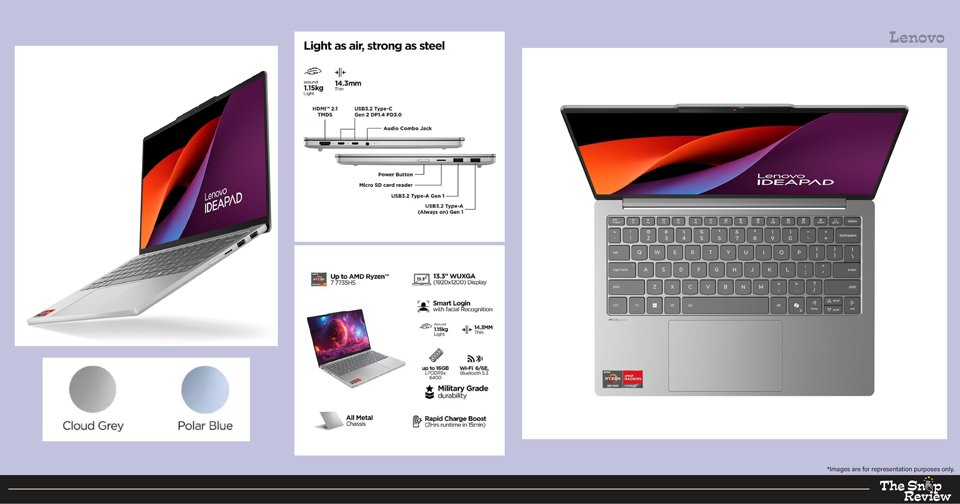
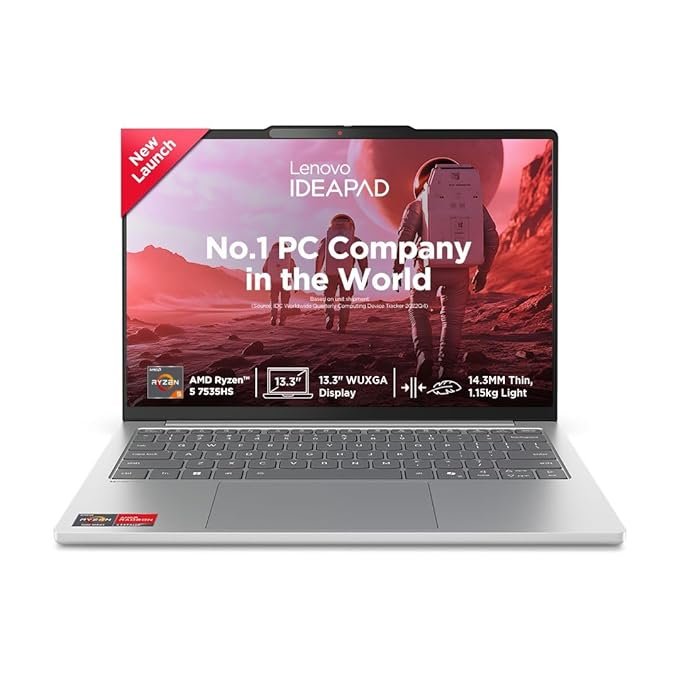
Lenovo IdeaPad Slim 5
Price: Rs.68,750 – Rs.71,999
Storage: 512 GB SSD || Display: 15.6″ FHD IPS, 300 nits
Processor: AMD Ryzen 5 7530U / Intel Core i5 (varies by configuration)
Battery: 8-10 hours (real-world mixed use)
Best for: General office & home use
What we like –
Its AMD Ryzen 5 chip handles everyday multitasking with ease. Browser with over 20 tabs, Zoom calls, Excel sheets, YouTube in the background – this configuration never stutters during typical workday use.
16GB of RAM is optimal for use in 2026. Many budget laptops still try to sell 8GB of RAM, which seems inadequate within a year. Lenovo has done the right thing in this regard.
The 512GB SSD means faster boot times, quicker app launches, and plenty of space for your documents, downloads, and files, eliminating the need to free up storage frequently.
Battery life is really good. You’ll get 8 to 10 hours of backup in a typical work day – emails, documents, video calls, a little browsing – and you don’t have to carry the charger everywhere.
It’s readily available and often discounted during Amazon sales and Chrome offers. During festival sales, it’s often 5 to 10 percent off.
The build quality is solid. Typing isn’t clunky, keyboard movement is satisfying, and the trackpad is precise and smooth.
What could be better –
The 300-nit display is adequate for indoor use, but its brightness will fade in bright sunlight. Working near a window in the afternoon is possible, but not comfortable.
Its webcam works for video calls but isn’t impressive – 720p quality, while 1080p quality is more common these days.
Its speakers are thin and tiny. Music sounds tinny. For serious audio work or entertainment, you’ll need earphones or external speakers.
It looks traditional. If you value design aesthetics, you might find this machine a bit bland compared to the Samsung Galaxy Book 4 or the Asus VivoBook S16.
Real talk –
The Lenovo IdeaPad Slim 5 is like a reliable and affordable everyday car. It’s not a flashy, exciting, or aspirational laptop, but it gets the job done every day, perfectly meeting the needs of an office worker or student, and it’s cheaper than premium options. For home-based professionals, parents juggling children’s assignments and office work, or anyone who wants a reliable machine for everyday tasks, this is the most sensible choice in 2026.
Lenovo IdeaPad Slim 5 Laptop Review
Price: Rs.68,750 – Rs.71,999
Storage: 512 GB SSD || Display: 15.6″ FHD IPS, 300 nits
Processor: AMD Ryzen 5 7530U / Intel Core i5 (varies by configuration)
Battery: 8-10 hours (real-world mixed use)
Best for: General office & home use
Disclaimer : We are a product review website providing honest opinions based on extensive research. Prices mentioned are approximate and may vary.
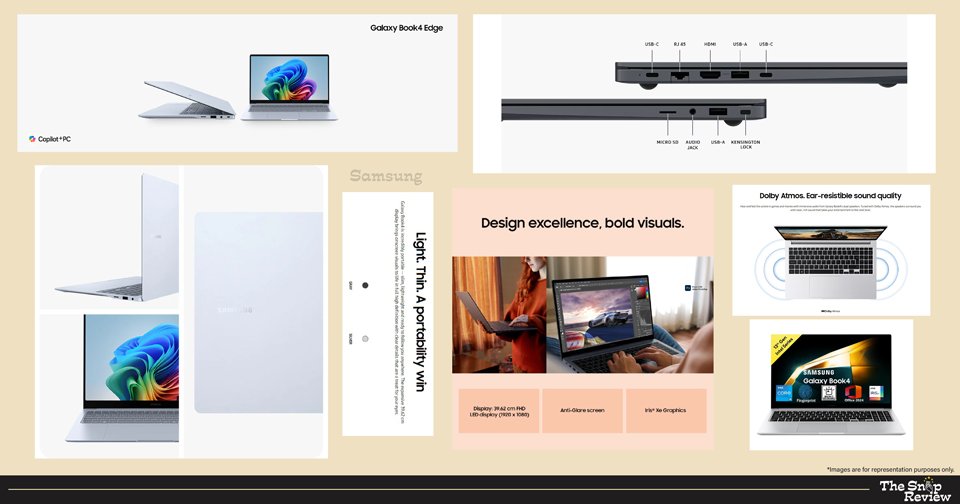
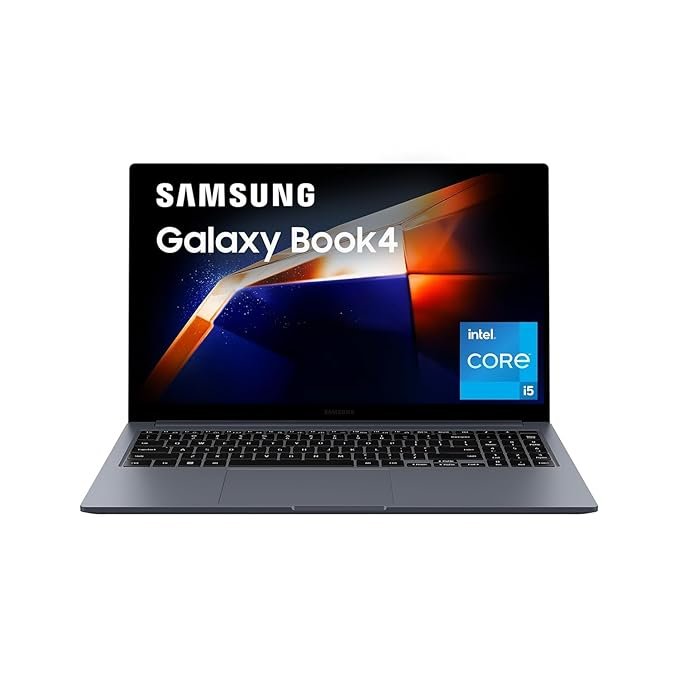
Samsung Galaxy Book4
Price: Rs.60,000 – Rs.62,000
Storage: 512 GB NVMe SSD || Display: 15.6″ FHD, 300 nits
Processor: Intel Core i5 – 1335U
Battery: 8-9 hours (real-world mixed use)
Best for: College students & budget under 62K
What we like –
The Intel Core-5-1335U is a powerful processor with a good balance of performance and efficiency cores. It can handle demanding editing tasks like running multiple research tabs, attending Zoom lectures, compiling code for engineering students, and editing assignments simultaneously without lagging.
Weighing in at approximately 1.59 kg, it’s so light that it won’t tire your shoulders even if you carry it around all day. This is especially important when commuting to and from campus or between classes.
The integration of the Samsung Galaxy Ecosystem is a bonus for students who already use Samsung phones. You can receive and respond to phone notifications directly on your laptop, mirror your phone’s screen, and transfer files wirelessly – a crucial feature that improves quality of life.
The build quality feels premium for its price. The chassis doesn’t feel flimsy, and the hinges are strong—important for a machine that will be disassembled and dismantled numerous times daily for years.
8 to 9 hours of battery life is enough for a full college day, including morning lectures, library sessions, and evening assignments, without having to search for a power outlet.
What could be better –
Its integrated Intel Iris Xe graphics are suitable for light creative tasks, but not for gaming or heavy video rendering. Engineering students working with CAD software should consider more powerful options.
Its display is decent, but not as vibrant. Students consuming content like streaming lectures or watching videos may find the colours a bit dull compared to OLED options.
The selection of port options may be even greater. Depending on the configuration, you may need a USB hub to connect multiple peripherals.
Real Talk –
The Samsung Galaxy Book 4 is the perfect laptop for discerning students – practical, well-built, with a robust construction, efficient battery backup, and an affordable price. It handles academic tasks well, is easily portable, and takes advantage of the extensive ecosystem available to Samsung Android users. Whether you’re completing engineering assignments, writing research papers, attending online lectures, or managing college life, this laptop is a reliable companion that will accompany you throughout your studies.
Samsung Galaxy Book4
Price: Rs.60,000 – Rs.62,000
Storage: 512 GB NVMe SSD || Display: 15.6″ FHD, 300 nits
Processor: Intel Core i5 – 1335U
Battery: 8-9 hours (real-world mixed use)
Best for: College students & budget under 62K
Disclaimer : We are a product review website providing honest opinions based on extensive research. Prices mentioned are approximate and may vary.
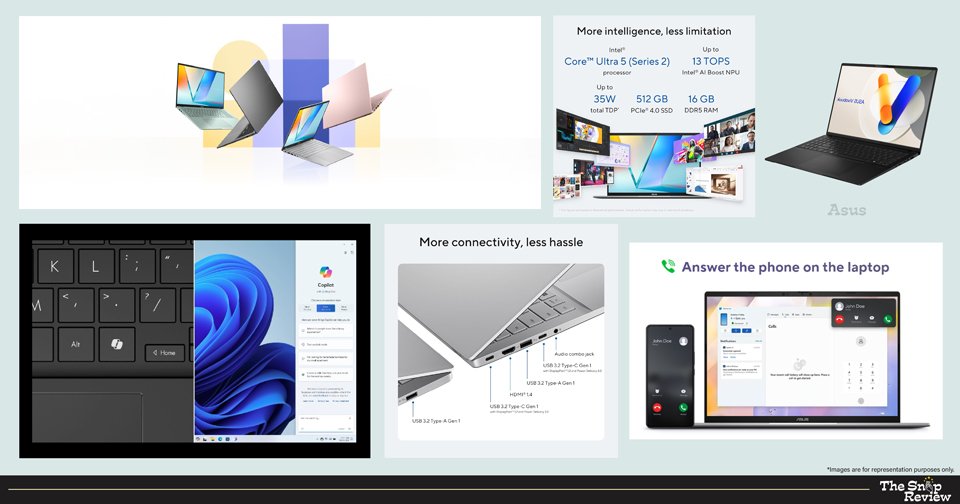
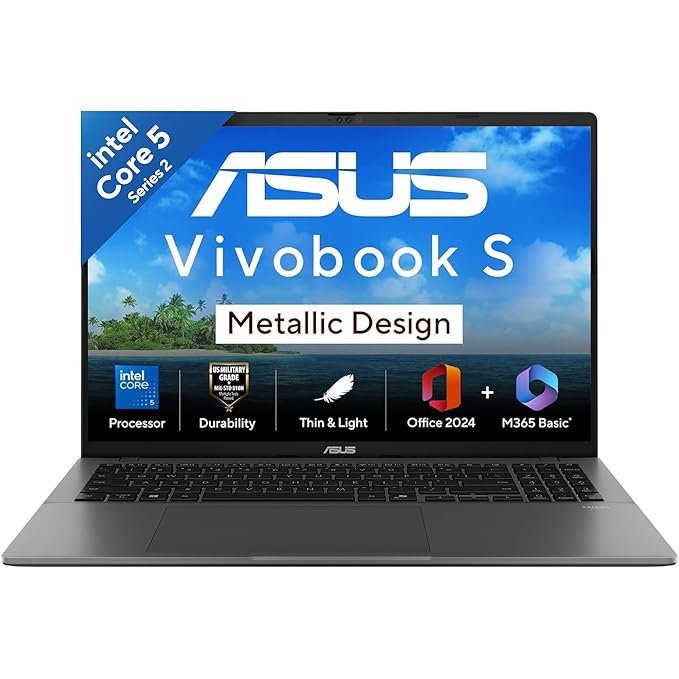
ASUS Vivobook S16
Price: Rs.65,990
Storage: 512 GB SSD || Display: 16″ WUXGA, up to 400 nits
Processor: AMD Ryzen 5 / Intel
Battery: 8-9 hours (real-world mixed use)
Best for: Content Creators & Writers
What we like –
The 16-inch WUXGA display is larger and has a higher resolution than most laptops in this price bracket. Writers spend hours reading and writing at screens – the extra display space makes a meaningful difference in comfort and productivity.
Its display delivers up to 400 nits of brightness, which is significantly better than competing models priced around Rs.50,000. It performs well in most indoor environments and is also usable in moderate lighting conditions.
ASUS has truly equipped the VivoBook S16 with a fantastic keyboard. Its keypress speed is satisfying, the layout is comfortable, and the backlight is quite helpful when working late into the night. For writers who type thousands of words daily, the keyboard quality is extremely important.
The AMD Ryzen 5 configuration handles photo editing in Lightroom, video editing in DaVinco Resolve for basic timelines, graphic design in Canva, and even light Photoshop work without much effort.
The 9 to 11 hours of battery life is quite impressive for a 16-inch laptop. Content creators working in cafes or co-working spaces will love the convenience of not having to constantly connect to a power outlet.
The ASUS VivoBook S16’s thin bezels give the display an expansive, modern feel that improves the viewing experience compared to older, thicker bezel designs.
What could be better –
While the display quality is above average for this price, the colour grading isn’t done to professional standards. Photographers or video editors who do professional colour-related work will eventually need an accurate panel.
Made of plastic, this laptop is sturdy enough for everyday use, but doesn’t feel as premium as some competing laptops with metal chassis. This is evident when you pick it up.
The speakers are mediocre. For a laptop designed for listening to YouTube videos or reference music, the audio output is disappointingly flat.
Thermal management could be better. During sustained heavy workloads – such as long rendering sessions or intensive editing – the chassis heats up and the fan speed increases significantly.
Real Talk –
The ASUS VivoBook S16 is a reliable laptop for a standard creative – it’s not the most premium or most powerful option, but it’s the most honest budget option for content creators, bloggers, and writers working on a limited budget. Its large and bright display is great for hours of screen time. The keyboard is incredibly easy to use. Its battery gives you the freedom to work without worrying about frequent charging. If you make content creation your profession or consider it your hobby, then this laptop will prove to be very useful for you and you will not need to spend much in the future.
ASUS Vivobook S16 Laptop Review
Price: Rs.65,990
Storage: 512 GB SSD || Display: 16″ WUXGA, up to 400 nits
Processor: AMD Ryzen 5 / Intel
Battery: 8-9 hours (real-world mixed use)
Best for: Content Creators & Writers
Disclaimer : We are a product review website providing honest opinions based on extensive research. Prices mentioned are approximate and may vary.
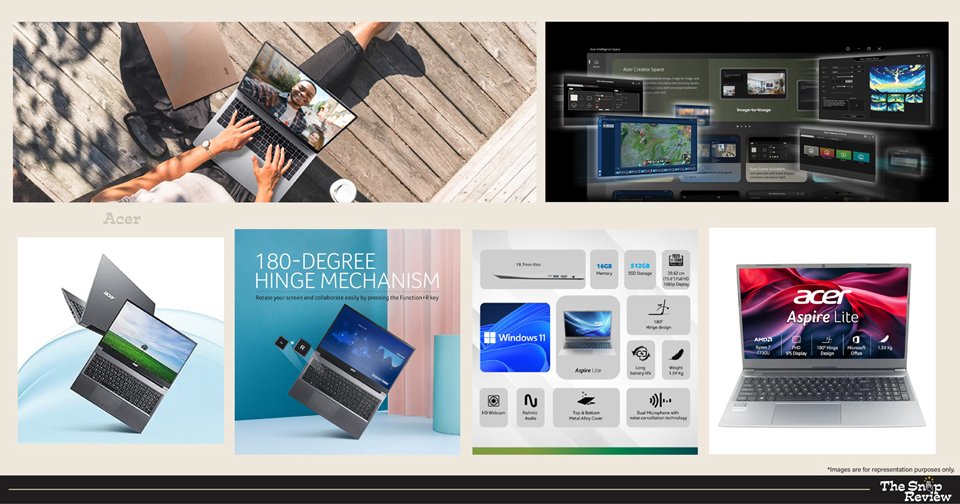
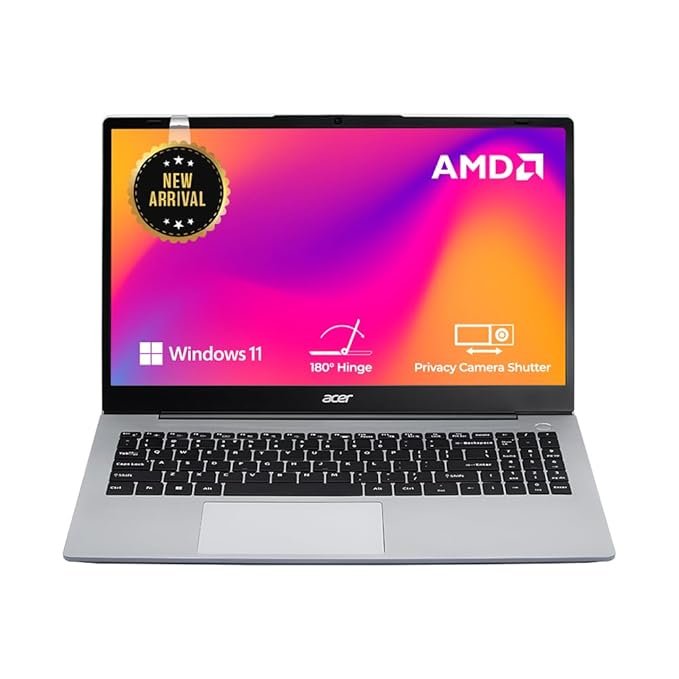
ACER Aspire Lite
Price: Rs.42,000 – Rs.55,000
Storage: 512 GB SSD || Display: 15.6″ FHD IPS
Processor: AMD Ryzen 5 7430U / Ryzen 7 7730U
Battery: 7-9 hours
Best for: Thin-& -Light Budget
What we like –
AMD’s Ryzen 5 7430U and Ryzen 7 77430U chips are truly powerful. The Ryzen 7 configuration, in particular, outperforms similarly priced Intel competitors, with its multi-core performance handling everything from software development to basic-level video editing with ease.
The Aspire Lite’s 16GB of RAM sets it apart from many competing budget laptops, which still offer an inadequate 8GB of RAM. You can run your entire workflow – browser, office suite, communication apps, and more – simultaneously without any interruptions.
Weighing in at approximately 1.59kg, the Aspire Lite is genuinely portable. It doesn’t feel like a bulky backpack, and its slim size makes it easy to fit into most laptop sleeves and bags.
Its biggest advantage is its price. Getting Ryzen 7 performance for Rs.50,000 to Rs.55,000 is exceptionally affordable, and ACER often offers further discounts through Amazon deal events, bringing the price down even further.
Its SSD makes the computer boot up quickly and applications launch quickly. It feels very responsive and modern in everyday use.
What could be better –
Its display brightness is average – around 250-300 nits. In brightly lit environments, visibility becomes a challenge. This is one area where you’ll notice some shortcomings in the budget.
Build materials are primarily plastic. While the chassis holds up well, it’s not as reliable as its metal competitors. The keyboard deck feels slightly compressed when pressure is applied.
Speakers work, but listening isn’t enjoyable. For entertainment – movies, music, YouTube – it’s actually better to use headphones or external speakers.
Acer’s software comes with some pre-installed applications that you’ll need to remove during initial setup. This isn’t unusual at this price, but it’s important to be aware of it.
Thermal performance can cause fans to become louder under sustained heavy workloads. This isn’t a problem for general office and student usage, but it can become a problem for extended computing tasks that run for extended periods of time.
Real talk –
The Acer Aspire Lite 2026 is the most affordable option in the Indian laptop market. It doesn’t pretend to be premium, but rather strives to deliver superior performance at the lowest possible cost, and it succeeds brilliantly. For first-time laptop buyers, students on a limited budget, or anyone who needs a capable laptop without spending a fortune, the Aspire Lite fulfils all the essentials that matter most, without any compromises. Buy this during the sale on Amazon and you will be hard pressed to find a better option anywhere else.
ACER Aspire Lite Laptop Review
Price: Rs.42,000 – Rs.55,000
Storage: 512 GB SSD || Display: 15.6″ FHD IPS
Processor: AMD Ryzen 5 7430U / Ryzen 7 7730U
Battery: 7-9 hours
Best for: Thin-& -Light Budget
Disclaimer : We are a product review website providing honest opinions based on extensive research. Prices mentioned are approximate and may vary.
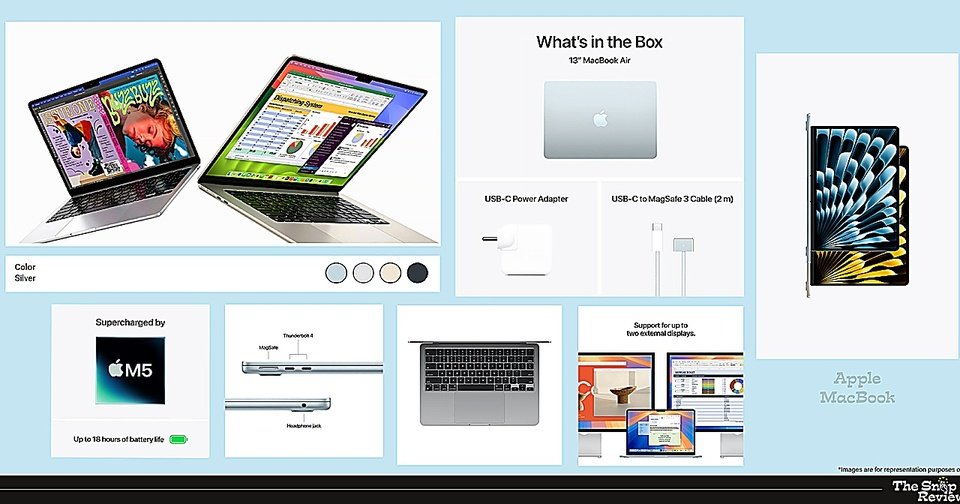
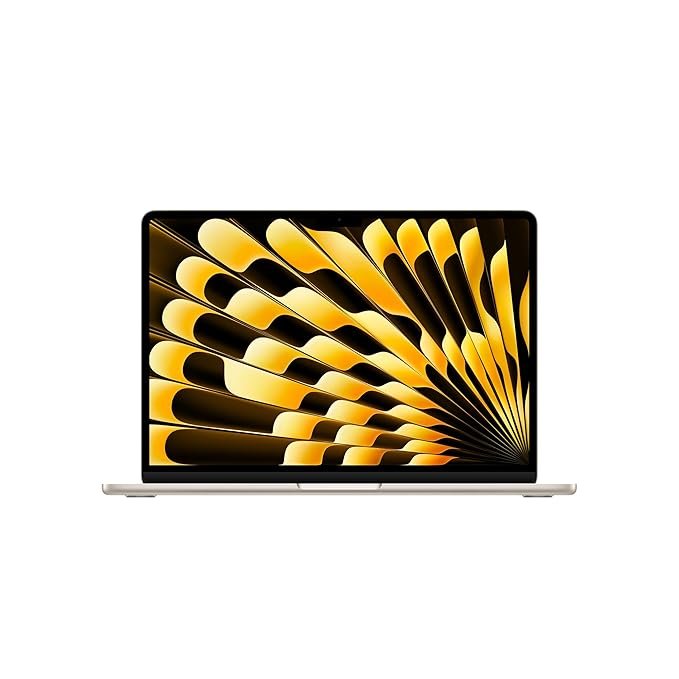
APPLE MacBook Air 13.6” (M5, 16GB)
Price: Rs.1,09,990 – Rs.1,28,490
Storage: 512GB || Display: 13.6” Liquid Retina, 500nits, P3 wide color
Processor: Apple M5 Chip
Battery: 15+ hours real-world
Best for: Premium Creativity & Pro Laptop
What we like –
Its M5 chips deliver performance comparable to, or even better than, Intel’s best laptop processors, while consuming significantly less power. This isn’t just marketing gimmicks – it’s a measurable and documented reality that explains the MacBook Air’s extraordinary battery life and near-silent operation.
The MacBook Air doesn’t have fans. There’s no cooling fan in the entire machine. It runs completely silent in all conditions. For professionals who work in quiet environments – writing, recording, podcasting, client meetings – this complete silence is truly valuable.
Battery life exceeds 15 hours with typical mixed usage. This means you can practically go all day and into the evening without needing to charge. No other Windows laptop, at any price, offers such reliable battery life.
The P3 wide colour gamut liquid retina display is exceptional for creative work. Photographers, video editors, and designers can rely on the colour accuracy of this display – which can’t be said for most laptop panels priced under Rs.150,000.
macOS is specifically optimized for Apple silicon. From Final Cut Pro and Logic Pro to Lightroom Classic and Xcode, every application runs with exceptional efficiency. The software ecosystem for creative professionals on macOS is genuinely superior compared to the Windows alternative.
Weighing in at around 1.2kg, the MacBook Air 13 is the lightest professional laptop available in India. For frequent travellers, this weight is felt throughout the year during daily commuting.
Vijay Sales, Reliance Digital and Croma offer GST input credit on MacBook purchases for registered businesses – significantly reducing the real cost for freelancers and business buyers.
What could be better –
The base model comes with 512GB and 1TB of storage, which is really insufficient for most professional work in 2026. Budget for the 512GB configuration – it’s practically the minimum.
This MacBook Air only has 2 USB-C / Thunderbolt 4 ports and 1 MagSafe charging port. You’ll need a hub or dock to connect multiple peripherals, external drives, or displays simultaneously.
It takes some time for Windows users to learn macOS. File management is different, application behavior is different, and shortcuts may not be used in the same places. Allow 2 to 4 weeks before you’re fully proficient.
Apple’s pricing for RAM and storage upgrades is quite high. The 16GB RAM configuration is the minimum needed for professional work.
Gaming on macOS is still quite limited compared to Windows. The M5 chips are capable, but they offer very few gaming options. If you want to game even occasionally, the MacBook Air isn’t the right choice for you.
Real Talk –
The MacBook Air M5 is the best laptop available in India for professionals whose work is primarily macOS-based – video editors using Final Cut Pro, musicians creating music in Logic Pro, developers creating iOS or macOS applications, writers who value quietness and reliability, and creative professionals who need accurate color for client work. Priced between Rs.1,09,990 and Rs.1,28,490, it is available as a professional tool. It should be evaluated as such. If you are buying it to browse the internet and watch YouTube, you are paying too much. If you’re buying this as your primary creative and professional workstation, you’re making a wise investment that will serve you efficiently for 5 years or more.
APPLE MacBook Air 13” Laptop Review
Price: Rs.1,09,990 – Rs.1,28,490
Storage: 512GB || Display: 13.6” Liquid Retina, 500nits, P3 wide color
Processor: Apple M5 Chip
Battery: 15+ hours real-world
Best for: Premium Creativity & Pro Laptop
Disclaimer : We are a product review website providing honest opinions based on extensive research. Prices mentioned are approximate and may vary.
How to Choose the Right Laptop for Your Needs?
- The Everyday User: Browser, email, Zoom calls, YouTube, Netflix, WhatsApp Web, and the occasional Word document. You need reliability and battery life above everything else. Do not overspend on processing power you will never tax.
- The Student: Assignments, research, online lectures, light presentations, and a fair amount of multitasking across multiple browser tabs. You need portability, adequate performance, and a keyboard that can survive thousands of hours of typing notes. Battery life matters because campus power outlets are never where you need them.
- The Creator or Developer: Photo editing, video editing, graphic design, coding, or content production. You need a capable processor, 16 GB RAM at minimum, a display that shows colours accurately, and storage that won’t run out mid-project. Speed matters more than portability here.
- The Gamer: You need a dedicated GPU, a high refresh-rate display, adequate thermal headroom, and you have already accepted that battery life will be poor. Everything else is secondary.
Processor — The Decision That Drives Everything
The processor is the single most important specification on a laptop and the one most frequently misunderstood. Do not chase the highest model number or the newest generation blindly. Instead, understand what the processor class means in practice.
- AMD Ryzen 5 (7000/8000 series): Excellent multi-core performance at budget-friendly prices. Ideal for students, everyday users, and light content creators. The Ryzen 5 7530U and 7430U are genuinely capable chips that punch above their price.
- Intel Core i5 (12th Gen and above): Strong single-core performance, broad software compatibility, and consistent behaviour across demanding applications. A better choice if you use Windows-specific professional software that is optimised for Intel architecture.
- AMD Ryzen 7 (H-series for gaming): The step up for people who need sustained performance under load — gaming, video rendering, and software development. Paired with an RTX GPU, this combination handles virtually everything short of 4K video production comfortably.
- Apple M3 / M4: In a category of their own. Performance per watt that no x86 processor matches. Fanless, silent, and battery life that lasts a full working day and into the evening. The right choice exclusively for macOS users who rely on Apple’s software ecosystem.
RAM — Do Not Compromise Here
If there is one piece of advice that cuts across every budget and every use case, it is this: do not buy a laptop with 8 GB of RAM in 2026. Full stop. Eight gigabytes were adequate in 2020. Modern browsers consume 2–4 GB on their own with a reasonable number of tabs open. Add Zoom, Spotify, your Office suite, and a PDF viewer, and 8 GB is already struggling.
16 GB is the practical minimum for any laptop you intend to use for more than two years. Every laptop on our recommended list ships with 16 GB as standard, and this was a deliberate decision. The performance difference between 8 GB and 16 GB in real-world daily usage is not incremental — it is transformative.
Display Matters More Than You Think
You will spend every single minute of laptop use looking at the display. It is possibly the specification that has the biggest impact on day-to-day satisfaction, yet it is the one buyers most commonly undervalue because the numbers on paper are hard to evaluate without seeing the screen in person.
- Brightness under 300 nits: Avoid if possible. Workable indoors but painful in bright environments, which is most Indian offices during daytime.
- 300–400 nits: The sweet spot for most users at this price range. Comfortable indoors, usable in moderately bright conditions.
- 500 nits and above: Premium territory. The MacBook Air’s 500-nit Liquid Retina display handles virtually all environments without strain.
- Refresh rate: 60Hz is baseline for everyday use. 120Hz makes scrolling and general interaction noticeably smoother — once you use it, returning to 60Hz feels sluggish. 120Hz and above is essential for gaming and recommended for anyone who does a lot of reading or coding on screen.
Service Network — A Uniquely Indian Consideration
Here is something that no international review publication will tell you, because it only matters in India: check whether your chosen brand has an authorised service centre in your city — or within a reasonable distance — before you buy. A laptop with no nearby service support is a liability waiting to happen.
Dell and HP have the most extensive authorised service networks in India, covering Tier 2 and Tier 3 cities meaningfully. Lenovo and ASUS are strong in metros and growing in smaller cities. Apple’s service has expanded significantly but remains concentrated in major urban centres. If you live outside a major city, this factor can legitimately tip the decision between two otherwise equal options.
Common Mistakes to Avoid When Buying a Laptop
1. Buying 8 GB RAM to Save Rs.3,000
This is the single most common and most regretted laptop purchase mistake in India. Buyers see a machine with attractive specs and a competitive price, notice it has 8 GB of RAM, tell themselves “it’ll be fine,” and then spend the next three years frustrated by slowdowns, application crashes, and a machine that feels dated well before it should. The Rs.2,000–3,000 saved upfront will cost you in productivity and happiness many times over. Always buy 16 GB. Always.
2. Prioritising Processor Generation Over Ram and Storage
Salespeople at electronics stores know that “13th Generation” sounds more impressive than “12th Generation” and will steer you toward the newer chip even if it comes paired with half the RAM or a slower storage drive. A 12th Gen i5 with 16 GB DDR5 RAM and a 512 GB NVMe SSD will outperform a 13th Gen i5 with 8 GB RAM in virtually every real-world task. Generation numbers matter, but they matter less than the overall configuration.
3. Ignoring Battery Life Claims vs. Reality
Laptop manufacturers test battery life under conditions that bear no resemblance to actual usage — screen at minimum brightness, Wi-Fi off, no applications running, and a simple video file looping. When a laptop claims “up to 12 hours,” expect 6–7 hours of real-world mixed use. The only meaningful exception is the Apple MacBook Air; whose battery claims are genuinely achievable. For everything else, divide the manufacturer’s figure by roughly 1.5 to get a realistic expectation. If you need all-day battery without carrying a charger, this matters enormously.
4. Not Checking Service Centre Availability Before Buying
Thousands of Indian buyers have experienced the frustration of owning a laptop from a brand with poor local service coverage. Your Rs.60,000 laptop develops a display issue 14 months after purchase, and the nearest authorised service centre is in another city with a two-to-three-week turnaround time. This is not a hypothetical — it is a documented reality in customer reviews across Amazon India and Flipkart for several brands. Always Google “[brand name] service centre [your city]” before purchasing. If the results are thin or the centre is inconveniently far, factor that into your decision.
5. Skipping the EMI Calculation
No-cost EMI on Amazon India and Flipkart has made it easy to buy laptops at price points that stretch budgets uncomfortably. Before selecting a 12-month no-cost EMI, verify that it is genuinely no-cost — some offers bundle processing fees or require a specific credit card that carries annual fees. Also consider whether a slightly more expensive, better-configured machine on the same EMI plan makes more sense than saving Rs.1,000 per month on a laptop that will frustrate you daily. Sometimes the smarter purchase is the Rs.5,000 more expensive option that you actually enjoy using for five years.
Overall Insights: Which One Should You Buy?
The Mid-Range Has Never Been Stronger
The ₹45,000–₹65,000 laptop segment in India now offers impressive value with 16 GB RAM, fast SSDs, and powerful processors. Brands like Lenovo, Samsung, and ASUS are proving that buyers no longer need to compromise between performance and affordability.
AMD Has Changed the Budget Equation
AMD Ryzen 5 and Ryzen 7 processors have become strong alternatives to Intel, offering excellent performance at competitive prices. Budget-friendly laptops now deliver power that was once limited to premium devices.
The MacBook Air Occupies Unique Territory
The Apple MacBook Air M5 continue to stand apart with unmatched battery life, build quality, display, and efficiency. While Windows laptops excel in certain areas, few offer the same all-round premium experience.
Indian Buyers Are Getting Smarter
Laptop buyers in India are now focusing on real-world performance, thermals, battery life, and service quality instead of just specifications. This shift is pushing brands to improve overall user experience and transparency.
Gaming Laptops Are Mainstream, Not Niche
Gaming laptops have become a mainstream category in India, driven by rising gaming interest and competitive pricing. Powerful RTX-based laptops are now available at far more accessible price points than before.
The Service Experience Gap Remains Real
Post-purchase service still plays a major role in customer satisfaction, especially outside metro cities. Brands with stronger service networks continue to earn better long-term trust from buyers.
16 GB RAM Is the New Baseline
It is quickly becoming the standard across mid-range laptops, reflecting changing user needs and market competition. Buyers are now encouraged to avoid 8 GB models for better long-term performance.
Frequently Asked Questions –
What is the best laptop for work from home in India?
The Lenovo IdeaPad Slim 5 is ideal for most professionals due to its performance and battery life. For heavier workloads, ASUS Vivobook S16 and Samsung Galaxy Book4 are better choices.
Which is the best laptop under ₹50,000 in India in 2026?
The Acer Aspire Lite Ryzen 7 and Lenovo IdeaPad Slim 5 Ryzen 5 are top choices under ₹50,000. Both offer 16 GB RAM and 512 GB SSD, making them great for long-term daily use.
Is MacBook Air worth buying in India?
Yes, especially for creators, designers, and professionals using macOS. For basic browsing or office work, it may feel expensive for the value offered.
Which gaming laptop should I buy under ₹80,000?
ASUS TUF offers the best gaming value, while Dell G15 is better for thermals. HP Victus and Lenovo LOQ are strong all-round options for gaming plus work/studies.
Should I buy a laptop offline or online in India?
Online platforms usually offer better prices, but offline stores help you check display, keyboard, and build quality before buying. A mix of both works best.