Best Infant Car Seats in India 2026
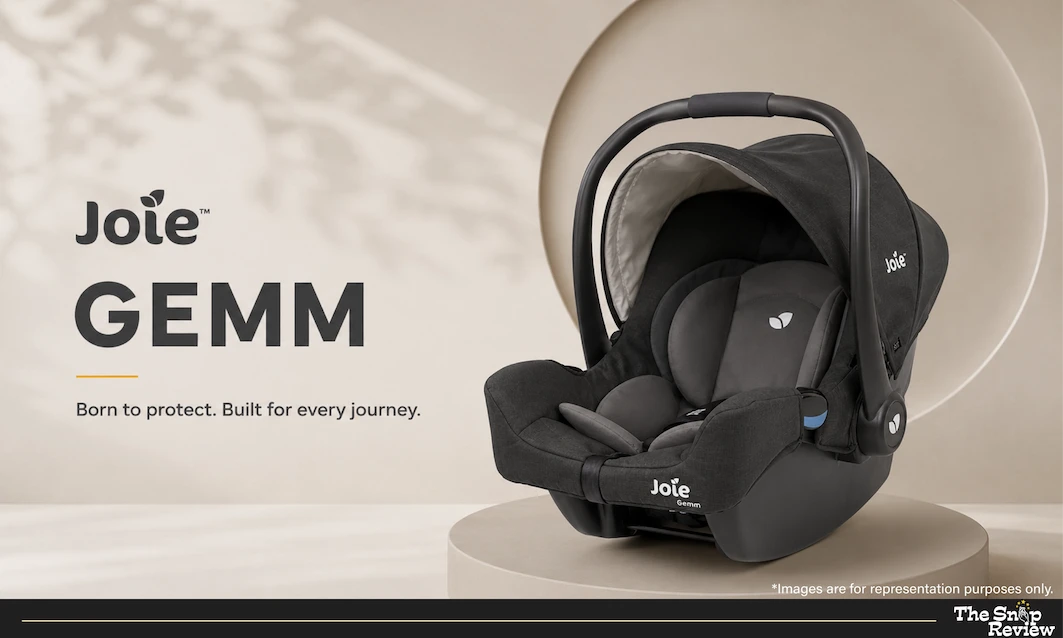
Joie GEMM Infant Car Seat
Type: Rear-Facing Infant Car Seat
Suitable For: Birth to 13 kg (approximately birth to 18 months)
Safety: Side impact protection, 5-point harness
Best For: Budget-conscious parents who still want a trusted brand
Available At: joiebaby.co, Amazon India
What We Like –
If parents want to benefit from Joie’s reputation for safety without paying the full premium price of the i-Gemm 3, we would recommend the Joie GEMM. This infant carrier strikes a truly excellent balance between price and safety.
Its SoftTouch 5-point harness features front-tension adjustment, meaning tightening it requires just a single pull rather than a complex, multi-step process—something you’ll find incredibly useful at 6 a.m. when your new-born is being fussy and you need to get somewhere in a hurry.
We felt that the side-impact protection and robust outer shell offer genuine peace of mind for daily city driving, where sudden braking and manoeuvring into tight parking spots are commonplace. Its curved base allows for a gentle rocking motion, and the UPF 50+ water-repellent canopy is detachable to improve airflow during hot days—a truly useful feature, especially given how hot parked cars can get during Indian summers.
It can be installed using a base (sold separately, known as the click FIT base) or directly with the car’s seat belt. Additionally, it is airline-certified, which is very useful when traveling by air with your baby during the early months.
What Could Be Better –
Without the optional base, it has to be installed using the seat belt. Compared to a proper ISOFIX click-in system, it requires a bit more practice to ensure a secure, wobble-free fit.
It lacks the ‘Tri-Protect memory foam headrest’ found in the i-Gemm 3; so, even though it has good padding, the head support isn’t as good as that of the more expensive model.
Much like carriers designed primarily for infants, this seat is also suitable for children from birth up to approximately 18 months of age; therefore, you will subsequently need a forward-facing or convertible seat.
Real Talk –
For parents seeking a reliable, well-reviewed brand without spending the extra money on the i-Gemm 3’s new certification and headrest technology, the GEMM is a sensible choice. It performs the essential functions effectively, and it is all you really need for driving in most Indian cities.
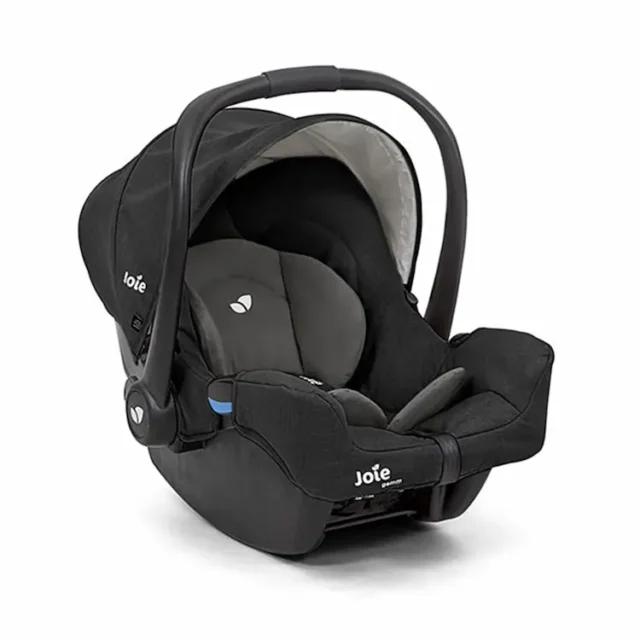
Joie GEMM Infant Car Seat
Type: Rear-Facing Infant Car Seat
Suitable For: Birth to 13 kg (approximately birth to 18 months)
Safety: Side impact protection, 5-point harness
Best For: Budget-conscious parents who still want a trusted brand
Available At: joiebaby.co, Amazon India
Disclaimer : We are a product review website providing honest opinions based on extensive research. Prices mentioned are approximate and may vary.
Common Mistakes to Avoid When Buying an Infant Car Seat
- Indian parents often make the mistake of purchasing the most expensive convertible seat right at the start, assuming that a larger, costlier seat will be safer for a new-born. In reality, specialized infant carriers are better suited to a new-born’s physique, whereas large convertible seats are designed for older children. Therefore, choose the right seat for your child’s current needs first and upgrade later, rather than trying to manage everything with a single seat from the very beginning.
- Check for ISOFIX compatibility before purchasing—this applies to any car sold in India. If you are buying a seat designed primarily for ISOFIX installation consult your car’s manual or check with the dealer to confirm the presence of anchor points. Otherwise, you will have to rely on seatbelt installation, and some ISOFIX-based seats do not handle this alternative method as effectively.
- Ignoring the car seat’s expiry date – car seats (which contain plastic and foam components) degrade over time, and most manufacturers specify a usage timeframe (often 6 to 10 years from the date of manufacture). Just because a second-hand seat looks fine, do not assume it will remain safe.
- Overlooking the seat’s recline and headrest adjustment features—if the seat cannot be adjusted as the child grows (such as when transitioning from a fragile new-born to a more active six-month-old), you will either have to buy a new seat prematurely or use the seat in an improper position. Choose a seat where the harness and headrest adjust simultaneously, rather than one where they must be adjusted manually and separately.
Overall Insights: Which One Should You Buy?
There is no single “best” child car seat—the best seat is the one that is right for your child’s current age and your car. A few general points can help you make the right decision:
Choose a seat based on the child’s current age, rather than considering future needs.
For a new-born, a carrier seat designed specifically for infants is safer and more comfortable than a convertible seat meant for older children.
Be sure to check your car’s ISOFIX compatibility before selecting a seat. You can only derive the full benefit of a seat designed for ISOFIX installation if your car actually has the necessary anchor points.
Decide beforehand whether you want to make a single purchase or two. A convertible seat is more expensive initially but can serve you for several years, eliminating the need for two or three separate purchases; in contrast, an infant-only carrier is cheaper upfront but will need to be replaced within 12–18 months.
Prioritize essential safety features—such as a 5-point harness, side-impact protection, and recognized certifications—over add-ons like cup holders or app connectivity.
First, select a category based on your budget, then compare specific models within that range. A highly-rated, lower-priced seat will generally offer better value than an expensive premium model whose full range of features you might not utilize.
Frequently Asked Questions
Q: Is it legal to drive in India without a car seat for an infant?
Unlike the seatbelt regulations for adults, there is no single national law in India mandating the use of car seats for children; however, road safety experts and paediatricians strongly advise using an age-appropriate and correctly installed car seat right from the very first journey—such as the trip home from the hospital. Beyond legal requirements, a properly installed car seat significantly reduces the risk of injury in the event of an accident or sudden stop.
Q: What’s the difference between ISOFIX and seatbelt installation?
With ISOFIX, the seat or base is fitted directly into place using metal anchor points already installed in the car. This generally results in a more secure and accurate fit, minimizing the risk of installation errors. In seatbelt installation, the car’s existing seatbelt is threaded through the car seat. While this method works in almost all cars, securing the seat properly and firmly requires greater care and practice.
Q: Are convertible car seats safer than infant-only carriers for an infant?
It is not strictly necessary; however, a dedicated infant carrier is often the better choice for infants, as it is designed to fit their smaller bodies and provides superior support for the head and sides. Once your child outgrows the infant carrier (typically between the ages of 12 and 18 months), a convertible seat becomes a better option.
Q: How often should I replace a car seat?
Most manufacturers specify a lifespan of 6 to 10 years from the date of manufacture. Beyond this period, even if the seat appears to be in good condition, the plastic and foam components may have deteriorated. Replace the car seat immediately if the vehicle is involved in a moderate or severe accident, regardless of the seat’s age or how intact it may look.
Disclaimer: We are a product review website providing honest opinions based on extensive research and real-world usage analysis. Prices mentioned are approximate and may vary based on sales, offers, and location.