Best Camera Phones Under 30000
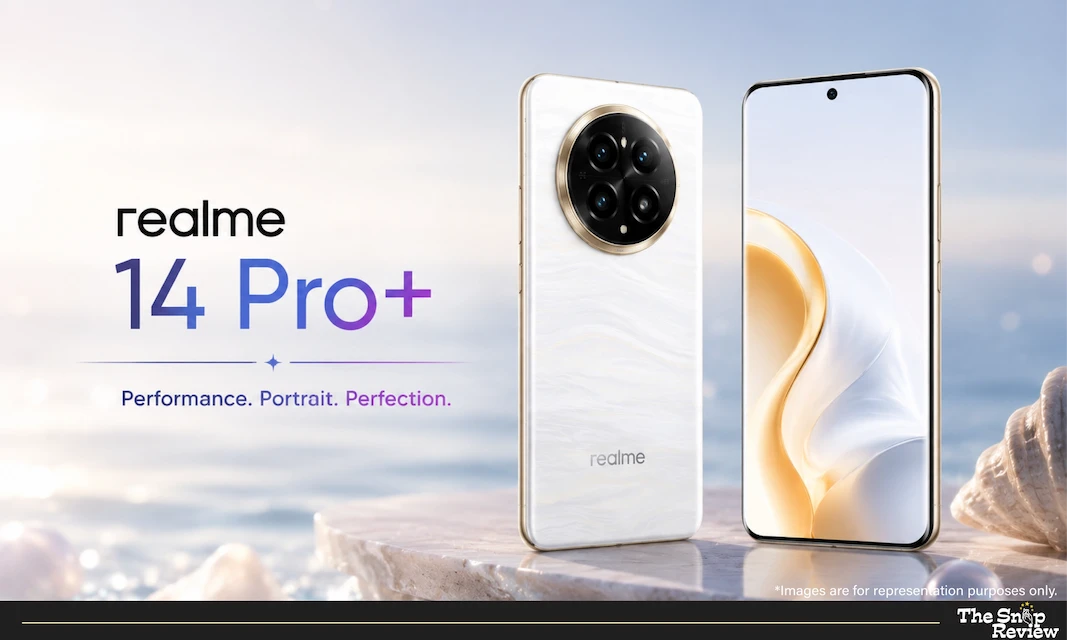
Realme 14 Pro+
Price Range: Rs. 24,999 – Rs. 29,999 (8GB / 12GB variants)
Primary Camera: 50MP Sony IMX896 with OIS + 50MP Sony IMX882 Periscope (3x) + 8MP Ultra-wide
Front Camera: 32MP
Video: 4K @ 30fps; AI Ultra Clarity 2.0 on telephoto
Best For: Travel photography, wildlife, zoom shots, price-to-performance buyers
Available At: Amazon India, Flipkart, Croma, Vijay Sales, Reliance Digital
What We Like –
The Realme 14 Pro+ is the zoom champion of this list, a title it owes to its impressive periscope telephoto system powered by the Sony IMX882 sensor. At 3x optical zoom, the level of detail in distant subjects is far superior to that of competitors relying on cropped digital zoom; you can photograph birds, monuments, or stage performers from afar and still capture sharp, high-quality images.
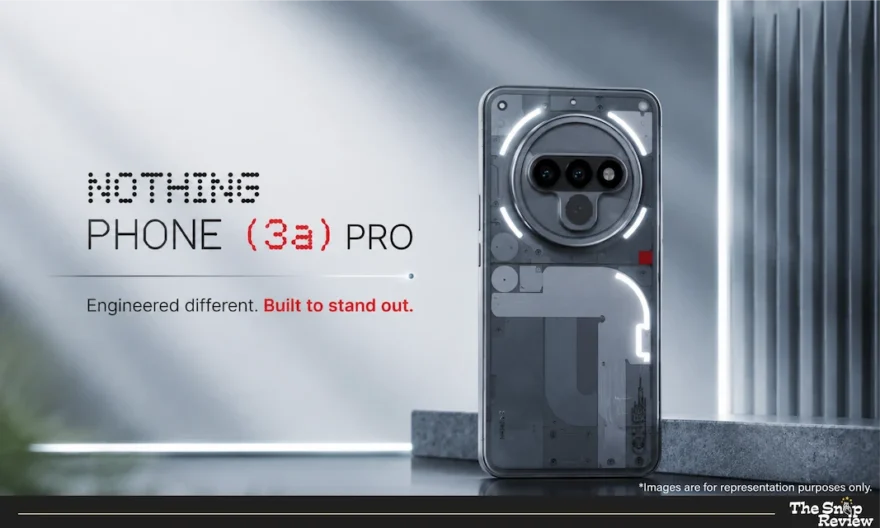
Its primary camera utilizes the Sony IMX896 sensor with OIS—the same sensor found in the Nothing Phone (3a) Pro—delivering excellent results, especially in good lighting. Realme’s January 2026 AI Ultra Clarity 2.0 update has significantly improved telephoto sharpness and resolved the processing lag issue in 120x Superzoom that early buyers had complained about. The large 6.83-inch display and 6000mAh battery make it an excellent phone for photography-focused trips.
The world’s first temperature-sensitive color-changing design (specifically the Bikaner Purple variant) is truly a unique feature that grabs everyone’s attention; the back panel changes color when the temperature drops, serving as a fun party trick and a great conversation starter.
What Could Be Better –
Software support has long been Realme’s weakest link, and the 14 Pro+ is no exception; compared to brands like Nothing or Motorola, one can expect slower Android updates and a shorter software lifecycle. Realme UI’s heavy processing applies aggressive AI beautification by default; while this creates an immediate “wow” factor, closer inspection reveals images that can appear over-processed and somewhat artificial.
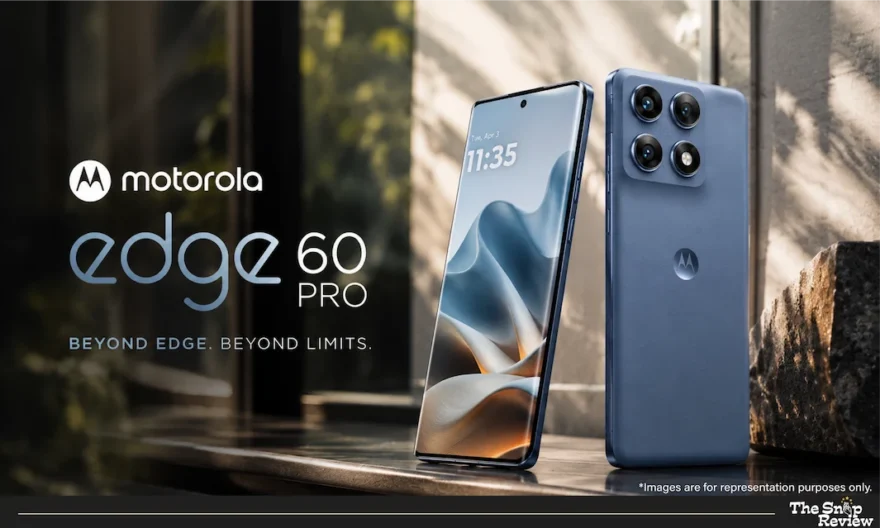
Its 32MP front camera is significantly weaker compared to the 50MP front cameras found on Motorola and Nothing phones. This matters if selfies and video calls are a key part of your daily phone usage.
Real Talk –
For photographers who prioritize zoom capabilities—such as travel bloggers, nature enthusiasts, or those who frequently photograph distant subjects—the Realme 14 Pro+ is the best option under Rs. 30,000, offering excellent value for its price. Simply embrace Realme’s image processing style rather than fighting against it, and you will be very pleased with the results.
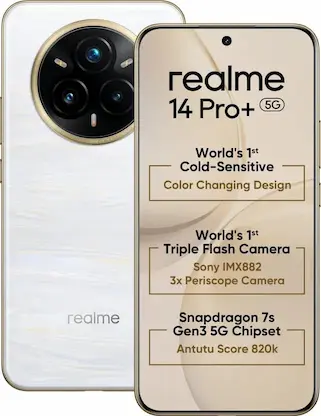
Realme 14 Pro+
Price Range: Rs. 24,999 – Rs. 29,999 (8GB / 12GB variants)
Primary Camera: 50MP Sony IMX896 with OIS + 50MP Sony IMX882 Periscope (3x) + 8MP Ultra-wide
Front Camera: 32MP
Video: 4K @ 30fps; AI Ultra Clarity 2.0 on telephoto
Best For: Travel photography, wildlife, zoom shots, price-to-performance buyers
Available At: Amazon India, Flipkart, Croma, Vijay Sales, Reliance Digital
Disclaimer : We are a product review website providing honest opinions based on extensive research. Prices mentioned are approximate and may vary.
How to Choose the Right Camera Phone for Your Needs?
Know your primary shooting style first –– Before comparing specifications, ask yourself: do you mostly shoot portraits, landscapes, zoomed-in subjects, or selfies? Each phone on this list has its own unique strength. Instead of simply choosing the phone with the highest megapixel count, selecting a phone that suits your shooting style will bring you greater satisfaction.
Optical zoom matters more than megapixels –– When photographing distant subjects, a 200MP sensor (without a dedicated zoom lens) cannot compete with a 50MP sensor featuring a genuine 3x periscope telephoto lens. If you are photographing weddings, travel scenes, nature, or objects more than 5 meters away, prioritize a phone with true optical zoom over one that simply offers higher megapixels.
OIS is non-negotiable for video –– If you record videos of children, events, or moving subjects, choose a phone with Optical Image Stabilization (OIS) in its primary camera.
Software support affects long-term value more than any spec –– If a phone has an excellent sensor but only two years of software support, it will soon start to feel outdated and insecure; in contrast, a phone with a slightly less impressive camera that receives updates for 6–7 years would be a better choice. If you plan to use your phone for 3–5 years, Samsung’s 7-year and Motorola’s 4-year commitments are highly significant.
Service network availability in your city matters –Before purchasing any phone in this segment, be sure to check for an authorized service center in your city.
Key Camera Specs to Look for in a Camera Phone –
Sensor Quality & Size – Large sensors with low f-number apertures (e.g., f/1.6 vs. f/1.8) gather more light and deliver superior results in low-light conditions. Always check which sensor brand is used; Sony IMX sensors (such as the IMX896, IMX906, or LYT-700C) consistently outperform generic or unbranded sensors, even when the megapixel count is the same.
OIS (Optical Image Stabilization) prevents camera shake while shooting or recording video handheld. It is essential for low-light photography and smooth video. However, not all cameras on phones advertised as having OIS actually feature it—so be sure to check exactly which specific lenses include OIS.
Telephoto & Zoom – At this price point, a true periscope telephoto lens is far superior to cropped digital zoom. A genuine optical zoom lens magnifies distant subjects to produce clear, detailed images without compromising quality.
Front Camera – If selfies and video calls are important to you, look for a camera with at least 32MP and autofocus.
Video Capabilities – 4K at 30fps has now become the standard in this segment. For stable video, prioritize phones that feature both OIS and Electronic Image Stabilization (EIS). If you shoot in low-light conditions, a phone with a large primary sensor and a wider aperture (lower f-number) is crucial for good video quality.
Common Mistakes to Avoid When Buying a Camera Phone
- Choosing only on megapixels –– In low-light conditions, a 200MP sensor might yield poorer results compared to a 50MP sensor equipped with OIS and a larger aperture. While megapixels determine resolution, the actual photo quality is determined by sensor quality and software processing.
- Ignoring the telephoto camera completely –– Many buyers focus solely on the primary camera and only realize much later that they cannot zoom in effectively. If you frequently take photos or videos of subjects that are out of arm’s reach—such as children’s sports, stage performances, or wildlife—always check whether the phone has genuine optical zoom.
- Not checking real-world low-light performance –– Manufacturer sample images are always taken under optimal conditions. Before buying, be sure to check YouTube for comparisons of actual night photography from the specific model you are considering purchasing.
- Overlooking software update commitments –– A phone that receives Android updates for only two years can pose security risks. Moreover, just as the hardware begins to operate at its full potential, improvements to the camera algorithms often cease. Therefore, it is essential to check the brand’s update policy before purchasing a phone.
- Buying based on launch-day price without checking current price –– Prices on Amazon India and Flipkart fluctuate frequently. The Realme 14 Pro+ launched at Rs. 29,999 but is often available for Rs. 24,999 — a saving of Rs. 5,000. Always check the current listed price rather than the launch price mentioned in reviews.
Frequently Asked Questions
Q: Can a camera phone under Rs. 30,000 genuinely compete with a flagship camera?
For most real-world shooting scenarios—such as daylight portraits, travel photography, social media content, and family events—yes. The difference becomes apparent primarily in low-light conditions and at longer zoom ranges, where flagship phones costing over Rs. 60,000—featuring larger sensors and more powerful computational photography—pull ahead.
Q: How long do camera phones in this price range typically last in Indian conditions?
Phones in the Rs. 24,000 to Rs. 30,000 range typically serve as a primary daily device for about 3–4 years, after which a significant performance gap emerges compared to newer models. The biggest limiting factors are usually software support and battery degradation, rather than hardware performance.
Disclaimer: We are a product review website providing honest opinions based on extensive research and real-world usage analysis. Prices mentioned are approximate and may vary based on sales, offers, and location.