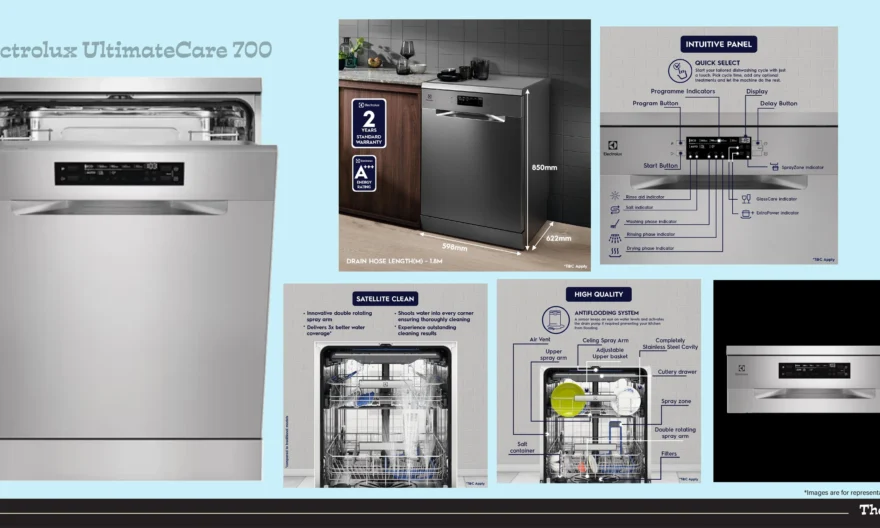

Best Dishwashers in India 2026
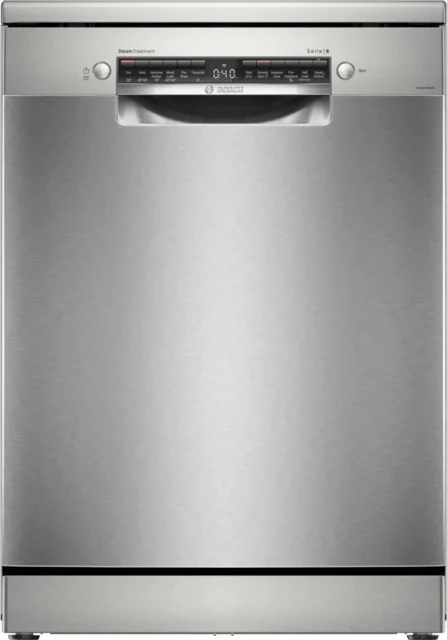
Bosch SMS6HMI01I Series 6 Dishwasher
Place Settings: 15 — ideal for families of 4–6
Key Indian Feature: Intensive Kadhai 70°C + Steam Wash
Water per Cycle: 9 litres
Noise Level: 44 dB (whisper quiet)
Motor: EcoSilence Drive — 10-year warranty
C+apacity: 15 Place Settings
Rating: 4.5 ★★★★★
Price: Rs.55,000 – Rs.65,620
What We Like –
Let’s first talk about the key feature that sets this dishwasher apart from all others: The Intensive Kadhai 70°C program. Bosch engineers spent time learning Indian cooking habits and created a wash cycle specifically designed to remove spice layers, turmeric stains, and ghee residues that ordinary programs simply push around but don’t remove. The high-temperature wash of 70°C breaks down the oil at the molecular level – leaving your kadhai looking as good as new.
Its steam wash function is equally impressive. It produces steam that reaches every corner of your cookware, destroying 99.9% of bacteria and allergy-causing elements without soaking. If you’ve ever tried to clean a pressure cooker’s blower by hand, with all its rubber rings and valves, you’ll understand how important this is.
Its Aqua Sensor technology is so intelligent that it detects water soiling mid-cycle and automatically adjusts the wash intensity to the rinse cycle. This means it never uses more water than necessary – just 9 litres per cycle, while an average Indian household uses 40-60 litres of water to wash the same amount of clothes by hand.
The Eco-Silence Drive motor operates at just 44dB – about the level of a quiet library. You can even run it in the middle of the night without waking anyone.
What Can Be Better –
Priced at Rs. 55,000-61,000, the Bosch is worth considering before buying. It’s the most expensive model in our top 5, and while its performance is appropriate for families with heavy cooking, infrequent or infrequent users may find they’re paying a high price for features they rarely use.
Installation will require a separate plumbing connection and a professional. Keep this in mind when planning your purchase – this is not a plug-and-play product. Bosch service centre availability in Tier-2 and Tier-3 cities may sometimes be a few days longer than in metro cities, which matters when a Rs.60,000 appliance breaks down.
The number of wash programs – while well designed – may seem a little less diverse than IFB. Those looking for detailed control of high-granularity cycles may find the menus a bit limited, although all the programs available perform excellently.
Real Talk –
This dishwasher was specifically designed because someone at Bosch took Indian cooking seriously. Its Intensive Kadhaai Program is no mere show-off – it’s the most useful feature any dishwasher has ever offered in the Indian market, and it performs exactly as advertised. If you cook a full Indian meal daily and want a machine that will run flawlessly until 2035, the Bosch SMS6HMI01I is the perfect choice. It costs a little more, but its performance is just as impressive. For those who take Indian cooking seriously, this is the best option.
Bosch SMS6HMI01I Series 6 Dishwasher
Place Settings: 15 — ideal for families of 4–6
Key Indian Feature: Intensive Kadhai 70°C + Steam Wash
Water per Cycle: 9 litres
Noise Level: 44 dB (whisper quiet)
Motor: EcoSilence Drive — 10-year warranty
C+apacity: 15 Place Settings
Rating: 4.5 ★★★★★
Price: Rs.55,000 – Rs.65,620
Disclaimer : We are a product review website providing honest opinions based on extensive research. Prices mentioned are approximate and may vary.
How to Choose the Right Dishwasher for Your Indian Kitchen?
1. Place Settings — The Most Misunderstood Specification
“Place settings” refers to the number of full place settings (plate, bowl, glass, cutlery) the machine can hold. But Indian cooking generates more cookware than this calculation accounts for. A family of 4 running a full Indian kitchen — with kadhais, pressure cookers, serving bowls, tawas, and steel plates — will realistically need 12–15 place settings even with only 4 members.
- Family of 2–3 people: 12 place settings sufficient
- Family of 4–5 people: 14–15 place settings recommended
- Joint family of 6+: look for 15–16 place settings, or run two cycles
2. Water Consumption — The Number That Changes Everything
This is the specification that converts most sceptics. The average Indian household uses 40–60 litres of water hand-washing a full day’s dishes. A modern dishwasher uses 9–12 litres for the same load. Over a year, with one full cycle per day, that is a saving of approximately 11,000–18,000 litres — equivalent to 180–300 overhead tank refills in a city apartment.
In cities where water costs Rs.5–10 per kilolitre and where supply is irregular, this is not just environmentally responsible — it is financially significant.
3. Hard Water Compatibility — Critical for Most Indian Cities
TDS (Total Dissolved Solids) levels above 300 ppm are considered hard water. Most Indian metro cities — Delhi (400–600 ppm), Mumbai (200–350 ppm), Bengaluru (150–300 ppm), Chennai (300–500 ppm) — fall in or above this range. Hard water leaves white calcium deposits on dishes and scale build-up inside the machine that reduces lifespan.
- Built-in water softener
- Salt-based regeneration
- Basic protection
4. Indian Cooking Programs — Non-Negotiable
A dishwasher without an Intensive or Kadhai program at 65–70°C is the wrong dishwasher for an Indian kitchen. Standard European programs are calibrated for pasta sauce and roast drippings — not masala, turmeric, ghee, or the sticky residue of caramelized onions. Verify that your chosen machine has at minimum a 70°C intensive program before purchase.
5. Noise Levels — More Relevant Than You Think
Indian apartments have open kitchen-living room layouts increasingly common in modern design. A machine running at 49 dB is audible in the adjacent room during a quiet evening. Machines at 44 dB blend into background household noise. If your kitchen is adjacent to a bedroom or living area where conversation or television are normal, prioritize machines at 44–46 dB.
6. After-Sales Service — The Specification Nobody Lists
When a Rs.50,000 appliance stops working on a Sunday evening, what matters is how quickly and easily you can get it repaired. Check the brand’s service centre coverage in your specific city before purchase — not just the top 10 metros.
- Best service network
- Strong metro service
- Growing coverage
Frequently Asked Questions (FAQs)
1. Are dishwashers truly worth buying in India?
Yes — more now than ever. A modern dishwasher uses one-fifth the water of hand-washing, cleans at 70°C temperatures that hands cannot tolerate (killing bacteria more effectively), and frees 30–45 minutes per day. Over a 10-year lifespan, the water savings alone offset a significant portion of the purchase cost in most cities.
2. Can Indian utensils like kadhais, pressure cookers, and tawas go in a dishwasher?
Most stainless steel, tempered glass, and ceramic utensils are dishwasher-safe. Cast iron, non-stick coated items, copper utensils, and items with wooden handles should be hand-washed. All five machines in our list have programs specifically calibrated for heavy Indian cookware — but check individual utensil manufacturer guidance for certainty.
3. How much does it cost to run a dishwasher daily in India?
A standard cycle uses approximately 1.0–1.5 kWh of electricity and 9–12 litres of water. At average Indian electricity rates (Rs.6–8 per unit) and water costs, daily running cost is approximately Rs.8–15 — less than Rs.400 per month. Factor in detergent (Rs.3–5 per cycle using dishwasher tablets) and total daily operating cost is roughly Rs.12–20.
4. What detergent should I use?
Always use detergent specifically formulated for dishwashers — tablets, gel, or powder labelled as “dishwasher detergent.” Regular dish soap creates excessive foam that damages the machine and reduces cleaning performance. Popular options in India include Finish Quantum tablets, Rin Dish wash tablets, and Prill Dishwasher gel. Use rinse aid alongside detergent for best drying results.
5. Does a dishwasher need professional installation?
Yes. Dishwashers require connection to a water supply line (inlet hose), a drain line, and a dedicated electrical point. All five brands in our list offer free installation with purchase. Professional installation ensures proper levelling, leak-free connections, and correct placement of the drain hose to prevent backflow. Do not attempt self-installation unless you have plumbing experience.
6. How do I maintain a dishwasher to ensure long life?
Run a monthly cleaning cycle with a dishwasher cleaner tablet (Finish Machine Cleaner works well). Clean the filter every 2–4 weeks by removing it and rinsing under the tap. Check the spray arms monthly for blocked jets. Leave the door slightly ajar after cycles to allow the interior to dry fully and prevent mildew. Refill rinse aid and salt (where applicable) as indicated by the machine’s indicator lights.
Disclaimer: We are a product review website providing honest opinions based on extensive research and real-world usage analysis. Prices mentioned are approximate and may vary based on sales, offers, and location.